
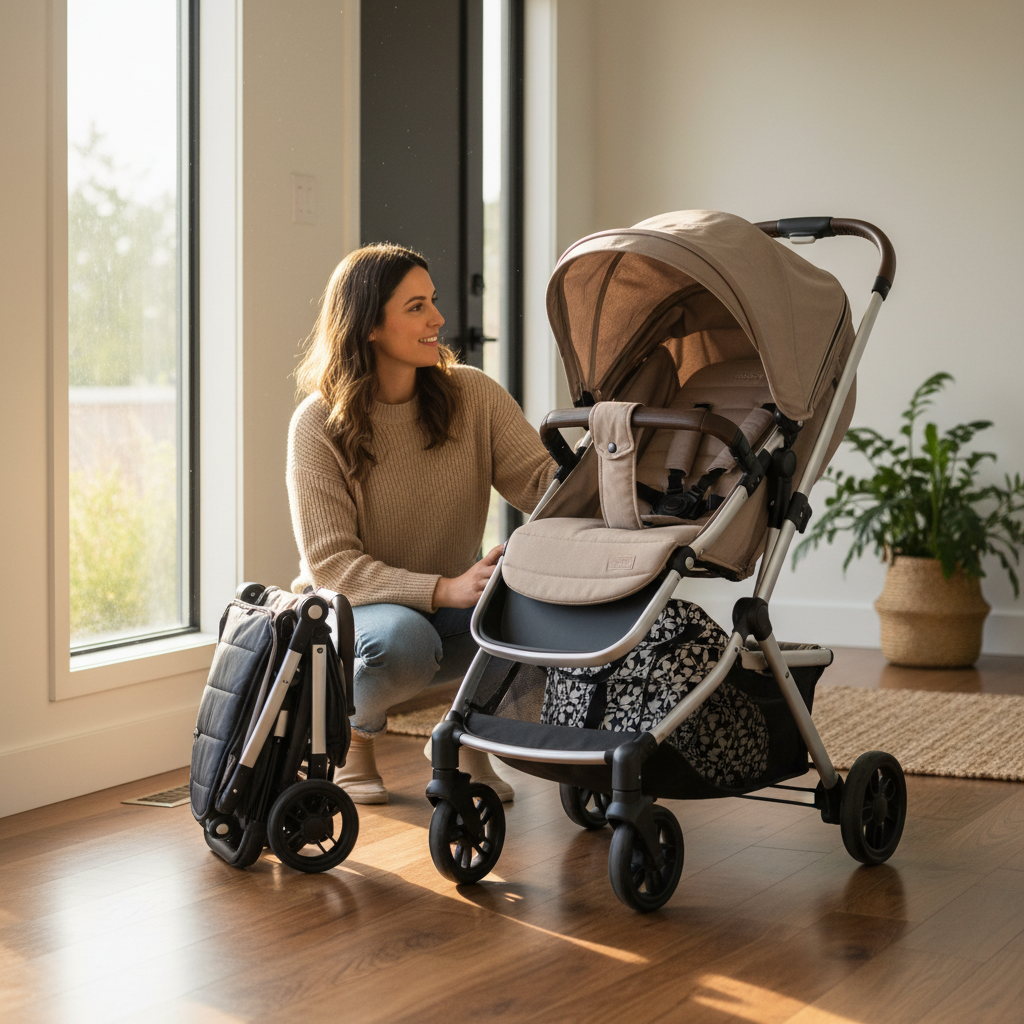
- by Mamazing Team
Travel Stroller vs Everyday Stroller: Which One Fits Real Daily Life?
- by Mamazing Team
If you are comparing a travel stroller vs everyday stroller, you are probably not looking for a theory lesson. You want to know what will feel easier on a normal Tuesday: loading the car, getting through daycare pickup, carrying the stroller up steps, fitting it into a hallway, or staying comfortable on a long outing.
Here is the short answer: yes, many families can use a travel stroller every day, but it works best when your week is full of transitions. If you fold often, lift often, store in tight spaces, or switch between car, elevator, and sidewalk all day, a travel stroller can absolutely become your main stroller. If most of your days are long, gear-heavy outings with fewer folds and more miles, an everyday or full-size stroller usually feels better.
Quick Answer
Choose a travel stroller if everyday life means frequent folds, stairs, small trunks, tight storage, or city errands. Choose an everyday or full-size stroller if you stay out longer, carry more gear, and care more about comfort during the outing than convenience between stops. The best stroller for travel and everyday use is usually the one that removes the friction you feel most often, not the one that wins the biggest outing on paper.
The easiest way to decide is to stop thinking about the best-case day and picture your most common one. Are you constantly transitioning between spaces, or do you mostly settle into one long outing?

The mistake many parents make is assuming they have to pick the stroller that wins the biggest outing. In real life, the better choice is usually the one that removes the most frequent friction.
In most real shopping conversations, everyday stroller, regular stroller, and full-size stroller all point to the same idea: a stroller designed to feel more capable once you are out for a while. It usually gives you more storage, a more substantial feel, and less compromise on longer walks.
A travel stroller is optimized for portability. It is the stroller that behaves well during the annoying parts of the day: folding, lifting, storing, carrying, fitting through tight spaces, and moving fast when you do not have a lot of room.
| Decision Point | Travel Stroller | Everyday / Regular / Full-Size Stroller |
|---|---|---|
| Optimized for | Fast folds, lifting, tight spaces, car loading, city errands, travel days. | Long outings, heavier everyday use, more storage, more built-out comfort. |
| Feels best when | You are constantly moving between spaces and need the stroller to stay out of your way. | You stay out longer and want the stroller to feel more like a mobile base camp. |
| Main tradeoff | You may give up some basket space, planted feel, or rougher-surface confidence. | You give up convenience when folding, carrying, storing, and loading in small spaces. |
| Best question to ask | How often will I need to fold and carry this? | How often will I spend long stretches behind it with lots of gear? |

That is why the query travel stroller vs regular stroller often leads to confusion. Parents are not really asking for labels. They are asking which stroller solves their routine with less friction.
Yes, many families can. A travel stroller can absolutely be your everyday stroller if your routine rewards compactness and low carrying weight more than maximum storage and maximum ride plushness.
A travel stroller often works surprisingly well as a daily stroller when your normal day includes quick errands, daycare handoffs, coffee runs, doctor appointments, small-car loading, or apartment living. In those routines, folding speed and carrying ease are not “nice extras.” They are what determines whether the stroller feels helpful or exhausting.
This is especially true for parents who deal with one or more of these situations:
It is also worth separating daily use from all-purpose use. A travel stroller can be excellent for everyday routines without being the right answer for every terrain, every age stage, or every outing length. If you need newborn-specific setup, deeper recline expectations, or more all-day support for long sessions, always check the exact product guidance instead of assuming every compact stroller behaves the same.
A travel stroller becomes less satisfying when your real pain points happen during the outing rather than between outings. If you take long walks most days, carry a lot of stuff, or want the stroller to feel especially substantial over longer sessions, a regular or full-size stroller usually makes more sense.
That does not mean a travel stroller is “bad” for daily use. It means the tradeoff becomes more obvious. You may notice the smaller basket faster, feel the lighter frame more on uneven ground, or simply wish for a roomier setup when your toddler, jacket, snack bag, toys, and groceries all show up at once.
If you are still stuck, score your week like this:
If “fold/lift/tight space” points win, a travel stroller is usually the smarter daily pick. If “long outing/storage/comfort” points win, an everyday or full-size stroller is usually the better fit.
The biggest difference is not marketing language. It is what annoys you less at the end of a week.
Regular strollers often feel better when you treat the stroller like a gear hauler. If you always carry a packed diaper bag, a blanket, backup clothes, food, and shopping extras, you will notice basket size. A travel stroller can still work, but it usually rewards a lighter packing style.
On smooth sidewalks and everyday errands, a good travel stroller can feel excellent. Over longer outings or rougher surfaces, a more substantial everyday stroller can feel calmer and less fatiguing. That matters less if your daily route is coffee shop, pharmacy, pickup, and home. It matters more if your daily route is two miles in the park.
This is where a travel stroller often wins hard. A lighter stroller changes the entire experience of stairs, rideshares, compact trunks, and small homes. If your stroller is always in the way, you do not have a comfort problem. You have a usability problem.
That is also why it helps to read real-world design lessons before you buy. If you want a deeper look at what actually makes a compact stroller annoying or easy to live with, Mamazing has a useful guide on common travel stroller design fails and fixes.
Most parents searching this topic are not purely one type or the other. You may have weekday errands, weekend walks, one small trunk, one elevator, and a toddler who still naps in the stroller sometimes. That is why the smartest question is usually not “Which stroller wins more categories?” It is “Which stroller do I want as my default?”
If one stroller will do almost everything, prioritize the problem you face most often. If you already have a larger stroller at home for long days, then a travel stroller becomes even easier to justify as your practical daily driver. And if you know you will resent carrying weight more than you will ever appreciate extra bulk, that is already your answer.
The best travel stroller is not just “small.” It is a stroller that behaves predictably when travel adds friction. That usually means the folded size is manageable, the carry is reasonable, the fold is simple under pressure, and the stroller still feels stable and safe when you are rushing.

If you want a more detailed buying framework, Mamazing also has a guide on what makes a good travel stroller. It is a helpful companion piece if you already know you want a compact model and now need to compare execution details.
Travel convenience should never come at the expense of basic safety habits. The CPSC stroller guidance highlights core basics such as brakes, restraint systems, stability, and latching performance. In plain language: stay within the stroller’s stated limits, use the harness correctly, and do not treat “lightweight” as a reason to overload the handle or basket.
For sleep-related safety, the American Academy of Pediatrics notes that if a baby falls asleep in a stroller, they should be moved to a firm, non-inclined sleep surface as soon as possible rather than left to continue sleeping there. That guidance appears in HealthyChildren’s safe sleep recommendations.
If you fly often, review the current TSA guidance for traveling with children. TSA notes that strollers and related children’s items must be screened, and gear that does not fit through the X-ray machine may receive visual or physical inspection. Airline carry-on and gate-check rules still vary, so always confirm folded-size expectations with your carrier before you fly.
That same mindset helps even if you are not boarding a plane every month. A stroller that is genuinely travel-friendly usually also feels easier in restaurants, pediatric visits, grandparents’ houses, and any day where your route changes three times before lunch. Travel-readiness is often just everyday ease under a different name.
An everyday stroller usually wins when your lifestyle is less about transitions and more about staying out. That can mean neighborhood walks, long shopping trips, outdoor events, or routines where the stroller stays open for hours and acts more like a home base than a quick mobility tool.
You should lean toward an everyday or full-size stroller if:
This is also the right answer if you are constantly trying to talk yourself into a travel stroller because it looks easier, but your routine keeps telling you comfort and carrying capacity matter more. The best stroller is not the one that seems clever on paper. It is the one that keeps fitting your week six months from now.
A useful rule of thumb is this: if you mostly complain about maneuvering the stroller itself, go lighter and more compact. If you mostly complain about everything you need the stroller to carry and support, go more everyday-oriented. One frustration points to portability. The other points to capacity.
If you have already decided that a travel stroller can work for daily use, the next question is usually not “travel or everyday?” but “which type of travel stroller fits my routine better?”
Within Mamazing’s lineup, the choice is less about hype and more about how aggressively you want to optimize for compactness. The Ultra Air X leans more toward the ultra-light, compact, highly portable end of the spectrum. The Ultra Air still plays in the travel-stroller category, but sits a little closer to the “everyday travel companion” idea.

Ultra Air X
Best for parents who want the lightest, most compact behavior in everyday transitions.

Ultra Air
Best for parents who still want a travel stroller, but prefer a slightly more all-around everyday feel.
If that is the decision you are actually making, Mamazing’s own Ultra Air vs Ultra Air X comparison is the more useful next click than a generic stroller roundup. If you are still deciding how much stroller you want overall, the brand’s lightweight vs full-feature travel stroller comparison adds another useful lens.
The simplest framing is this:
If you want one more filter before choosing, ask yourself which sentence sounds more like your life:
For parents who are still comparing compact options in general, Mamazing also has a roundup on travel stroller picks for real-life travel use, which is helpful when your shortlist is no longer “travel vs everyday” but “which compact stroller will hold up to actual family use?”
Yes, if your routine rewards folding, lifting, compact storage, and frequent transitions more than maximum storage and long-outing comfort.
They can be. Travel strollers are good for everyday use when your normal week involves stairs, compact storage, small trunks, daycare stops, elevators, or frequent folding. They feel less ideal when your daily routine is mostly long outings with lots of gear and fewer transitions.
A travel stroller is built around portability and convenience between stops. A regular or full-size stroller is usually built around comfort, capacity, and stability during longer outings.
A travel-ready stroller should fold quickly, carry easily, store compactly, and still feel practical and secure under real-world pressure like airports, trunks, elevators, and tight hallways.
Parents who take long walks often, carry a lot of gear, and rarely fold or lift the stroller are usually better served by an everyday or full-size model.
For most families, it is the stroller that solves the most frequent friction in your week. If your hardest moments happen during folds, lifts, and tight transitions, a travel stroller often wins. If your hardest moments happen once you are already out for a long stretch, an everyday stroller usually fits better.
Not always, but many families still like having one. If your full-size stroller handles long outings well but feels bulky for errands, restaurants, flights, or quick car-based stops, a travel stroller can become the easier second stroller you reach for most often.
When parents search travel stroller vs everyday stroller, they are usually looking for permission to stop overbuying. You do not need the biggest stroller if your real life punishes bulk more than it rewards it. And you do not need the lightest stroller if your real pain starts once you are already out for three hours.
Pick the stroller that makes your most common hard moment feel easier. That is the answer that lasts.
If you are still narrowing options, you can keep going with Mamazing’s guides on what makes a good travel stroller and common design mistakes to avoid, or go straight to the Ultra Air X and Ultra Air product pages if you already know your routine is firmly in the compact-travel-stroller camp.
Featured Products


Pregnancy Hunger: Complete Guide to Causes, Management, and What to Expect
Screen-Free Activities for Toddlers on a Plane That Actually Work