
- by Artorias Tse
Airport Stroller Guide: How to Travel Through the Airport With a Foldable Stroller
- by Artorias Tse
If you are flying with a baby or toddler, bringing the right airport stroller can make the entire trip easier. In most cases, that means a lightweight foldable stroller that is easy to push through check-in and security, easy to collapse at the gate, and realistic to carry when your hands are already full. The trick is not just owning a stroller that folds. It is knowing when to keep using it, when to gate-check it, and when an overhead-bin-sized stroller is actually worth the hassle.
For most families, the smoothest setup is a compact stroller for airport travel that handles three jobs well: moving through crowded terminals, folding quickly before boarding, and reopening fast after landing. If you also need to manage a diaper bag, snacks, nap timing, and sometimes a car seat, those details matter more than flashy features.
This guide walks through the full airport flow: how to choose a foldable stroller for airplane travel, what usually happens at security and the gate, when overhead bin storage is realistic, whether airports provide strollers, and how to handle car seats and post-flight reassembly without turning arrival into chaos.
A good stroller for airport use is not necessarily the lightest stroller on the market. It is the one that stays helpful from curb to gate without becoming one more thing to wrestle with. For most families, that means a stroller with a fast fold, a compact footprint, dependable wheels, and a carry-friendly shape once collapsed.
When you are comparing options, prioritize these five traits first:
If you travel often, a foldable stroller for plane trips should also feel realistic to carry after folding. A stroller that folds small but is still awkward to grab is not as airport-friendly as it sounds on paper.

If you are wondering whether a baby carrier or stroller is better in the airport, the honest answer is that it depends on your child, your luggage, and how long the airport day will be. A carrier can be simpler for security and stairs, but a stroller gives you somewhere to rest your child, haul essentials, and move through long terminals with less arm strain.
For most airport days, a compact stroller wins when:
A carrier can be the better backup when you have a tight connection, a very young baby who prefers being held, or a destination where you plan to leave the stroller checked for most of the day. Many families end up using both: stroller for the airport flow, carrier as insurance for boarding, stairs, or a meltdown moment.
The easiest way to navigate the airport with a stroller is to think in stages rather than in one long stress blur. From check-in to security to the gate, the goal is to keep the stroller useful until the moment it is not.
A practical airport stroller flow usually looks like this:
That sequence sounds simple, but it helps because it turns “traveling with a stroller” into a series of smaller choices instead of one vague source of stress.

Security is often the moment when a stroller stops feeling convenient and starts feeling complicated. The best fix is to strip it down before you reach the scanner. Remove toys, cup holders, dangling bags, blankets, and anything else that can slow the fold or trigger extra handling.
It also helps to keep one small pouch for passports, phones, and wallet items on your body rather than in the stroller basket. That way, if you need to fold the stroller quickly or carry your child, you are not suddenly digging for essentials while the line moves around you.
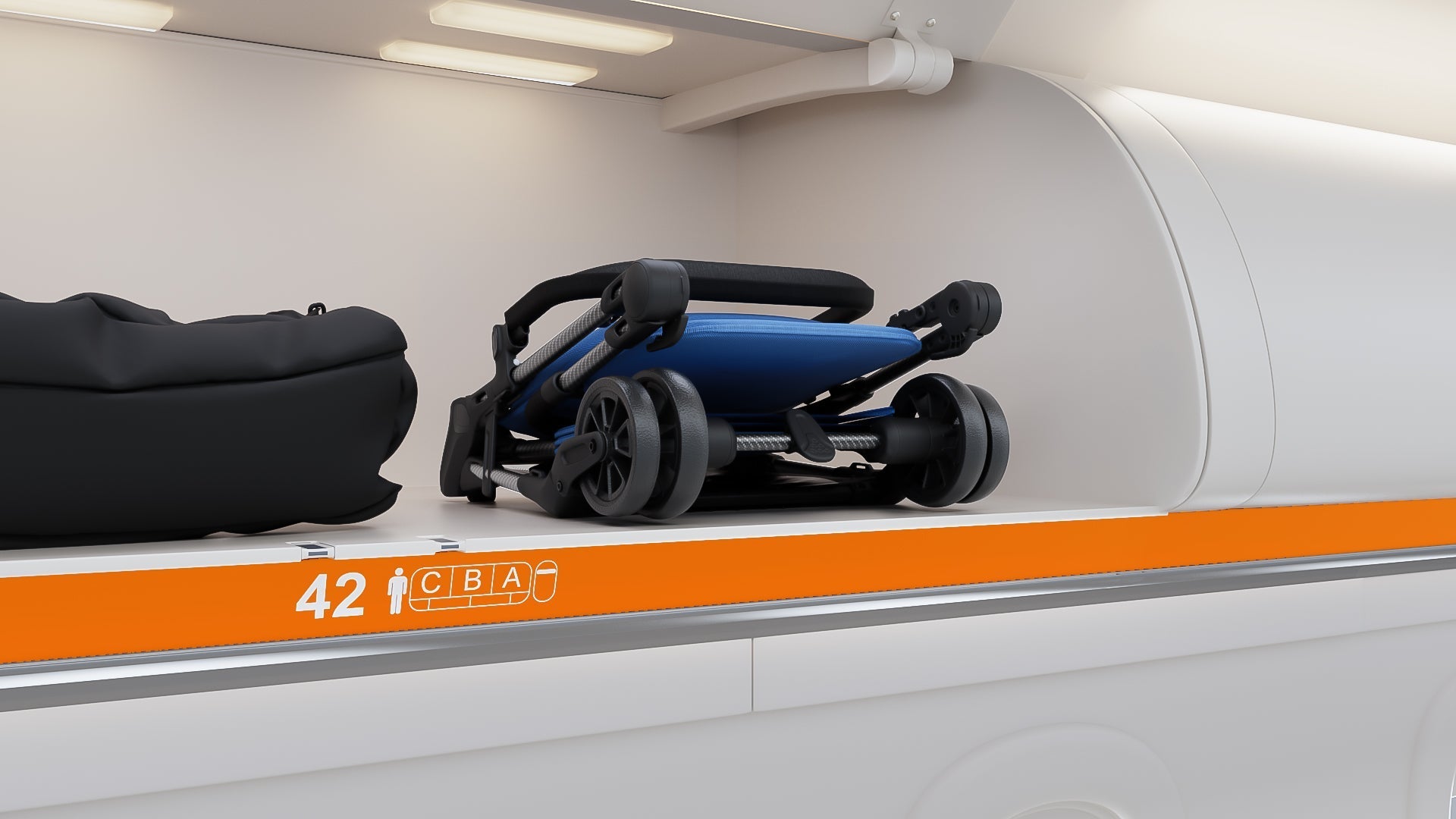
Most families flying with a stroller will gate-check it. A true overhead bin stroller can be a great option, but only when the airline allows it, the folded dimensions really qualify, and there is cabin space left by the time you board. In practice, gate check is the default path and overhead-bin storage is the exception you prepare for carefully.
| Option | Usually best when | Main trade-off |
|---|---|---|
| Gate check | You want the stroller right up to boarding and do not want to fight for bin space | Possible handling wear or delayed return after landing |
| Overhead bin | Your stroller truly fits airline cabin limits and you want to avoid baggage handling | Not guaranteed even if the stroller is compact enough on paper |
If you are shopping specifically for an overhead bin stroller, treat that as a bonus feature, not a promise. Airline rules vary, crews make case-by-case decisions, and even approved sizes can run into a full cabin. A foldable stroller for airplane travel should still be easy to gate-check if needed.
If you plan to gate-check your stroller, tell the gate agent early and confirm where the handoff will happen. In many airports, you will keep using the stroller until just before boarding, then fold it at the jet bridge door or at a designated gate-check point.
This is also where a compact stroller pays off. The easier it is to collapse and hand over, the calmer the boarding process feels.
Sometimes yes, but only if the folded stroller meets the airline's cabin requirements and the crew agrees there is space. That is why the safer assumption is not “my stroller can definitely come onboard,” but rather “my stroller might be allowed onboard if it is truly cabin-compatible and space allows.”
If carrying the stroller into the cabin is central to your travel plan, check the airline's current dimensions before you leave for the airport and be ready with a fallback plan for gate check anyway. That keeps you from building the whole day around a bin-space assumption that may not hold.
Usually, no. Some airports or terminals may have family services, short-term loaners, or destination-specific programs, but you should never assume an airport stroller will be waiting for you. If a loaner exists, it may be limited, location-specific, or only available after check-in or between flights.
That means the safest planning mindset is simple: bring the setup you know you can manage on your own. If an airport does offer stroller help, treat it as a bonus rather than part of the core plan.
A car seat stroller for airport travel can be helpful, but it can also add bulk fast. The right choice depends on your child's age, whether the car seat is needed on the plane, and how many transitions you have in one day.
If you are bringing both a stroller and a car seat, think about them as separate jobs:
For some families, keeping the car seat attached until the gate is easiest. For others, especially with older babies or toddlers, gate-checking the stroller and carrying the car seat separately is less awkward. What matters most is not creating a setup that feels impossible once boarding starts.
If you are already overloaded, this is also the point where a carrier may outperform a second bulky accessory. Simpler is often better in the airport.
Airport stroller etiquette still matters, but it should support the travel flow rather than replace it. Once you know how the stroller fits into your day, the main courtesy and safety rules become easier to follow.
These tips are worth keeping, but they work best once the bigger planning decisions are already handled. A well-planned airport stroller setup naturally creates better etiquette because you are not constantly improvising under pressure.
After the flight, the best move is to retrieve and test the stroller as early as possible. If it was gate-checked, stay alert near the jet bridge exit and ask quickly if it is not there. The earlier you flag a delay or a problem, the easier it is to get help before the crowd disappears.

Before you put your child back in, do a quick travel check:
If anything is missing or damaged, document it immediately and report it before leaving the arrival area. That step feels tedious when you are tired, but it is much easier than trying to prove the issue later.
Many stroller travel problems come from small planning mistakes rather than huge disasters. The most common ones are:
A little realism helps here. The best airport stroller is usually not the fanciest one. It is the one that keeps transitions manageable when everyone is tired.
If you want your airport day to feel smoother, do a short stroller check before you leave for the airport. Five minutes at home can save a surprising amount of stress later.
This checklist also helps you judge whether your stroller is truly airport-friendly. If folding it, carrying it, and stripping it down already feels frustrating at home, it will feel even more frustrating in a crowded terminal.
Usually, yes. Most families gate-check their stroller rather than bringing it into the cabin. A very compact stroller may sometimes be allowed onboard, but that depends on airline rules and available bin space, so gate check should still be your backup plan.
Sometimes. If the stroller folds small enough for the airline's cabin limits and the crew approves it, it may be allowed onboard. But not every compact stroller qualifies, and space can run out, so you should plan for gate check even if your stroller is marketed as travel-friendly.
Most do not provide them in a way you can rely on. Some airports or terminals may have limited family services or loaners, but you should assume you need to bring your own stroller unless the airport specifically says otherwise.
A lightweight foldable stroller with a fast fold, compact size, and easy carry profile usually works best. The ideal airport stroller is simple to push through a terminal, simple to collapse at the gate, and simple to reopen after landing.
For most long airport days, a stroller is more practical because it gives your child a place to sit and gives you a place to carry gear. A carrier can still be useful for security, stairs, tight boarding moments, or babies who settle better on your chest, so many parents travel with both.
The right airport stroller setup should reduce friction, not add more of it. For most families, that means bringing a compact foldable stroller you can confidently use through the terminal, quickly hand off at the gate, and reopen without drama after landing.
If you are choosing between models, focus less on marketing claims and more on the real airport questions: Does it fold quickly, carry easily, fit the way you travel, and still feel practical when you are tired? If the answer is yes, Mamazing's travel-friendly stroller options are a sensible next place to compare what fits your family best.
Featured Products


Most Compact Stroller Guide: Best for Small Apartments, Small Trunks, and Narrow Sidewalks
The Ultimate Guide to Lightweight Strollers for Travel