
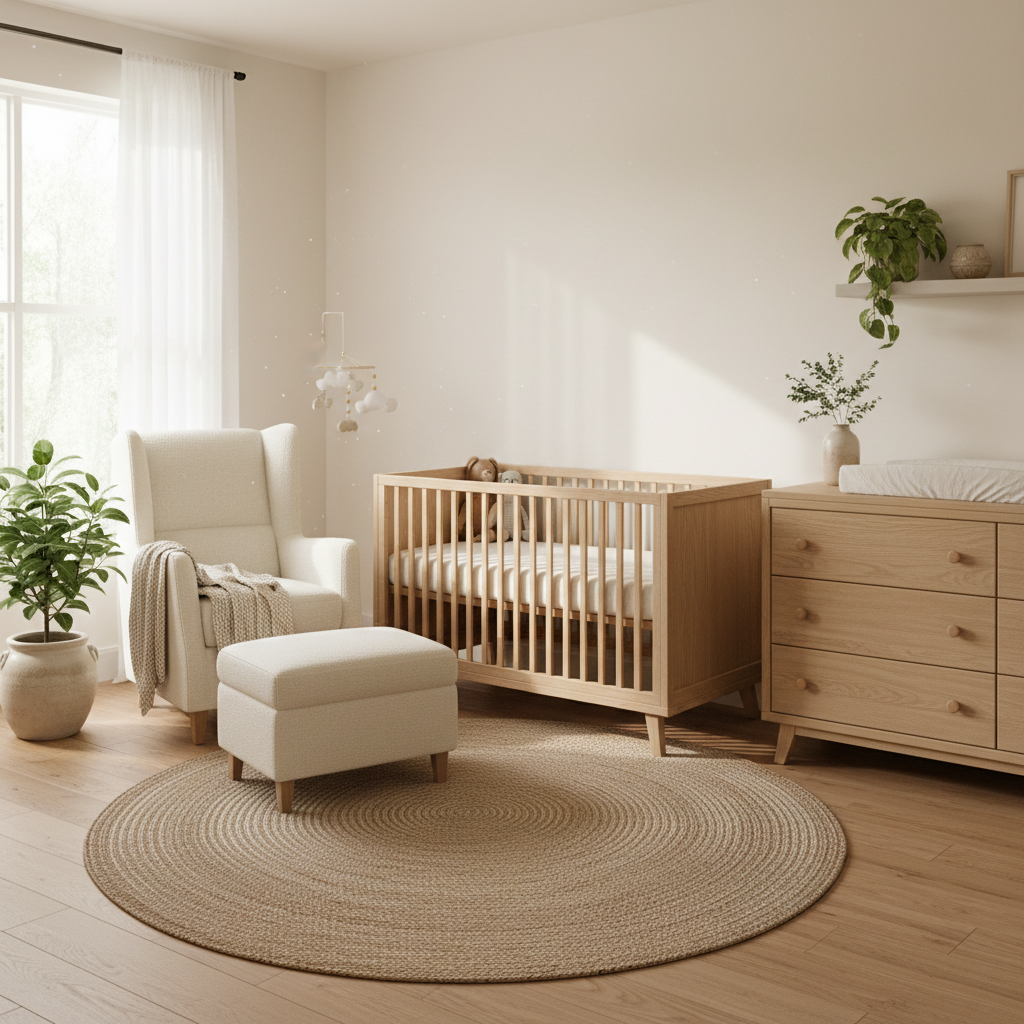
- by Artorias Tse
How to Choose Non-Toxic Nursery Furniture for a Healthier Baby Room
- by Artorias Tse
If you want the short answer first, the safest path is usually simple: choose solid wood or metal where you can, avoid heavy composite boards unless they are clearly labeled TSCA Title VI compliant, favor low-odor water-based finishes, and look for independent certifications such as UL GREENGUARD Gold and FSC. That combination will not make a nursery perfectly chemical-free, but it can meaningfully lower the exposure risks that worry most parents.
That matters because babies spend a lot of time close to their sleep space, changing area, and feeding chair. The U.S. EPA says formaldehyde is used in composite wood products such as hardwood plywood, particleboard, and medium-density fiberboard, and it can off-gas into indoor air over time. If you are comparing a crib, dresser, or nursery chair, the material list and compliance label often tell you more than the styling ever will.
This guide walks you through how to choose non-toxic nursery furniture without getting lost in marketing language. You will learn which materials are lower-risk, which certifications actually help, how to compare cribs and dressers, and where a nursery chair fits in if you want comfort without turning the room into a showroom. If you are building a broader low-waste setup, Mamazing also has a helpful guide to choosing sustainable baby gear that pairs well with the furniture decisions here.
Non-toxic nursery furniture is furniture that reduces the most common exposure concerns in a baby room: formaldehyde-heavy composite wood, high-VOC paints and finishes, questionable adhesives, stain-resistant chemical treatments, and poorly documented foam or fabric inputs. In practice, you are not looking for a magical perfect label. You are looking for a safer stack of signals.
The strongest signals are easy to recognize. A crib or dresser made from solid wood usually has fewer glue-heavy layers than MDF or particleboard. A product with GREENGUARD Gold certification has been tested for low chemical emissions, which is especially relevant in spaces used by children. If a dresser uses engineered wood, an EPA-recognized TSCA Title VI label tells you the composite panels must meet U.S. formaldehyde emission standards. And if you care about sourcing as much as emissions, FSC standards help you identify wood from more responsibly managed forests.
Red flags are just as useful. Be cautious when a brand says only “eco-friendly finish” or “green materials” without naming the finish type, the board type, or the certification body. Be skeptical of furniture that smells strongly right out of the box, especially if the materials list is vague. And remember that “natural” does not automatically mean low-emission; what matters is the full construction, not one attractive phrase in the product copy.
If you want to choose non-toxic baby furniture with confidence, start with the material stack before you compare colors, curves, or storage extras. The biggest difference between a safer piece and a more questionable one usually comes down to wood type, adhesive load, and surface coating.
Solid wood is usually the easiest starting point because it does not rely on the same amount of resin-bound layers used in MDF and particleboard. That does not make every solid wood crib automatically superior, but it often lowers one major concern: off-gassing from composite binders. The EPA specifically lists hardwood plywood, particleboard, and MDF among the composite wood products associated with formaldehyde exposure concerns, which is why the board type matters so much in a nursery.
Plywood sits in the middle. A well-made dresser that uses plywood in selected panels can still be a smart buy if the manufacturer states that the product is TSCA Title VI compliant or references legacy CARB Phase 2 compliance on older documentation. That label does not mean “zero formaldehyde,” but it does mean the composite panels must meet regulated emission limits.
| Material | What it does well | What to check before you buy |
|---|---|---|
| Solid wood | Strong, repairable, lower glue load, long lifespan | Ask about finish, stain, and any engineered drawer bottoms or back panels |
| Formaldehyde-compliant plywood | Lighter than solid wood, often more stable, can be lower-emission than cheap MDF | Look for TSCA Title VI wording and ask which parts are plywood versus fiberboard |
| MDF or particleboard | Lower price, smooth painted finish | Only consider it with clear emissions compliance, sealed edges, and low-odor finishes |
| Bamboo or recycled wood mixes | Can improve sourcing story and reduce virgin timber use | Ask what adhesives and coatings were used, not just where the fiber came from |
A good rule of thumb is to spend your scrutiny where your baby spends the most time close to the surface. For a crib, the rails and mattress support area deserve extra attention. For a dresser or changing table, inspect the drawer box, side panels, and back panel because that is where lower-cost engineered materials often show up.
Look for water-based, low-VOC, or zero-VOC finishes, but do not stop there. The more useful question is whether the brand can explain the finish system in plain language and whether the product has an emissions certification to back up the claim. UL notes that GREENGUARD-certified products are tested for chemical emissions, which is much more meaningful than a vague promise that a coating is “clean.”
With glues, transparency matters more than buzzwords. Some brands call out added-urea-formaldehyde-free construction or publish testing details for their composite panels. If the answer to “what adhesive is used?” is impossible to get, treat that as a useful answer in itself. Furniture made for a nursery should not require detective work.
Also pay attention to timing. Even lower-emission furniture can have a mild odor when newly unpacked. If you can, assemble the room a few weeks before your baby uses it, leave windows open when weather allows, and let textiles air out before daily use. That is not fear-based advice. It is just a practical way to make a good purchase even better.

The best nursery furniture certifications do different jobs, so the goal is not to find one label that covers everything. The goal is to understand what each label answers: emissions, sourcing, textile processing, or product safety.
If you are buying indoor furniture for a baby room, GREENGUARD Gold is one of the most useful labels because it focuses on low chemical emissions in indoor environments. UL describes GREENGUARD Gold as an elevated certification designed to offer greater protection for sensitive groups, which is exactly why it matters more in a nursery than in a guest room. When parents ask what GREENGUARD Gold certified means, the simple answer is this: the product has been tested to stricter emissions criteria than a basic self-claim.
For composite wood, this is the label that helps you judge the panel itself. The EPA explains that hardwood plywood, MDF, and particleboard sold in the United States must meet formaldehyde emission rules under TSCA Title VI, and older product pages may still mention legacy CARB Phase 2 language because the standards were aligned during the transition period. If you are choosing a nursery dresser or changing table made with engineered wood, this label is not optional background detail. It is one of the first things to confirm.
FSC and GOTS answer different questions, and it helps to keep them separate. FSC standards relate to responsible forest management and chain-of-custody practices, so FSC is about where the wood comes from and how forests are managed. GOTS applies to textiles, and its official guidance says products carrying the “made with organic” label must contain at least 70% certified organic fibers. For a nursery chair, GOTS may matter more for the upholstery or cushion cover than for the frame.
JPMA is not the same as GREENGUARD Gold, and that distinction is important. JPMA certification speaks to product safety, performance, and testing against standards and legal requirements. GREENGUARD Gold speaks to emissions. If you are shopping for a crib, you want the furniture to be structurally safe and appropriate for infant sleep, which is why the CPSC safe sleep guidance and federal crib requirements still matter alongside any low-emissions story.
In other words, use certifications as a stack, not a shortcut. GREENGUARD Gold helps with emissions. TSCA Title VI helps with composite wood panels. FSC helps with wood sourcing. GOTS helps with textile integrity. JPMA and CPSC rules help with product safety. The strongest nursery furniture usually does well in more than one of those categories.

You do not need to judge every nursery item by the same criteria. A crib needs the strictest sleep-safety lens. A dresser needs a sharper look at composite panels and finish quality. A nursery chair has different pressure points again, especially fabric, foam, and long-session comfort.
For a crib, start with the sleep function before anything else. The safest crib is one that meets applicable safety requirements, has a firm compatible mattress, and keeps the sleep space simple. The CPSC safe sleep guidance is clear that a crib should be used with only a fitted sheet and no soft extras in the sleep area.
Once the safety basics are covered, material choice matters. A solid wood crib with a smooth, low-odor finish is often the simplest answer for families trying to reduce chemical exposure. If a crib includes plywood or composite components, look for the same emissions transparency you would want in a dresser. Also check how easy the surface is to wipe clean because babies chew rails, drool on edges, and touch everything within reach.
If you are buying for more than one stage, a convertible crib can make sense for sustainability because it extends the useful life of the frame. That only counts as a real eco-friendly win, though, if the build quality is good enough to last through the conversion.
Dressers and changing tables are where many parents accidentally compromise, because the price gap between solid wood and lower-cost engineered wood can be wide. This is exactly why the label reading matters. If a dresser is made with plywood, MDF, or particleboard, ask whether those panels are TSCA Title VI compliant and whether the edges are well sealed.
A good nursery dresser should also feel calm to live with. Drawers should open cleanly, hardware should feel secure, and the finish should not leave a strong lingering odor in the room. If you are using the top as a changing station, look for depth, stability, and a layout that lets you keep diapers and wipes within one-handed reach without adding bulky plastic organizers that crowd the surface.
For many families, the best eco-friendly nursery dresser is not the one with the most trend-forward shape. It is the one with a durable frame, a repairable finish, and enough storage to stay useful after the diaper stage ends. Reusability is one of the few sustainability benefits you actually feel every day.
A nursery chair does not need to dominate the room, but it does deserve a careful materials check because you will spend long stretches pressed against its fabric, armrests, and cushion fills. Prioritize a stable frame, fabric that is easy to clean, and materials information that goes beyond “soft and premium.” If the upholstery or textiles are certified, that is a plus. If the chair relies on foam, ask whether the brand discloses anything about added flame retardants or low-emissions testing.
If you want a practical example of a daily-use seating option, Mamazing’s electric nursery rocking glider chair fits naturally into the conversation when you are comparing comfort, reach, and feeding support. The chair should serve you during feeds, contact naps, and late-night soothing sessions, but it should still earn its place through material transparency and long-term usability, not just soft-focus styling.

The best nursery chair is usually the one that makes long sitting sessions easier without introducing a lot of unnecessary chemical treatments. Washable covers, durable wood or metal framing, and a shape that still works elsewhere in the home after the nursery years are all good signs.
Eco-friendly baby furniture is worth paying attention to, but only when the brand can prove what the phrase means. Real transparency usually sounds specific. It names the wood species, identifies whether engineered panels are used, states the finish type, and points to a certification or compliance standard you can verify.
Greenwashing sounds softer and broader. It leans on words like pure, conscious, natural, or planet-friendly while hiding the exact materials. It talks about a “non-toxic lifestyle” but never answers whether the dresser contains MDF. It celebrates a sustainable wood story but says nothing about emissions testing or upholstery treatments. When you see that gap, trust the missing details more than the polished adjectives.
This is also where your own priorities matter. Some families care most about emissions. Others care equally about forestry, repairability, and resale life. The smartest purchase is not always the most expensive piece. It is the one that aligns with your concerns in a way the brand can actually document.
You do not need to throw out every piece of furniture to create a healthier nursery. If you are working with a hand-me-down dresser, a secondhand chair, or a crib you already own, focus on the biggest exposure and safety wins first.
If you are planning a full nursery over time, that staggered approach often works better than one giant shopping spree. It gives you time to compare labels, read material sheets, and decide what genuinely improves daily life. It also keeps you from buying a fashionable piece now and regretting the materials later.
GREENGUARD Gold certified furniture is furniture that has been tested to stricter chemical emissions criteria intended for indoor spaces used by more sensitive groups, including children.
Solid wood is often the simpler lower-risk choice because it uses less resin-bound material, but the safer pick still depends on the finish, adhesives, and overall build quality.
It means the composite wood components are labeled to show compliance with formaldehyde emission standards, which is especially important when a nursery dresser uses plywood, MDF, or particleboard.
Look for low-odor water-based finishes, clear low-VOC or zero-VOC disclosure, and ideally an emissions certification that supports the finish claim.
No. JPMA focuses on product safety and performance testing, while GREENGUARD Gold focuses on low chemical emissions in indoor environments.
Yes. Better ventilation, fewer added textiles, safer crib setup, and targeted upgrades to the highest-risk items can make a nursery meaningfully lower-tox without a full reset.
The best non-toxic nursery furniture is rarely the piece with the loudest eco message. It is the one that quietly gets the basics right: safer materials, documented emissions standards, practical safety, and a design you will still want to use after the newborn stage. If you keep coming back to solid wood, low-emission finishes, transparent labels, and honest certification language, you will make fewer mistakes.
And if you are narrowing the room down to the pieces that matter most, start with the crib, then the dresser, then the chair you will use every day. Mamazing can support that process with nursery seating and broader baby gear guidance, but the strongest choice is always the one that matches your home, your budget, and the level of transparency you need to feel calm when you walk into the room.


Best Family Vacation Destinations With Kids by Age: Baby to Teen Ideas
Are Rocking Chairs Good for Babies? Benefits, Safety, and Whether You Really Need One