
- by xiaoyuyang
Baby Mosquito Bite: What It Looks Like, How to Treat It, and When to Worry
- by xiaoyuyang
If you just noticed a baby mosquito bite, the short answer is reassuring: most mosquito bites on babies are itchy, swollen, and uncomfortable, but they are usually not dangerous. The first step is to wash the area, use a cool compress, and watch for red flags like worsening swelling after the first day, drainage, a baby who seems sick, or fever in a very young infant. This guide is about mosquitoes biting infants and babies, not about “baby mosquitoes,” so you can get a direct answer fast.
Parents often worry because a mosquito bite on a baby can look much bigger than it does on an adult. That is common. Babies have delicate skin, and bites on the face or near the eye can puff up dramatically by morning. According to the AAP symptom checker for mosquito bites, a normal bite can be pink, itchy, and raised, and the swelling can look worse on the face because the tissue is loose there.
At Mamazing, we think parents need a practical plan more than a long summer pep talk. So below, you will find what a baby mosquito bite looks like, when mosquito bites are dangerous for babies, how to calm swelling and itching, how long bites usually last, when fever or infection matters, and how to prevent more bites safely.
A mosquito bite on a baby usually starts as a tiny puncture that quickly turns into a round, raised bump. On lighter skin, it may look pink or red. On deeper skin tones, it may look darker, slightly purplish, or like a firm swollen welt. Many parents search “what does a baby mosquito bite look like” because the swelling can seem out of proportion. That is especially true on the eyelid, cheek, forehead, hand, or ankle.
The AAP guide to identifying insect bites and stings notes that mosquito bites are often soft, itchy, and puffy rather than sharply painful. Babies also rub, kick, or fuss instead of telling you it itches, so behavior changes may be the first clue.

A typical baby mosquito bite may:
If your baby has a bite on the eyelid, the swelling can look dramatic enough to partly close the eye. That can still be a normal local reaction if your baby is otherwise acting fine, the eye itself is not red, and the swelling gradually improves with cool compresses.
| Type | Typical look | Common pattern | What parents notice first |
|---|---|---|---|
| Mosquito bite | Raised, soft bump or welt | Exposed skin, scattered | Itching and swelling |
| Flea bites | Small red dots | Often clustered on legs or ankles | Multiple tiny bites close together |
| Bed bug bites | Red bumps in lines or groups | After sleep, on exposed skin | Several bites in a row |
| Bee or wasp sting | Painful, hot swelling | Usually single sting | Crying right away from pain |
If the skin problem is crusting, spreading, blistering, or painful more than itchy, it is worth considering something other than a simple mosquito bite.
Many parents panic when a mosquito bites a baby on the forehead and the eyelid swells the next day. The location explains a lot. The skin around the eye is thin and loose, so fluid collects there easily. The AAP symptom checker specifically points out that bites near the eye can cause impressive swelling but are often still harmless if the swelling softens over time and your baby otherwise seems well.
Yes. Mosquitoes can bite babies, including newborns, whenever exposed skin is available. Searchers often ask “do mosquitoes bite babies” or “do mosquitoes bite newborns” because very young infants cannot swat insects away, and parents want to know if a bite is unusual. It is not unusual. What matters most is your baby’s age, where the bite is, how strong the swelling is, and whether your baby looks sick.
The CDC Yellow Book guidance for infants and children emphasizes prevention strategies that fit a child’s age, especially physical barriers for the youngest babies. That matters because newborns have fewer safe repellent options.
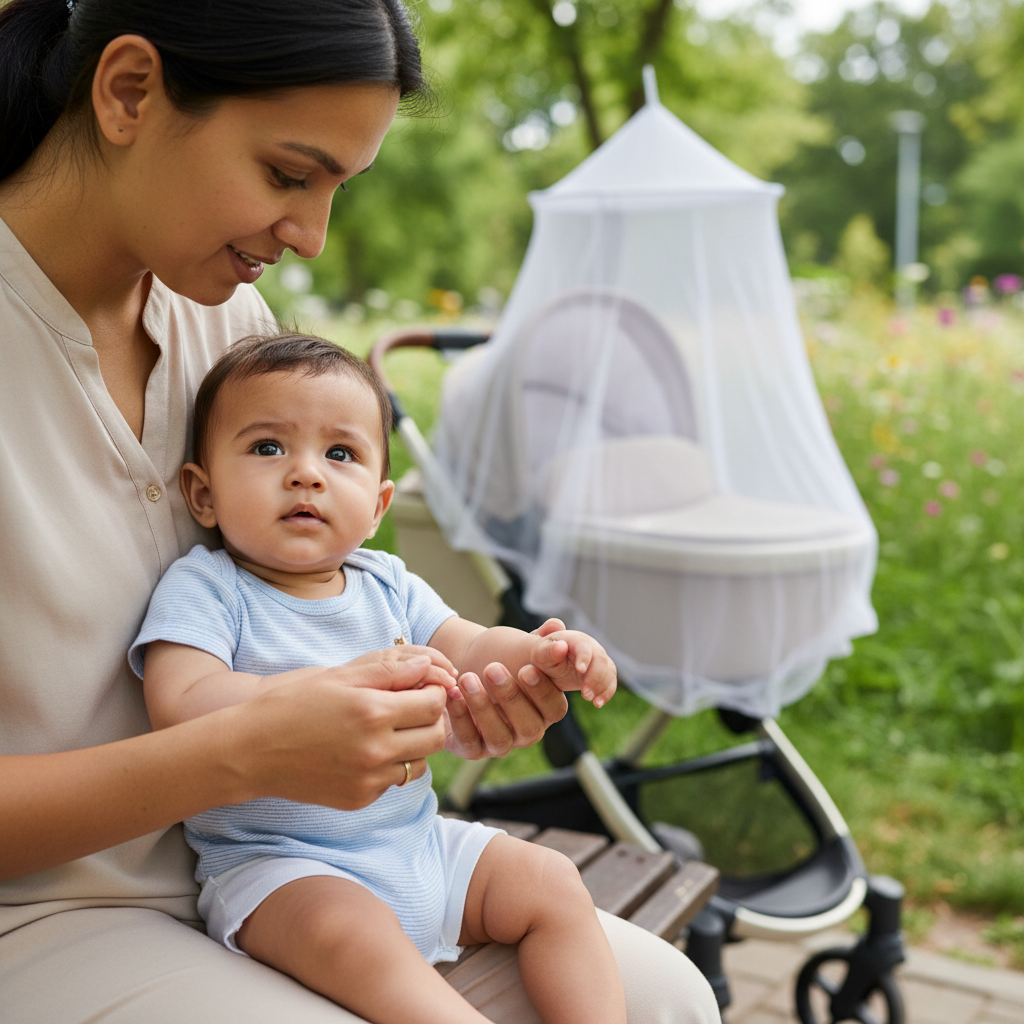
For newborns and babies under 2 months, the safety conversation changes. The main goal is preventing bites rather than treating repeated bites later. The CDC mosquito prevention guidance recommends dressing babies in clothing that covers arms and legs when possible and using mosquito netting over carriers and strollers. For this age group, physical barriers matter more than products.
If your newborn gets a mosquito bite, the bite itself is usually handled the same way as in an older baby: clean skin, cool compress, and watchful observation. But your threshold for calling a clinician should be lower if your baby is under 3 months and develops fever or seems less alert than usual.
Once your baby is 2 months or older, you can think about repellents in addition to clothing and netting. The AAP insect repellent advice explains that repellents can be used safely when chosen and applied correctly. For most families, the biggest mistakes are applying too much, putting it on hands that go into the mouth, or relying on “natural” products that are not actually better studied for babies.
If you are navigating other new-baby questions at the same time, it can help to keep age-based milestones in perspective with Mamazing’s guide to when babies say their first words. The same month-by-month mindset is useful here: what is safe for a newborn is not always the same as what works for a 6-month-old.
Most mosquito bites on babies are not dangerous. They are annoying, itchy, and sometimes spectacularly swollen, but they usually settle with simple care. The harder question is not “Can mosquitoes bite babies?” but “When does a normal bite become something I should worry about?”
The CDC overview of mosquito bites explains that the bump is caused by the body reacting to mosquito saliva. That immune response is why some babies swell more than others, even when the bite itself is minor.
Babies can have larger local reactions than adults. That alone does not mean the bite is infected or dangerous.
You should pay closer attention if the bite area keeps expanding after 48 hours, becomes more painful than itchy, starts draining, or is accompanied by symptoms that involve the whole child rather than just the skin. A mosquito bite can also become problematic if scratching breaks the skin and bacteria get in.
Think in two categories:
This is also why the phrase “are mosquito bites dangerous for babies” needs a nuanced answer. The bite is usually not dangerous. The reaction, scratching, or a sick baby is what changes the picture.

If you searched “how to get rid of mosquito bites on babies,” the goal is not to erase the bite instantly. The goal is to reduce itching, calm swelling, protect the skin, and make your baby comfortable while the immune reaction settles down.

The AAP symptom guidance supports simple comfort care first. In real life, that means you do not need a complicated “remedy” routine. Start with the least irritating option that helps.
If your baby is also having a rough night because itching wakes them up, simplifying the sleep environment can help. Mamazing’s article on white noise safety for babies can be useful if you are trying to rebuild calm after an uncomfortable bedtime.
Parents are often told to try essential oils, strong home remedies, or a little of whatever anti-itch cream an older sibling uses. That is not a good default. Avoid putting essential oils directly on your baby’s skin, avoid applying products near the eyes or mouth, and do not use combination repellent-sunscreen products as your baby’s main mosquito strategy. The AAP repellent guidance and CDC prevention advice both steer families toward age-appropriate, evidence-based prevention rather than improvised skin applications.
Most bites improve clearly within a few days, but the exact timeline depends on your baby’s skin, how much they scratch, and where the bite happened. If you searched “how long do mosquito bites last on babies,” this general timeline is a useful guide:
| Time after the bite | What is common | What needs closer attention |
|---|---|---|
| First few hours | Raised bump, itching, mild redness | Rapid spread far beyond the area or trouble breathing |
| 24 to 48 hours | Peak swelling, especially on face or eyelid | Increasing pain, drainage, or a baby who seems ill |
| 3 to 5 days | Less swelling, lingering itch or discoloration | No improvement at all or more redness each day |
| Up to 1 week or longer | Residual mark fading slowly | Persistent warmth, crusting, or broken skin that is not healing |
A big bite on a baby’s face can still look “worse before better” on day 2 because gravity pulls fluid downward. That pattern is annoying but not automatically dangerous.
A simple local mosquito bite usually causes skin symptoms, not significant fever. If a baby has fever, especially a newborn or young infant, it is safer to ask whether something else is going on or whether the child needs medical review. The CDC mosquito bite overview and CDC Yellow Book section on mosquitoes and other arthropods also remind families that mosquito exposure matters more in areas where mosquito-borne illnesses circulate. That does not mean every bite is dangerous. It means fever plus mosquito exposure should be interpreted in the context of the child, season, location, and how sick the baby looks.
In plain terms: a puffy welt is common; a baby with fever, low energy, poor feeding, or vomiting needs a different level of attention.
Parents do not need to call for every bite, but you should not wait things out blindly if your instincts say your baby looks unwell. Call your pediatrician sooner if your baby is very young, the swelling is extreme, or the bite is no longer acting like a simple itchy bump.

Seek urgent care right away if your baby has trouble breathing, lip or tongue swelling, or a severe whole-body reaction. Those symptoms are not typical for an ordinary mosquito bite.
If you are already tracking normal baby behavior changes, Mamazing’s guide to when babies start laughing can sound unrelated, but it is a useful reminder: when your baby suddenly acts unlike themselves, behavior matters. Appetite, alertness, and comfort are often more informative than the size of the bite alone.
Prevention matters because the easiest bite to treat is the one that never happens. The best routine depends on your baby’s age, the weather, and how long you will be outside. The CDC prevention page and the AAP insect repellent advice give a solid framework that parents can actually use.

For older babies, repellents may be appropriate when you use them carefully. The AAP recommends applying repellent to your own hands first and then spreading a thin layer on exposed skin, while avoiding the hands, eyes, mouth, and broken skin. When you come indoors, wash it off.
That kind of boring, consistent routine usually protects better than chasing trendy hacks. If you are going somewhere buggy, plan layers and netting before you leave instead of trying to improvise once your baby is already getting bitten.
The CDC travel guidance for infants and children is especially helpful if you are taking a baby outdoors on trips, camping, or visiting places where mosquitoes are heavy.
Yes. Mosquitoes can bite newborn babies, and the safest prevention for babies under 2 months is physical protection like clothing and stroller netting rather than relying on skin-applied products.
Usually no. Most baby mosquito bites are itchy, swollen skin reactions, but you should call a doctor if your baby has fever, worsening redness, drainage, trouble breathing, or seems unusually sleepy or sick.
Wash the area gently, use a cool compress, keep your baby from scratching, and ask your pediatrician before using stronger anti-itch medicines on very young babies.
Most bites improve over several days, although swelling can peak in the first 24 to 48 hours and a leftover mark can take about a week or a little longer to fade.
Severe local swelling can happen, especially on the face, but fever is not typical for a simple bite. Fever, poor feeding, vomiting, or a baby who seems unwell should prompt medical advice.
Call if your baby is under 3 months with fever, if the bite keeps getting redder after two days, if there is pus or crusting, or if swelling near the eye is getting worse instead of better.
A baby mosquito bite can look dramatic and still be ordinary. What helps most is a calm sequence: clean the skin, cool the bite, protect it from scratching, and watch the child as much as the bump. Babies usually do well when parents focus on comfort and prevention instead of trying too many treatments at once.
If your baby is a newborn, if the bite is on the face, or if the reaction seems to be moving beyond the skin, trust that instinct and get medical guidance. And if you are building your broader baby-care toolkit, Mamazing is here with practical, evidence-aware guidance that helps you make confident decisions one real-life question at a time.



When Can Baby Wear Sunscreen? FDA Guidance Before 6 Months and What to Use After
Ultimate Baby Beach Guide: Safety Tips & Essentials for Every Age