
- by Artorias Tse
Do You Need a Travel Stroller? When to Bring One and When to Go Without
- by Artorias Tse
If you want the short, honest answer: no, you do not need a travel stroller for every trip. But on the wrong kind of trip, not bringing one can make the whole day feel heavier, slower, and far more chaotic than it needs to be. A stroller usually earns its space when your itinerary includes airports, long sightseeing days, naps on the go, or hours of carrying snacks, diapers, extra layers, and tired-kid emotions. You can often skip it when your plans are built around stairs, uneven streets, hiking paths, quick transit changes, or babywearing.
The real decision is whether a stroller solves the hardest part of this trip. Are you protecting naps, saving your back, moving through a city faster, or avoiding constant lifting on stairs? Once you name the real problem, the right setup gets easier to see.
This guide will help you decide when a travel stroller is worth packing, when going without one is easier, how age and destination change the answer, and why many families end up happiest with a hybrid setup.
A travel stroller is worth it when you expect long walking days on mostly smooth ground, regular naps away from your room, and enough gear that carrying everything by hand would wear you down. It is much less useful when your trip involves repeated folding, stairs, rough terrain, or short outings where the stroller spends more time being lifted, stored, or dragged than actually rolling.
If you are still unsure, do not ask whether a stroller is useful in general. Ask whether it will be rolling more than it will be lifted. That one question gets surprisingly close to the right answer.
Bring the stroller when the trip asks your child to stay comfortable and cooperative for longer than usual. On stroller-friendly trips, a good compact stroller does not just move your child. It protects the pace of the day, preserves energy for later, and gives you a place to set down the gear that otherwise ends up on your shoulders.
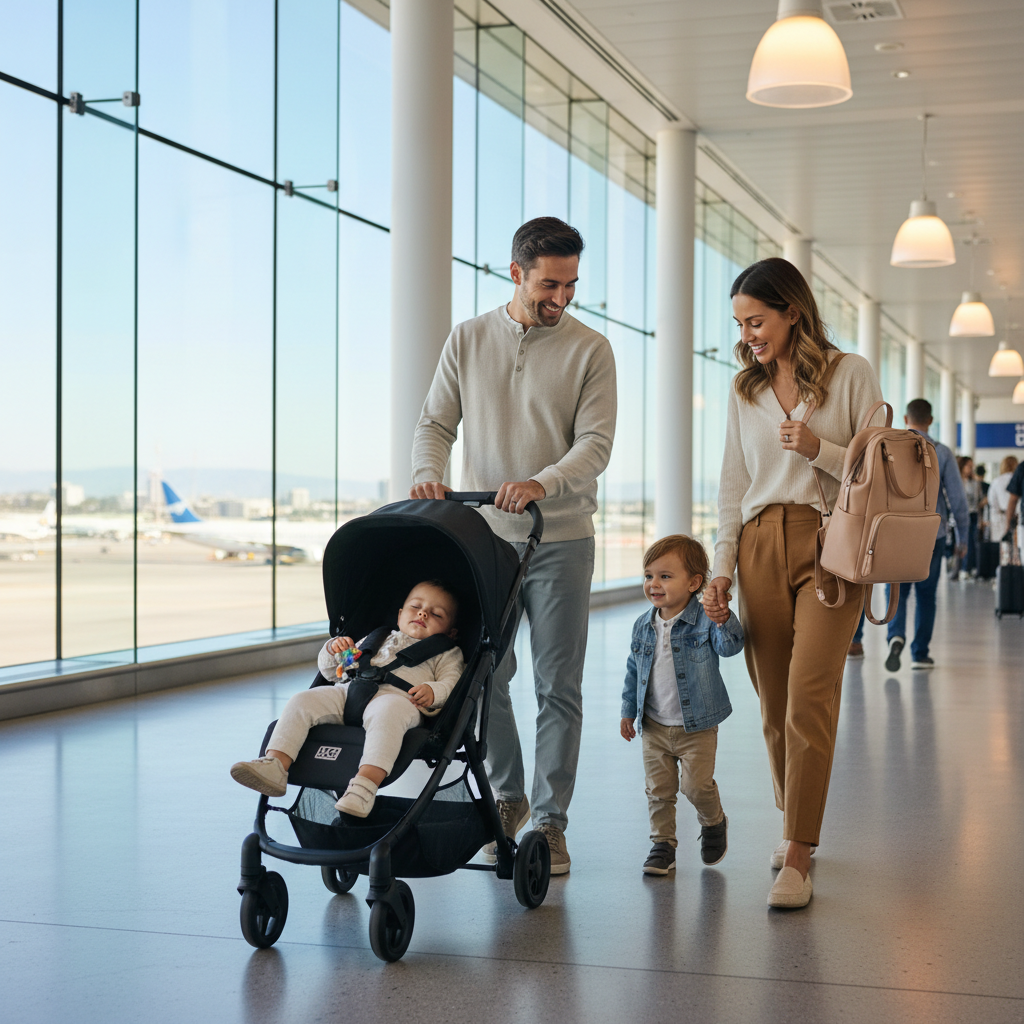
Airports are where many parents stop seeing a stroller as optional and start seeing it as logistics support. According to TSA's guidance for traveling with children, strollers, umbrella strollers, and baby carriers all need screening, so there is still some handling involved. Even so, a stroller keeps your child contained, your bags organized, and long airport stretches much easier.
The same logic applies in cities and large attractions. If you plan to cover museums, promenades, or theme parks in one day, a stroller gives your child a place to reset without forcing you back to the hotel. That matters even more if naps or overstimulation can decide the rest of the day.
If you are flying with a baby, it also helps to remember that the stroller solves ground travel, not in-seat flight safety. The FAA's guidance on flying with children strongly recommends using an approved child restraint system for children under two rather than relying on a lap hold, and it notes that baby carriers are not an in-seat substitute during taxi, takeoff, or landing. In other words, airport comfort and onboard safety are separate decisions. Pack for both.
A stroller is easier to justify when it does more than move one child from point A to point B. Maybe your baby naps best in motion, your toddler walks well until mid-afternoon, or a sibling seems fine until the longest part of the day. In those cases, a stroller protects the family schedule as much as the child.
The storage factor matters too. A compact stroller with a usable basket can absorb wipes, snacks, layers, and random kid essentials that would otherwise sit on your back. If the alternative is a carrier plus a heavy backpack plus a child who wants to be held every time you stop moving, the stroller may actually feel more freeing.
Some destinations make a stroller feel easy because the environment is doing half the work. Think wide sidewalks, elevators, family attractions, smooth hotel access, paved walking routes, and predictable transit. On those trips, the stroller does not feel like a burden because it rarely interrupts your flow. It simply rolls.
This is also where a compact model matters. If you are bringing a stroller, you want one that folds quickly, fits into taxis or hotel corners without drama, and does not become the largest item you are managing. If that sounds like your trip, it is worth reading Mamazing's guide to the best travel stroller features for easier journeys before you go. The wrong stroller can make a stroller-friendly trip feel difficult; the right one can make it feel organized.
Skip the stroller when it creates more lifting than relief. On some trips, the stroller stops being a mobility tool and turns into one more awkward object to drag through spaces that were never designed for it. That is when babywearing, slower pacing, and lighter packing often win.
If you are heading somewhere full of stairs, narrow sidewalks, uneven stone streets, hiking routes, or frequent train and bus connections, a stroller can get old very quickly. This is especially true in older cities where every "short walk" seems to include a curb, a staircase, or a stretch of pavement that feels like a vibration test. The stroller may still work for part of the day, but if you are lifting it every fifteen minutes, it is no longer saving effort.
Trips with many transit changes are another common trap. If you need to fold the stroller with one hand while holding your child and managing bags with the other, its convenience disappears fast. In that kind of itinerary, going without a stroller can feel much more agile.
You can also skip the stroller when your child is old enough to walk most of the day and your plans allow for a slower pace. An older toddler or preschooler may not need a stroller for a short city morning, a beach town lunch, or a relaxed resort trip where your room is always close. In those cases, the stroller can become a security blanket for parents more than a real need.
If you are traveling with a younger baby and planning to wear them instead, comfort and safety matter more than optimism. HealthyChildren's baby carrier safety advice recommends keeping the baby's face visible, their airway clear, and checking them frequently, especially in slings and especially for infants under four months. A carrier is wonderful when it fits the baby, the adult, and the route. It is much less wonderful when everyone is overheating, overtired, and adjusting straps in the middle of a staircase.
You do not have to treat this as a permanent identity choice. Some trips work best when you leave the stroller at home and rent or borrow one only for the days you need it. If the stroller is only critical for one part of the itinerary, you may not need to carry it through every other part just to justify packing it.
This is also a good option if you already own a large everyday stroller but do not want to buy a dedicated travel model yet. Instead of forcing the full-size stroller into a trip it is not suited for, borrow, rent, or test a compact alternative before you commit. Mamazing's article on travel stroller vs. everyday stroller is a useful starting point if you are stuck between those two categories.
For many families, the best answer is not "stroller" or "no stroller." It is "bring a compact stroller and a carrier, then use each where it wins." That setup gives you a seat, storage, and nap support on smooth ground, plus hands-on mobility when the route gets awkward.
This works especially well on multi-day trips where each day has a different shape. The stroller handles long flat days; the carrier handles broken, bumpy, or crowded ones. Instead of forcing one tool into every situation, you rotate.
If you have ever come home thinking, "I hated carrying the stroller, but I also hated not having it," the hybrid approach is probably your answer.

If you are still on the fence, run through these seven questions before you zip the suitcase. A travel stroller usually earns its place if you answer "yes" to at least four of them.
The clearest way to decide is to compare both options against the parts of travel that actually create friction. Here is the practical version of that comparison.
| Decision factor | Travel stroller | No stroller |
|---|---|---|
| Long walking days | Usually easier because your child can rest, snack, and nap without ending the outing. | Works only if the child walks well or you are happy to carry them for long stretches. |
| Stairs and rough ground | Can become frustrating fast because lifting replaces rolling. | Usually better if you are using a carrier and keeping luggage simple. |
| Airport containment | Strong advantage for waiting, gate changes, and organizing bags. | Can feel freeing, but only if you can carry your child comfortably through the whole process. |
| Storage | Basket helps with snacks, water, layers, and diaper gear. | Everything goes on your shoulders or in your hands. |
| Flexibility | Best on predictable routes and accessible attractions. | Best for improvising, exploring, and moving quickly through awkward spaces. |
| Nap support | Usually the easier option for preserving naps without returning to the room. | Possible in a carrier for some babies, but more dependent on fit, weather, and adult stamina. |
| Best fit | Cities, airports, resorts, family attractions, and long sightseeing days. | Stairs, hiking routes, old towns, beaches, short outings, and high-mobility itineraries. |
Stroller travel works best when you plan for transitions, not just for the destination photos. A good setup removes friction before it happens.
Choose the lightest stroller that still solves your real problem. If you need it mainly for naps and long city days, focus on fold, weight, and maneuverability before you chase oversized features. Check how it fits in your trunk, in a taxi, beside a hotel bed, and near the hotel entrance. If you are flying with a newborn, HealthyChildren's flying with baby advice notes that air travel is generally safe once a baby is at least 7 days old, though waiting until 2 to 3 months is ideal when possible. That kind of age-and-stage reality should shape your stroller decision too.
If you are choosing a stroller specifically for travel, Mamazing's guide on how to choose the perfect stroller for your next adventure is a strong checklist to review before buying. The goal is not just compactness. It is compactness that still feels good at hour six, not just minute six.
Pack the stroller so it can be folded without a full unpack. Keep the carrier accessible even if you plan to use the stroller, because security lines, boarding, and delays are where switching tools helps most. TSA advises that children must come out of strollers for screening, so build in time instead of assuming you can roll straight through.
Also check your airline's rules before departure, not in the boarding lane. Policies vary by airline, route, and aircraft. The best travel day setup is the one you can manage confidently while also holding your child and listening for gate changes.
Once you arrive, use the stroller with intention. It should help you do more of what the day requires, not pressure you into keeping your child seated too long just because you brought it. If the route changes and a carrier makes more sense, switch. If your child falls asleep, great. If they want to walk for an hour, let them. The stroller works best when it stays a support tool, not a rule.
Going without a stroller works best when you replace it with a real system instead of hoping lighter packing will solve everything. It means reducing the load, pacing the day differently, and accepting that your child's limits become the trip's limits too.
If you are skipping the stroller, your carrier becomes the foundation of the plan. It needs to fit the adult, suit the baby's age, and stay comfortable beyond a quick errand. HealthyChildren recommends checking the baby's breathing position often and keeping the face visible and nose and mouth clear, especially for younger infants and sling-style carriers. That matters even more in hot weather, crowded transit, or long sightseeing days.
A good carrier also changes what kind of destination feels easy. Stairs, old neighborhoods, historical sites, and nature-heavy routes often become much simpler when you can move in one line instead of steering wheels through gaps.
No stroller means you need less stuff and better discipline about what comes along. The upside is freedom. The cost is that every extra item sits on your body instead of under a basket. Pack fewer "just in case" pieces, refill water as you go, and plan one real break before everyone reaches the point of no return.
This is also where realistic expectations matter. Without a stroller, you may do fewer attractions in a day, but the ones you do can feel smoother because you are not constantly folding gear, searching for ramps, or finding places to park the stroller. In the right destination, that trade is worth it.
Parents who enjoy stroller-free trips usually do one thing well: they break earlier than they think they need to. Shorter days, slower lunches, one key activity instead of three, and easy exits matter more without a stroller because you have less margin for error.
That is especially true in hot weather or on international trips. The CDC's family travel guidance is a good reminder that children do not just travel like smaller adults; their limits show up faster. A stroller can hide some of that. Without one, you have to plan around it more deliberately.

Age changes the answer because stamina, naps, body size, and cooperation change fast. The same family may need a stroller at 10 months, use a hybrid setup at 20 months, and skip it by age 4 except on the longest days.
At this stage, comfort, head support, and routine matter more than independence. Many babies are easier in a stroller for longer outings because the seat or bassinet-style setup can support naps better than an all-day carrier plan. A carrier can still be excellent for short outings, crowded airports, and places with stairs, which is why the hybrid option often makes sense here.
This is the age when many parents get the most value from a travel stroller. Babies and young toddlers still need naps, still get overwhelmed, and still change their walking tolerance without warning. They are also heavier, which makes "we'll just carry them" a risky assumption on a full travel day. If your child is in this range and your trip includes cities or airports, bring the stroller unless the terrain clearly argues against it.
Once your child is a strong walker, the decision becomes less about necessity and more about duration. A preschooler may not need a stroller for a half-day outing, but still benefit from one at a zoo, an airport, or a long sightseeing day with queues. If you are asking when a toddler is too old for a stroller on trips, the better question is whether the day is too long for them to enjoy without one.
You only need a travel stroller if it solves a real problem on your trip, such as long walking days, on-the-go naps, crowded airports, or carrying too much gear. If your itinerary is short, flexible, and full of stairs or rough terrain, you can travel comfortably without one.
A travel stroller is worth it when your regular stroller feels too bulky for airports, taxis, hotel rooms, or quick folds. If your everyday stroller already folds easily and fits your trip well, you may not need a second one.
A toddler is too old for a stroller on trips only when they can handle the length, pace, and terrain of the day without constant carrying or emotional crashes. Many older toddlers still benefit from a stroller on airport days, long sightseeing walks, and theme park outings.
It is easier to fly with a stroller when you want help with long airport walks, waiting at the gate, and carrying bags. It is easier to fly with a carrier when you expect stairs, tight boarding spaces, or fast transitions, and many families find that using both is the easiest setup of all.
A carrier is usually better for cobblestones, stairs, and hiking routes because those surfaces turn a stroller into something you have to lift instead of roll. If most of your destination feels uneven or narrow, going without a stroller is often the smoother choice.
If your trip is built around pace, naps, and long city days, bring the stroller. If it is built around freedom, uneven terrain, and shorter bursts of movement, skip it. If you want the lowest-risk choice for a mixed itinerary, pair a lightweight stroller with a carrier and use each where it wins.
If you are leaning toward bringing one, Mamazing's roundups of compact travel strollers for fold-and-go family travel and must-have travel stroller features can help you narrow down what matters before you buy, pack, or board.


Common Travel Stroller Problems: Design Flaws, Fixes, and What to Check Before You Buy
Proven Tips to Soothe Your Crying Baby Like A Pro