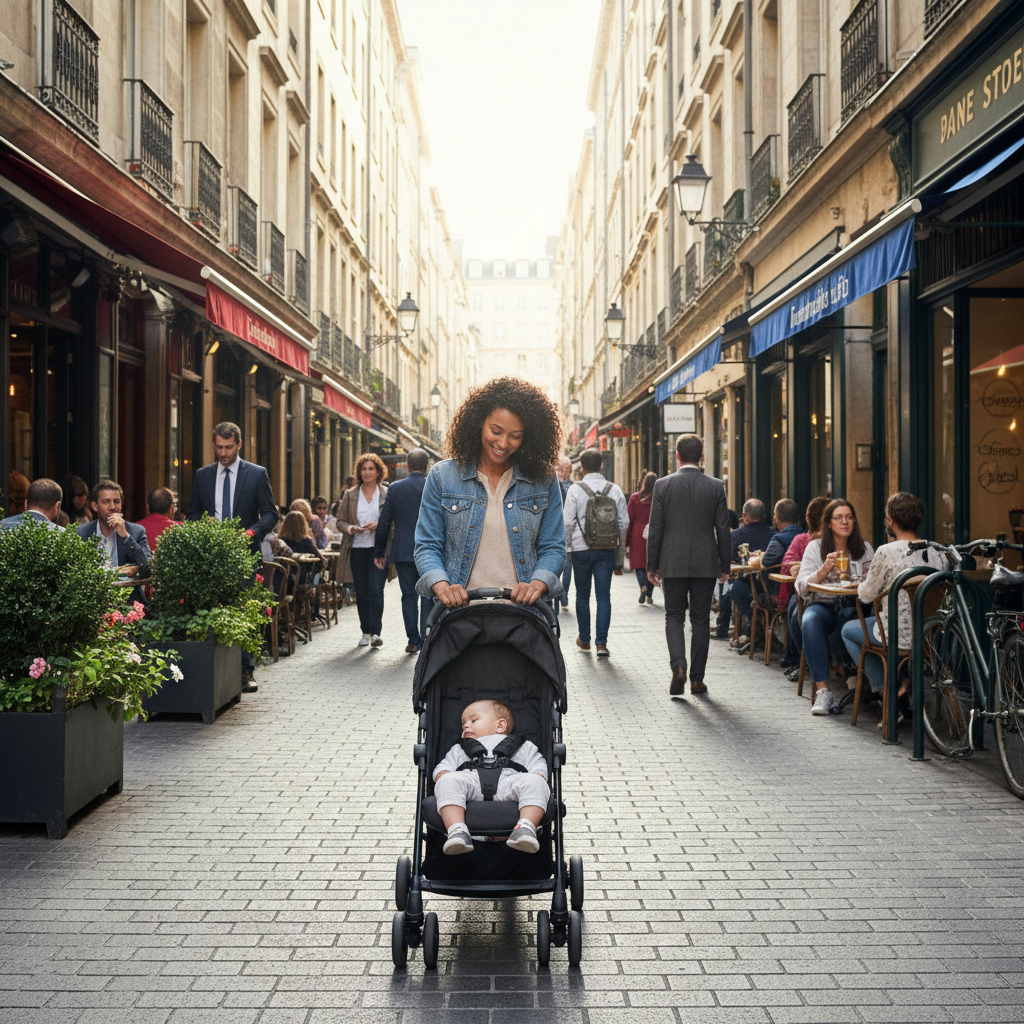
City parents do not need a stroller that is merely “good for travel.” They need one that can survive narrow sidewalks, curb cuts that are not where you need them, small coffee shops, subway stairs, apartment storage, and the weird geometry of trying to fold something one-handed while also holding a child, a bag, and your dignity. That is why the best travel strollers for urban environments are rarely the biggest, most feature-packed models. They are the ones that make city friction feel smaller.
If you want the short answer, look for four things first: compact width, easy maneuverability, a realistic fold for transit and taxis, and wheels that can cope with cracked pavement without making every block feel like a punishment. A city stroller should not just fit your baby. It should fit your route.
This guide is built around that reality. Instead of listing random models with generic praise, it focuses on the situations urban parents actually deal with every day: tight sidewalks, public transit, elevators that are somehow always full, small apartments, corner stores, and long city walks that look short on a map. From there, it becomes much easier to decide which stroller style deserves your money.
Quick Answer: What Makes a Travel Stroller Good for City Living?
A travel stroller works well in the city when it balances maneuverability, compactness, comfort, and fast everyday handling. That sounds obvious, but the city version of those words matters. Maneuverability means turning cleanly around pedestrians and store displays. Compactness means fitting through narrow sidewalks and apartment doors, not just folding eventually. Comfort means your child can actually stay in the stroller long enough for errands, commuting, and neighborhood walks to feel manageable.
A stroller that looks great in a suburban parking lot can feel completely different in an urban routine. What matters in the city is less about maximum size and more about how confidently the stroller moves through messy daily transitions. The American Academy of Pediatrics highlights fundamentals like working brakes, a secure restraint system, and locking mechanisms that stay engaged in its guide to choosing a safe baby stroller. For urban parents, those basics matter even more because your stroller gets used in tighter, faster-moving, more unpredictable spaces.
So before you compare brands, compare your life. Are you mostly walking on narrow sidewalks? Using buses and trains? Climbing apartment stairs? Taking taxis? Shopping on foot? The best stroller for commuters is not always the best stroller for rough sidewalks, and the best stroller for tiny apartments is not always the best stroller for long city walks.
The Urban Stroller Features That Actually Matter
Most “best stroller” roundups use the same recycled checklist. Urban parents need a sharper version of that checklist, because city frustration comes from details that look minor until you are dealing with them every day.
Narrow sidewalks and tight stores
If you regularly walk through older neighborhoods, crowded downtown blocks, or narrow retail aisles, stroller width matters more than people think. A stroller can be perfectly manageable on open pavement and suddenly feel oversized the minute you are squeezing past a sandwich board, a stroller coming the other way, or a packed coffee shop line.
That is why so many high-intent searches cluster around phrases like “best stroller for narrow sidewalks.” Parents are not only asking about size. They are asking about how a stroller behaves when space is limited. A good city stroller should feel responsive instead of defensive. You should be able to make a clean turn without wrestling the frame or planning your route three feet in advance.
Stairs, subways, buses, and taxis
Commuter life changes what “easy fold” actually means. In suburban shopping, a stroller can take a few extra seconds to collapse and nobody cares. On a train platform, in a bus aisle, or beside a taxi driver who is already loading bags, those extra seconds become the whole experience.
For commuters, one-hand fold is not a luxury feature. It is a stress-reduction feature. So is a stroller that stands neatly, lifts cleanly, and does not expand into an awkward shape the moment you try to carry it. This is why “best stroller for commuters” and “public transit” style queries deserve their own attention rather than getting buried inside a generic lightweight-stroller list.
Curbs, cracked pavement, and daily wear
Urban roads are rarely smooth for long. Curbs, uneven sidewalks, broken pavement, drain covers, and fast direction changes all put different pressure on a stroller than airport floors or mall tiles do. That is where wheel quality, steering response, and at least some useful suspension start to matter.
You do not need a giant all-terrain stroller to live in the city, but you do need a stroller that will not feel defeated by normal street conditions. That is why some of the strongest queries in GSC ask about durable wheels and rough sidewalks. Parents are not looking for off-road gear. They are looking for a stroller that still feels composed after weeks of real city use.
Basket access and apartment storage
City living also changes what “storage” means. In a large suburban home, you may care more about basket size alone. In a small apartment, you care about where the folded stroller goes, whether it stands cleanly, and whether the basket is actually usable when you are carrying groceries, a diaper bag, or quick errand supplies.
Good urban stroller design usually means making smaller things smarter: a basket you can reach without contorting, a folded shape that works in entryways or closets, and a frame you do not resent after the third time you lift it that day.
Best Travel Strollers for Urban Environments
This is the point where model examples become useful, but only if they are matched to real city use. Instead of pretending there is one perfect stroller for everyone, it is more honest to ask which stroller suits which urban routine best. A quick comparison also helps, because city parents often want more than broad praise. They want to know which model is lighter to carry, which one is easier to store, and which tradeoff comes with each design.
Before diving into the short reviews below, here is a practical snapshot of how these strollers compare for everyday urban use. Manufacturer-listed weights can change with accessories, so treat them as a helpful guide rather than the only reason to buy.
| Stroller |
Listed weight |
City-use strength |
Best for |
Tradeoff to note |
| Mamazing Ultra Air X |
9.0 lbs without organizer and cushion; 9.9 lbs with them |
Extremely easy to lift for stairs, transit, and fast transfers |
Commuters who fold and carry often |
Ultra-light builds usually ask you to be more selective about how much extra gear you hang on the stroller |
| Bugaboo Butterfly 2 |
Brand materials currently position it as a lightweight, compact travel stroller |
Quick fold and easy everyday movement in tight city spaces |
Errands, cafes, elevators, and frequent in-and-out stops |
It is a convenience-first choice, so compare basket and ride feel against your longer walking days |
| Joolz Aer+ |
13.2 lbs |
Neat compact fold that suits apartments and small entryways |
Families who care about clean storage and polished daily handling |
Not the lightest option in this group if stair carries are part of your routine |
| Mamazing Ultra Air Compact |
11.6 lbs without organizer and cushion; 12.8 lbs with them |
Balanced mix of portable weight and everyday comfort |
Parents who want one stroller for errands, walking, and occasional transit |
Less featherweight than the most commuter-focused models, but more rounded for mixed daily use |

Best for commuters: Mamazing Ultra Air X
If your days involve frequent folding, quick transfers, and carrying the stroller through stations, apartment entries, or tight urban stops, the Mamazing Ultra Air X is one of the strongest commuter-style picks in this group. Its biggest urban advantage is not just that it is light. It is that it stays practical when your day includes repeated "fold, carry, unfold, move again" moments. On the current Mamazing product page, it is listed at 9.0 lbs without the organizer and cushion, or 9.9 lbs with them, which gives city parents a clearer sense of what they are actually lifting.
This is the kind of stroller that suits parents who use public transit, live in buildings without effortless storage, or need something that feels quick instead of bulky. If your city routine is built around motion and transitions, the Ultra Air X makes more sense than a stroller that only feels good once it is already fully open and rolling. The tradeoff is that when you optimize heavily for carry weight, you should also stay realistic about how much gear you expect the stroller to manage on a long day out.
Best for narrow sidewalks and quick errands: Bugaboo Butterfly 2
The Bugaboo Butterfly 2 is a strong example of a stroller designed for families who want compact travel convenience without giving up day-to-day city usability. For urban parents, the appeal is simple: it is positioned as a lightweight, compact stroller with quick fold convenience and easy movement through tight places.
If your stroller life is full of cafes, sidewalks, elevators, and spontaneous errands rather than long suburban trunk hauls, this type of profile makes sense. It is the kind of stroller you choose when the question is not "Can it handle a huge basket load?" but "Will I still like this after using it three times before lunch?" The practical thing to compare here is not only folded size, but also whether the basket, seat comfort, and ride feel still match the longer walking stretches in your normal route.
Best for small apartments and a polished compact fold: Joolz Aer+
The Joolz Aer+ is worth comparing if your biggest urban friction points are storage and fold convenience. For apartment living, that matters. A stroller that is merely lightweight is not enough if it still becomes awkward in an entryway, under a table, or beside the door. Joolz currently lists it at 13.2 lbs, which is still portable, but more importantly, it points to the kind of compact stroller that earns its place indoors as well as outside.
Parents who live in compact homes often care less about maximum accessories and more about how cleanly the stroller fits into daily life when it is not being used. That is where the Aer+ style of compact, fold-first design becomes appealing. It suits families who want city mobility without a stroller that visually and physically takes over the room. If you carry a stroller up stairs often, though, it is worth noting that cleaner storage does not always mean the lightest carry in the lineup.
Best for all-around urban value: Mamazing Ultra Air Compact
If you want a strong middle ground between compact travel handling and everyday city comfort, the Mamazing Ultra Air Compact makes a lot of sense. It fits best for parents who want a stroller that can manage sidewalks, errands, smaller storage spaces, and daily walking without forcing them into the most minimal possible setup. On Mamazing's current product page, it is listed at 11.6 lbs without the organizer and cushion, or 12.8 lbs with them, which places it between an ultra-light commuter pick and a more comfort-led everyday stroller.
In city life, that balance matters. Some parents want the lightest possible fold. Others want a stroller that still feels comfortable enough for longer outings and more normal everyday use. The Ultra Air Compact is the kind of urban pick that works when your routine is mixed: walking, shops, apartment storage, occasional transit, and regular errands rather than one single use case only. That middle-ground profile is exactly why it can feel like better value for parents who do not want to buy one stroller for transit and another for everything else.

Best when wheel confidence matters more: compare your “city surface” reality first
Many parents search for the best stroller for rough sidewalks and curbs, but what they often need is not a specific brand as much as a better filter for evaluating wheels and ride feel. If your neighborhood includes broken pavement, steep curb cuts, and long walking routes, prioritize steering stability, wheel durability, and suspension over ultra-minimal design bragging rights.
This is also why I would not choose purely by folded size. A stroller can look impressively compact in a product video and still become tiring if your real route includes daily curb hops and rough blocks. Urban parents should choose based on the surfaces they actually push over, not the surfaces brands photograph most often.
One more thing urban parents often underestimate is how often a stroller is being judged in motion rather than at rest. A stroller may feel great in a showroom and still become frustrating when you are weaving around sidewalk planters, stepping into a tiny market, or trying to keep one hand free for a transit card. That is why city stroller picks should be judged on transitions, not just on parked photos and product specs.
Urban life also makes basket usability more important than many comparison articles admit. If you walk for errands, your stroller is often carrying more than a child: groceries, a jacket, a diaper bag, or the random things you buy because you are already out. A basket that looks big but becomes hard to reach once the seat reclines is much less helpful in real city use.
How to Choose Based on Your Real City Routine
The fastest way to choose well is to match the stroller to the part of city life that irritates you most right now.
-
If narrow sidewalks and tight stores are your main problem: prioritize compact width, responsive steering, and a stroller that does not feel oversized in close quarters.
-
If you commute by bus, subway, or train: prioritize one-hand fold, lighter carry weight, and a shape that is manageable when folded.
-
If you walk everywhere on rough pavement: prioritize better wheels, stronger steering confidence, and enough suspension to take the edge off urban wear.
-
If you live in a small apartment: prioritize folded footprint and how neatly the stroller stores when it is not in use.
-
If you want the most balanced city choice: look for a stroller that handles daily errands, corners, storage, and occasional transit without excelling in only one area.
This is also where your budget should stay tied to your route, not to marketing. A stroller that solves the wrong city problem is still the wrong stroller, even if it looks impressive in reviews. When possible, test how quickly you can fold it, how natural it feels to steer one-handed, and whether you can realistically lift it when your other hand is busy.
If your route changes a lot from day to day, favor balance over extremes. The best urban stroller is often not the tiniest, the cheapest, or the most luxurious. It is the one that feels consistently easy across sidewalks, transit, errands, and storage without forcing you to plan your day around the stroller itself.
That is also why specs should support your decision, not replace it. Weight, folded size, and wheel design are useful filters, but they only matter when they line up with the parts of city life that slow you down most. Paying more only helps if the feature actually removes friction from your daily routine.
If you want a broader urban comparison after this, Mamazing’s guide to foldable strollers for urban parents is a useful follow-up. If your main priority is a smaller city-friendly fold, the roundup on best compact travel strollers tested is also worth comparing before you buy.
Frequently Asked Questions About Urban Travel Strollers
What makes a stroller good for city living?
A city-friendly stroller should turn easily, fit through tighter spaces, fold quickly, and handle daily pavement wear without feeling heavy or clumsy. The best urban strollers solve space and movement problems, not just travel problems.
Is a travel stroller good enough for daily city use?
Often, yes. Many travel strollers work very well for city parents because compactness, easy fold, and maneuverability matter so much in urban life. The key is choosing one that still feels comfortable enough for your walking distances and pavement conditions.
Which stroller is best for narrow sidewalks?
The best choice is usually a stroller with a compact footprint and responsive steering rather than a wide, feature-heavy model. In practice, narrow sidewalks reward strollers that can turn neatly and pass through tight spaces without constant adjustment.
Do commuters need a one-hand fold?
Not every parent needs it, but commuters benefit from it more than almost anyone. If you regularly use buses, trains, taxis, or apartment stairs, a fast one-hand fold can remove a surprising amount of daily stress.
Are bigger wheels better for rough sidewalks and curbs?
Sometimes, but not automatically. What matters is the combination of wheel quality, steering feel, and enough suspension to cope with uneven pavement. Bigger wheels help only if the stroller still stays manageable in city spaces.
What stroller works best for small apartments?
Look for a stroller with a compact folded footprint and a shape that stores neatly when not in use. The best apartment-friendly stroller is one you can live with comfortably every day, not just one that looks lightweight in a product listing.
Final Takeaway
The best travel stroller for urban environments is not the stroller with the most hype. It is the one that makes your actual route easier: the one that fits narrow sidewalks, turns well in small shops, folds fast enough for commuting, and does not feel defeated by a week of city use.
That is why city parents usually do better when they choose by friction point instead of by feature list. If your biggest problem is commuting, choose for fold and carry ease. If your biggest problem is sidewalk width, choose for compact handling. If your biggest problem is rough pavement, choose for wheel confidence and ride feel. Once you do that, the shortlist becomes much clearer.
And if you are stuck between a few strong options, that is a good sign. It means you are no longer shopping for “a stroller.” You are shopping for your version of city life, which is exactly how this choice gets easier.




Traveling Abroad with a Stroller: How to Choose a Cabin-Approved Travel Stroller
Best Budget Travel Stroller: What to Check Before You Buy an Affordable Travel Stroller