
- by WengGracy
How to Help Your Baby Fall Asleep Independently
- by WengGracy
If bedtime has become a long loop of rocking, feeding, transferring, waking, and starting over, you are not doing anything wrong. Babies are wired to seek closeness. The goal of baby sleep training is not to make your baby need you less; it is to help them learn one small skill: falling asleep in the same safe place where they will wake later.
That difference matters. When a baby falls asleep in your arms and wakes in a crib, the change can feel startling. When they fall asleep in the crib with your calm support, night wakings often become less confusing. Gentle sleep training works best when it respects both sides of the equation: your baby needs safety and reassurance, and you need a bedtime that does not consume the whole evening.
This guide walks you through how to teach baby to self soothe using a gradual, responsive plan. It also covers what to do when your baby won't sleep alone, when to pause, and how to keep safe sleep at the center of the process.
Baby sleep training is any consistent approach that helps a baby learn to fall asleep with less hands-on help. It can be very gradual. It can include check-ins. It can preserve night feeds if your baby still needs them. It does not have to mean closing the door and ignoring every cry.
A more useful phrase is "independent sleep practice." You are practicing a sequence your baby can recognize:
Self-soothing does not mean your baby never cries. It means they slowly learn that the crib is familiar, bedtime has a pattern, and you will respond in a steady way. Some babies adapt in a few nights. Others need two weeks of smaller steps. Temperament, age, feeding patterns, illness, teething, travel, and parental consistency all change the timeline.
The most common mistake is changing the plan every night. One night you rock fully to sleep, the next night you try check-ins, the next night you bring baby into bed, and the fourth night you start over. Your baby is not being stubborn. They are reading the pattern. A gentle plan can still be firm enough to be understandable.
Before choosing a baby sleep training method, check the sleep setup. The American Academy of Pediatrics recommends placing babies on their backs for sleep on a firm, flat, non-inclined surface and keeping soft objects and loose bedding out of the sleep area; the AAP also advises room sharing without bed sharing for at least the first 6 months when possible. The CDC gives similar safe sleep reminders: back sleeping, a firm flat surface, and no blankets, pillows, toys, or bumper pads in the sleep space.

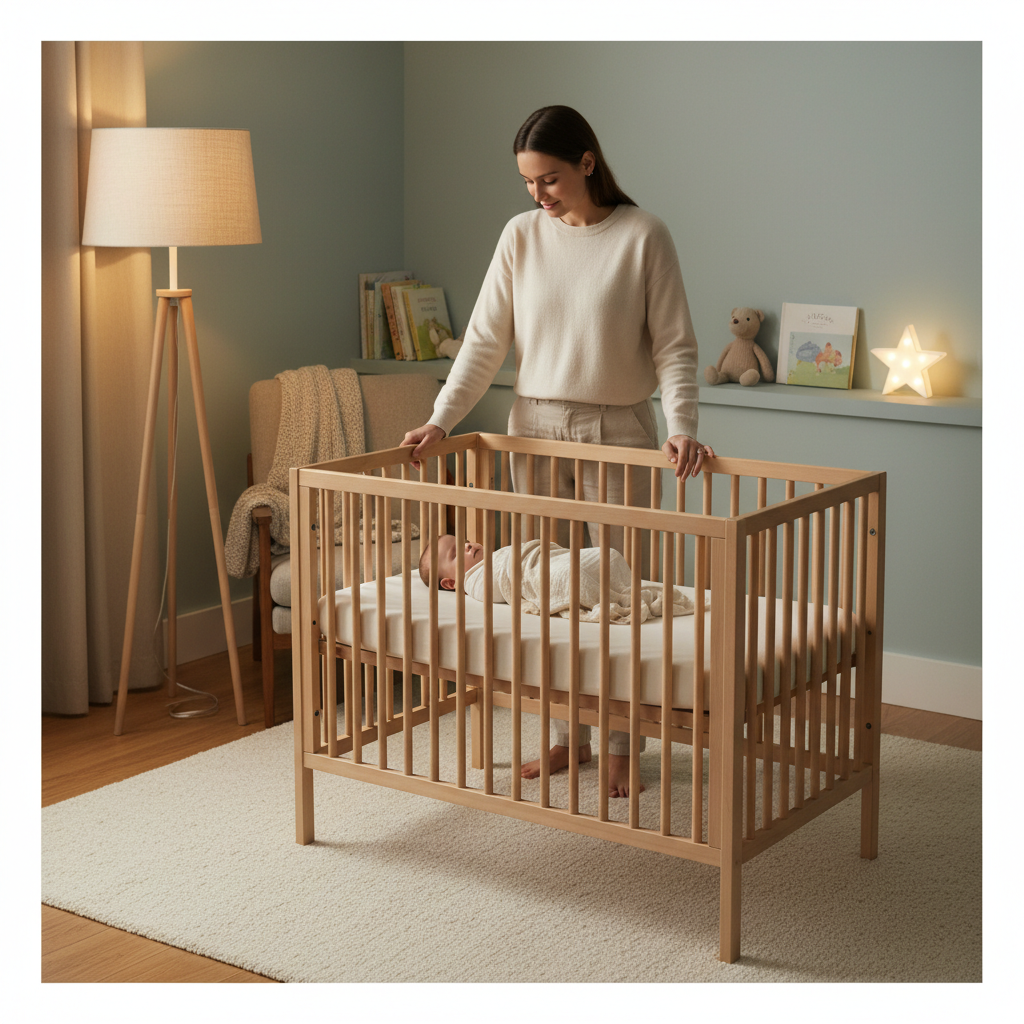
That means independent sleep should happen in a crib, bassinet, or play yard designed for infant sleep, not on a couch, adult mattress, nursing pillow, swing, car seat outside travel, or any soft surface. If you are preparing the room, choosing safe cribs can make the routine easier because your baby practices in the same safe place every night.
Keep the sleep environment boring in the best possible way. Aim for dim light, a comfortable temperature, a clean fitted sheet, and white noise if it helps mask household sounds. Skip mobiles that overstimulate at bedtime, loose blankets, stuffed animals, sleep positioners, weighted products, and anything that turns the crib into a play zone.
Safety also affects your mindset. You can be more consistent when you trust the space. If your baby protests, you are not wondering whether the mattress is safe or whether a blanket shifted. You can focus on the actual work: responding calmly without rebuilding the old sleep association.
It also helps to use the same sleep space for the first bedtime stretch every night. Consistency makes the crib feel less like a sudden separation and more like the next predictable step after feeding, pajamas, and your goodnight phrase.
Many families begin formal sleep training after the newborn stage, often around 4 to 6 months, but readiness is more than a number on the calendar. Ask three questions:
Newborns wake often because they need frequent feeding, comfort, and regulation. For very young babies, the "training" is simply building gentle cues: daylight during the day, dim light at night, a short calming routine, and safe sleep every time. You do not need to force independence before your baby is developmentally ready.
Pause baby sleep training during fever, breathing trouble, vomiting, poor feeding, major travel, a big move, or a new childcare transition. If sleep suddenly falls apart because of pain, illness, or teething, solve the cause first.
Also check yourself. Gentle sleep training asks for calm repetition, and that is hard when you are depleted. If you have a partner or another trusted caregiver, agree on the plan before bedtime. If you are doing it alone, write the plan down. At 2 a.m., your tired brain deserves a script.
Think of gentle sleep training as a ladder, not a leap. Start with the lowest step that changes the bedtime pattern. If it works, you do not need a more intense method.
A bedtime routine should be soothing, not elaborate. Try 20 to 30 minutes: feed, diaper, sleep sack, book or song, lights dim, crib. Put babies to bed drowsy but awake so they can associate the bed with falling asleep. The phrase "drowsy but awake" can be frustrating if your baby goes from happy to furious in twelve seconds, so use it as a direction, not a test you must pass perfectly.
Choose one sleep cue and repeat it every night: "It's sleep time. I love you. I'll check on you." Boring is useful. Your baby does not need novelty at bedtime; they need predictability.
Do not remove every comfort at once. Pick the strongest sleep association and soften it. If your baby feeds to sleep, move the feed earlier in the routine so it ends before the final song. If your baby is rocked fully to sleep, rock until calm, then hold still, then place in the crib. If your baby needs your hand on their chest, keep the hand there for a minute, then lighten the pressure.
The goal is not zero comfort. The goal is to separate comfort from the exact moment of falling asleep. That tiny space is where independent sleep grows.
Waiting for the perfect sleepy window can trap you. Put your baby down calm enough to try, even if their eyes are open. If they fuss, pause before rushing in. Some babies complain for a minute as they settle. If the fuss becomes escalating crying, use your chosen response.
There are several evidence-informed sleep training approaches, including graduated check-ins, camping out, and bedtime fading. For a gentle plan, two styles tend to feel manageable:
Both methods can work. The important part is that your response is predictable. If check-ins make your baby more upset, the chair method may fit better. If your presence turns into a long negotiation, timed check-ins may be clearer.
Most plans need several nights before you can judge them. The first night may be loud because the pattern changed. The second or third night may feel better, then worse, then better again. That unevenness does not mean you failed. Learning rarely looks tidy at bedtime.
Commit to one week unless your baby is sick, unsafe, or clearly not ready. Track bedtime, wake time, naps, feeds, and crying length. A simple note can show progress your tired body cannot feel yet.
Parents often hear "self-soothe" and imagine abandonment. A more accurate goal is co-regulation that slowly fades. At first, your baby borrows your calm. Over time, they need fewer cues to reach the same sleepy state.

Use a three-part response:
A sample script can help: "I hear you. You're safe. It's sleep time. I love you." Say it softly, then give your baby space. Avoid adding a new performance every time: extra songs, lights on, long rocking, a full feed when they are not hungry, or a phone flashlight in the crib. Those actions are loving, but they can accidentally teach your baby that bedtime keeps restarting.
If your baby gets very upset, pick them up to calm if your plan allows it. Then put them back down before sleep. This is the difference between responsive and inconsistent. You can comfort your baby without returning to the old pattern completely.
When a baby won't sleep alone, the issue is usually not one single thing. It may be timing, sleep pressure, separation, feeding, discomfort, or a sleep space that feels unfamiliar. Use troubleshooting before changing the whole method.
| What you see | Likely issue | Gentle adjustment |
|---|---|---|
| Falls asleep in arms, wakes on transfer | Strong holding association | Put down earlier, calm in crib, use brief touch. |
| Cries hard as soon as routine starts | Overtired or routine predicts separation | Move bedtime earlier and add calm connection before crib. |
| Wakes every 45-90 minutes | Needs same help to resettle | Use the bedtime response for non-feed wakes. |
| Sudden sleep refusal after good nights | Illness, teething, travel, new skill | Pause training, meet the need, restart when stable. |
If your baby only sleeps while touching you, start with the first stretch of the night. The first bedtime sleep is usually easier to change than 3 a.m. sleep. Once bedtime improves, use the same response for the first non-feed waking, then gradually for later wakings.
This plan is intentionally simple. Adjust for your baby's age, feeding needs, and pediatrician guidance.
Use the same bedtime routine both nights. End the feed before the final song. Put baby in the crib calm but awake. Use your chosen phrase. If crying escalates, check in after a short interval or stay in the chair beside the crib. Keep your response boring, warm, and brief.
If you have been patting continuously, pat for shorter periods. If you have been standing beside the crib, sit down. If you have been picking up every time, try soothing in the crib first. The change should be noticeable but not chaotic.
Use the same plan for bedtime and for night wakings that are not scheduled feeds or clear needs. If your baby still needs night feeds, keep them calm and low-stimulation. Feed, burp if needed, and return to the crib awake or drowsy so feeding does not become the only way to fall asleep.
At the end of the week, look for direction, not perfection. Is bedtime shorter? Is the first stretch longer? Are you doing less rocking? Is your baby falling asleep in the crib at least part of the time? Those are real wins.
Baby sleep training can be safe when your baby is developmentally ready, healthy, and always placed in a safe sleep space. Keep safe sleep rules separate from the method: back sleeping, a firm flat surface, and no loose bedding or soft objects.
Many families start gentle sleep training around 4 to 6 months, but readiness depends on feeding, growth, health, and your pediatrician's guidance. For newborns, focus on safe sleep, day-night cues, and a simple routine rather than formal training.
There is no single right number. Choose a response interval you can follow calmly, and shorten it if your baby is very young, sick, or highly distressed. Gentle sleep training is about predictable support, not ignoring real needs.
If your baby won't sleep alone after a week, review timing, naps, feeding, discomfort, and consistency before switching methods. You may need a smaller step, such as the chair method or reducing one sleep association at a time.
Yes. Sleep training does not have to remove needed night feeds. Keep feeds calm and predictable, then return your baby to the crib awake or drowsy so feeding does not become the only way to fall asleep.
You need a safe infant sleep space, such as a crib, bassinet, or play yard that meets current safety standards. Independent sleep should not be practiced on couches, adult beds, pillows, swings, or other soft or inclined surfaces.
Helping your baby fall asleep independently is not a referendum on how attached you are. It is a practical sleep skill, taught through routine, safety, and repetition. Start with the safest sleep space you can create, choose the gentlest step that changes the pattern, and give your baby time to learn.
If bedtime has felt impossible, begin tonight with one change: put your baby down just a little more awake than usual and respond with the same calm phrase. PatPat supports parents in building everyday routines that feel safer, simpler, and more sustainable, one night at a time.
Featured Products


Baby Waking Up Too Early: Causes and Fixes
Contact Napping: How to Transition Baby to Independent Sleep