
- by Gracyweng
Faint Line on a Pregnancy Test: What It Really Means
- by Gracyweng
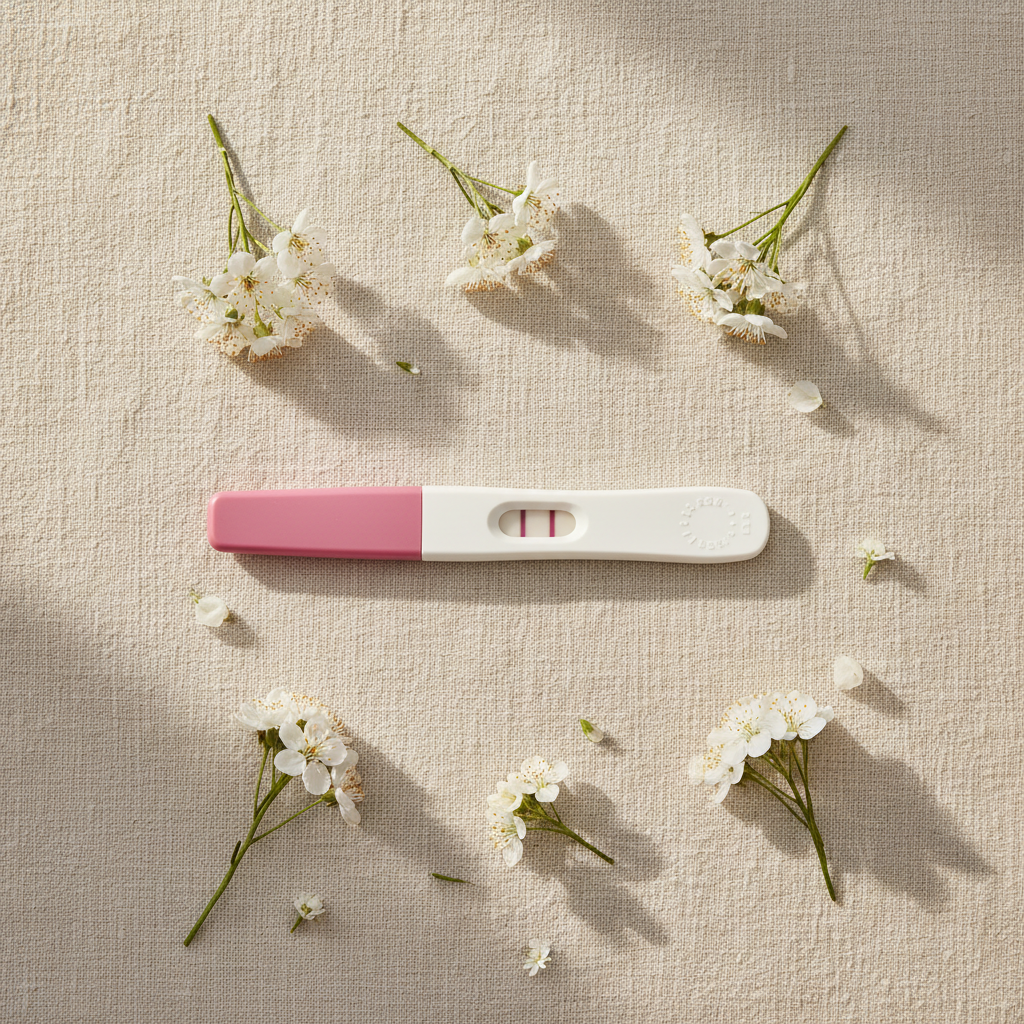
You stare at the test strip on your bathroom counter, heart pounding, eyes squinting. Is that a line? Is it your imagination? You hold it up to the light, snap a photo, invert the colors, and ask your partner — who, of course, sees nothing. If you have ever lived this moment, you are not alone. A faint line on a pregnancy test is one of the most-Googled, most-anxiety-producing experiences in early trying-to-conceive life, and here is the short answer most readers come looking for: a faint line on a pregnancy test, no matter how light, almost always means the test has detected hCG — the pregnancy hormone — and is generally considered a positive result.
This guide from Mamazing walks you through exactly what a faint positive pregnancy test means, how to tell a real faint line from an evaporation line, why your line might look so light, what to do next, and when to call your doctor. Whether you are 8 DPO with a "squinter" or staring at a faint line on a Clearblue or First Response test, you will find clarity here — and a calm next step.
A faint line on a pregnancy test means the test detected hCG (human chorionic gonadotropin) in your urine. Because hCG is only produced after a fertilized egg implants in the uterine lining, any visible colored line — even a barely-there one — typically indicates pregnancy. In medical and testing circles, the rule of thumb is simple: a line is a line.
Here is why the line can look so light at first. According to the Cleveland Clinic, hCG levels roughly double every 48 to 72 hours in early pregnancy. That means when you test at 9 or 10 days past ovulation (DPO), there may only be a tiny amount of hormone in your urine — enough for a sensitive test to detect, but not enough to produce a dark, obvious line. The darkness of the line correlates to how much hCG is in your sample at that moment, not to whether the pregnancy is viable.
So if you see a colored line within the test's reading window, even a whisper of one, the most likely explanation is that you are pregnant. The next steps are about confirming it and watching the line darken over the coming days.
This is the question that keeps women up at night, refreshing pregnancy forums at 2 a.m. The good news: once you know what to look for, the distinction becomes much easier.

An evaporation line forms as urine dries on the test strip after the chemical reaction window has closed. It is colorless, gray, or sometimes a faint white shadow — and crucially, it contains no dye. Evaporation lines usually appear after 10 minutes or more, well past the manufacturer's recommended reading time. They are an artifact of the test drying out, not a sign of pregnancy.
An indent line is a physical groove in the test strip where the antibody chemistry sits. It is visible even before you take the test — like a watermark or shadow under the right light. Like evaporation lines, indent lines have no color and do not indicate pregnancy. They become more visible when the strip is wet, which is why they sometimes get mistaken for a faint positive.
| Feature | Faint Positive | Evaporation Line | Indent Line |
|---|---|---|---|
| Color | Light pink or blue | Gray or colorless | Colorless / shadow |
| Timing | Within 3-5 min window | After 10+ minutes | Visible before testing |
| Contains dye | Yes | No | No |
| Indicates pregnancy | Yes | No | No |
| Darkens on retest | Yes (if pregnant) | No | No |
Read your test only within the manufacturer's reading window — usually 3 to 5 minutes, and never beyond 10. Toss the test once that window closes. If you keep staring at it on the counter half an hour later, what you are seeing is almost certainly evaporation, not a delayed positive.
If your faint line is real but lighter than you hoped, one of these explanations is usually behind it.
The most common reason. At 8 to 10 DPO, hCG levels are still very low. Only highly sensitive tests will pick up the hormone this early. According to Cleveland Clinic, home pregnancy tests can detect hCG as early as 10 days after conception, while many standard strips require 20-25 mIU/mL of hCG to trigger a clear line. If you keep getting negatives but still feel pregnant, our guide to hidden pregnancy signs when you test negative walks through the subtle symptoms most women miss in the first few weeks.
If you drank a large glass of water (or three) before testing, your hCG concentration is lower than it would be otherwise. The hormone is still there, but spread across more liquid, producing a fainter line.
Afternoon and evening urine is naturally more diluted. First morning urine (FMU) is the most concentrated sample of your day and gives the best chance of catching an early faint positive.
Pregnancy test sensitivity is measured in mIU/mL — the lower the number, the more sensitive. A 10 mIU/mL test will detect pregnancy days earlier than a 25 mIU/mL one. If you bought the cheapest box at the drugstore, that may be why your line is faint at the same DPO that another brand would show a clearer result.
Check the expiration date. Antibody chemistry degrades over time and after exposure to heat or moisture, which can produce weaker reactions.
Sometimes hCG rises briefly before a very early pregnancy loss. The faint line may appear, then fade on subsequent tests instead of darkening. This is heartbreaking, and we cover it in more detail below — but know that chemical pregnancies are common and rarely indicate a future fertility issue.
There is no minimum darkness threshold for a positive pregnancy test. If you see any colored line — pink, blue, or even a hint of either — within the reading window, that counts as a positive. The TTC community has even coined a name for the lightest possible results: "squinters," because you have to squint to see them.
If a squinter is fueling your anxiety, switching to a digital test can help. Digital tests translate the faint line into a clear "Pregnant" or "Not Pregnant" reading, removing the guesswork. They are usually a bit less sensitive than the most sensitive line tests, so wait a day or two if your line is extremely faint. Plenty of confirmed pregnancies started as barely-visible lines at 8 or 9 DPO and progressed to bold, unmistakable positives by 12 to 14 DPO. If you are also noticing tender or sore breasts, that is another classic early signal — our guide to breast pain in early pregnancy explains exactly where it hurts, what it feels like, and when it typically starts.
Timing matters enormously. Here is what to expect at various points in your luteal phase if you are pregnant.
| DPO | Typical hCG Level | What to Expect on Test |
|---|---|---|
| 8-9 DPO | 2-10 mIU/mL | Faint or no line (very early) |
| 10-11 DPO | 10-25 mIU/mL | Faint positive on sensitive tests |
| 12-13 DPO | 25-75 mIU/mL | Moderate line on most tests |
| 14 DPO (missed period) | 50-150 mIU/mL | Clear positive on most tests |
| 18-21 DPO | 200-1,000 mIU/mL | Strong positive, darkening line |
A faint line at 9 DPO on a sensitive test is normal and exciting — it usually progresses to a strong positive within a few days. If you are testing this early, expect to retest.
Here is the calm, step-by-step plan once you see that faint line within the reading window.

This moment can feel huge and scary even when it is exactly what you wanted. Whatever you are feeling — overjoyed, terrified, numb, or all three at once — is normal.
A chemical pregnancy is a very early pregnancy loss, usually before 5 to 6 weeks gestation. The fertilized egg implants and produces enough hCG to trigger a positive test, but the pregnancy does not progress. According to Healthline, chemical pregnancies account for between 50 and 75 percent of all miscarriages.
Signs of a chemical pregnancy include a faint positive that gets lighter or disappears on retesting, followed by a period that may be slightly heavier or later than usual. Most women who experience one go on to have healthy pregnancies. If you suspect a chemical pregnancy, your doctor can confirm with a blood test and help you process what happened, both physically and emotionally. Give yourself grace — early loss is real loss.
For anyone going through fertility treatment, the faint positive feels even more weighted. In the IVF community, "squinter BFP" (big fat positive) is shorthand for those first whisper-light lines after an embryo transfer.
A critical caveat: hCG trigger shots used in many fertility protocols can produce a false positive on home pregnancy tests for up to 14 days after the injection. This is why your clinic relies on serial beta hCG blood draws rather than home tests to confirm pregnancy. If you test at home and see a faint line during this window, do not panic in either direction — follow your clinic's specific retest schedule and trust their blood test results over the strip on your counter.
True false positives are extremely rare — under 1% of cases. A visible colored line within the reading window almost always means hCG was detected. Rare causes of false positives include recent pregnancy loss (residual hCG), certain fertility medications, and a handful of medical conditions involving tumors. A blood test will clear up any uncertainty.
Yes. A large volume of water dilutes urine and lowers hCG concentration, which can produce a faint line or even a false negative when you are very early in pregnancy. Use first morning urine, or hold your urine for at least four hours before testing.
Several possibilities: a chemical pregnancy, diluted urine, a different (less sensitive) test brand, or simply too little hCG progression in 24 hours. Retest in 48-72 hours with FMU and the same brand. If lines keep disappearing, call your provider.
Often, yes. Many bulk strip tests detect hCG from as low as 10 mIU/mL — more sensitive than some midstream brands. The key variables are sensitivity rating and using the correct reading window, not price.
Most OB-GYNs schedule a first prenatal visit around 8 weeks. Call sooner if you have had previous pregnancy losses, are post-IVF, are taking medications that need adjustment, or are experiencing pain or heavy bleeding.
PCOS itself does not directly cause false positives. However, some PCOS-related medications and conditions can affect hormone readings. A quantitative blood hCG test from your doctor is the most reliable way to confirm pregnancy if you have PCOS.
Once your faint line has darkened on retest and a blood hCG confirms the pregnancy, the journey shifts gears. The first trimester is mostly about your health — your OB-GYN appointment, prenatal vitamins, hydration, sleep, and gentle lifestyle adjustments. ACOG emphasizes early prenatal care as one of the strongest predictors of healthy outcomes for both you and your baby.
The second trimester, roughly weeks 13 to 27, is often when energy returns, nausea settles, and the pregnancy starts to feel more grounded. This is the window most parents-to-be use for nursery planning — and there is a quiet reason to start earlier than you might think. Many of the bigger nursery purchases have long lead times, and pre-planning lets you make calmer, more thoughtful decisions instead of last-minute ones. As the third trimester approaches, you will also want to think about what to pack for delivery day; our complete hospital bag guide covers what to bring, when to pack it, and what you can confidently skip.
Once that second trimester arrives and nursery planning begins in earnest, the nursing or glider chair is often the most-used piece of furniture in a newborn's room — it is where feeding sessions, night wakings, and early bonding happen. Choosing one that is comfortable and well-built is worth the early research. Mamazing's nursing chair collection covers styles from minimalist rockers to fully cushioned gliders to suit every nursery layout and personal taste.
Alongside the chair, selecting a safe, well-designed crib is the other cornerstone nursery purchase. Starting early removes the time pressure of ordering and assembly closer to your due date. Whether you are drawn to a convertible 4-in-1 design that grows with your child or a classic fixed-side crib, beginning your search now makes the final decision far less stressful. Explore Mamazing's crib collection to find designs that balance safety certifications, aesthetics, and long-term value.
If you remember nothing else from this guide, remember this: a faint line on a pregnancy test that appears within the reading window is, almost always, a real positive. hCG rises quickly in early pregnancy, so a faint line today is likely to be a darker line in 48 to 72 hours. Retest with first morning urine, switch to a digital test if you need extra reassurance, and call your healthcare provider to confirm with a blood test and book your first prenatal appointment.
Whether you are celebrating, processing, or somewhere in between, the team at Mamazing is rooting for you. From your first faint positive through nursery planning and beyond, we are here to make every step calmer, gentler, and more joyful. Take a breath, trust the process, and give yourself permission to feel everything you are feeling — this is a big, beautiful moment, no matter how light that little line started out.


1 Week Pregnant: Symptoms, Signs, and What's Really Happening in Your Body
How Soon Can You Take a Pregnancy Test?