
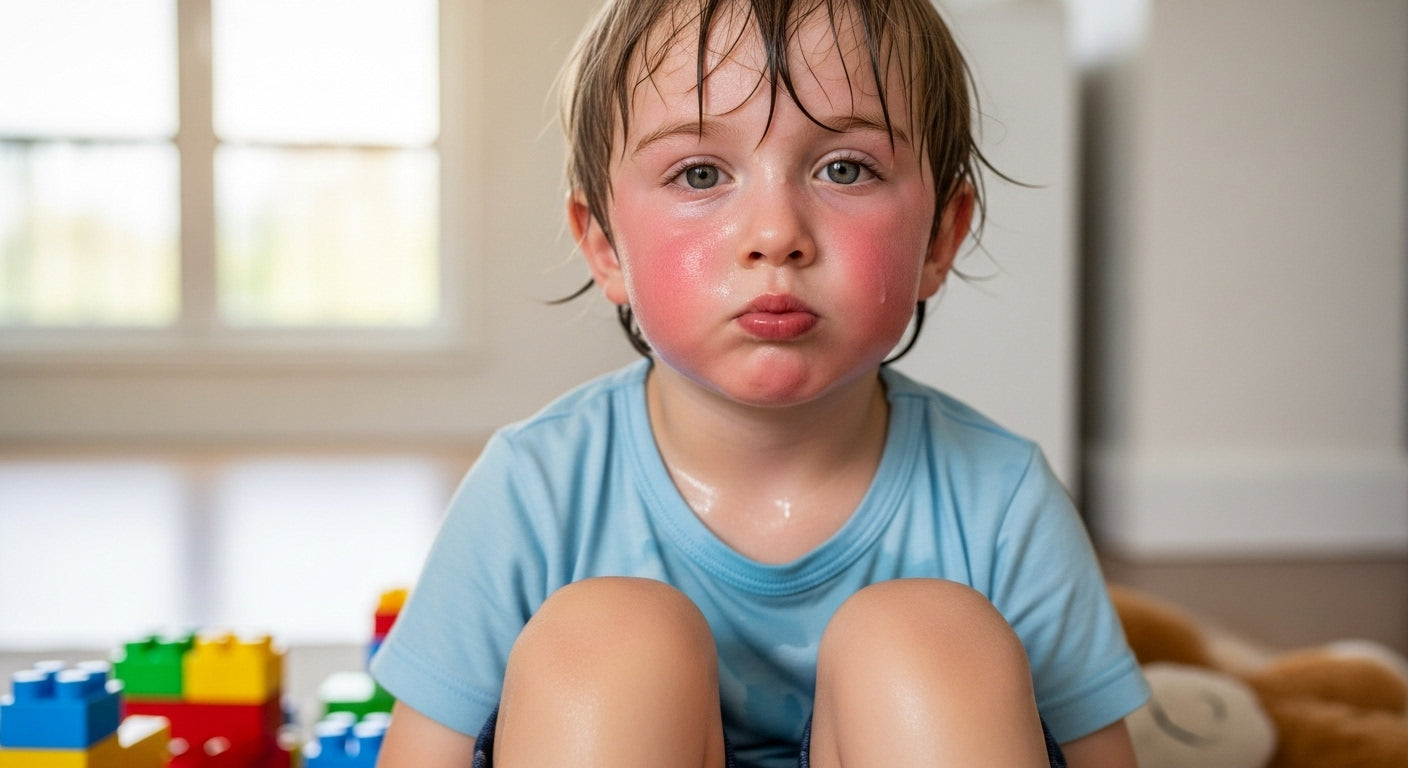
If your baby gets sweaty during sleep, feeding, or a warm stretch of the day, the most likely explanation is also the simplest one: babies run hot more easily than adults, and they cannot adjust their clothing, bedding, or position on their own. In many cases, baby sweating is normal. The question is not whether sweat can happen. The question is what else is happening with it.
That is why parents usually feel uneasy about the same handful of patterns. A sweaty head while sleeping feels different from sweaty hands and feet. Sweating during a long breastfeeding session feels different from sweating with fast breathing. A warm, damp baby without a fever feels different from a baby who suddenly looks pale, tired, or hard to wake. You do not need a complicated checklist for every moment, but you do need a clear way to sort normal cooling from a sign that your baby is struggling.
This guide walks you through that decision in plain language. You will learn what sweating usually means during sleep, feeding, play, and hot weather; what “baby sweating but no fever” should make you check first; and which red flags mean you should call your pediatrician sooner rather than later.
Key Takeaways
- Most baby sweating is related to sleep, feeding effort, warm rooms, extra layers, or active crying and is not dangerous by itself.
- A sweaty head while sleeping is often a setup clue: your baby may be warm, pressed into the mattress, or dressed too heavily for the room.
- Sweating during feeds deserves more attention if your baby also breathes fast, tires out quickly, feeds poorly, or is not gaining weight well.
- If your baby is under 3 months old and has a rectal temperature of 100.4°F (38°C) or higher, call your pediatrician right away.
- When you are unsure, check the whole picture: temperature, breathing, feeding, alertness, and color matter more than sweat alone.
Quick Answer: When Baby Sweating Is Normal vs Concerning
Here is the short version: sweating is often normal when your baby is in a warm room, overdressed, pressed against you during feeding, working hard to feed, crying hard, or sleeping with the head and neck resting against a surface. It becomes more concerning when sweating shows up together with labored breathing, feeding trouble, unusual sleepiness, color change, fever, or poor weight gain.
If you like quick rules, use this framework: normal sweating usually improves when you cool the room a little, remove a layer, pause for a feed break, or settle your baby. Concerning sweating keeps happening even when the environment is reasonable, or it arrives with other symptoms that suggest your baby is ill, working too hard to breathe, or working too hard to eat.
| Pattern | Usually reassuring if... | Call your pediatrician if... |
|---|---|---|
| Sweaty head while sleeping | Your baby sleeps normally, wakes normally, and seems comfortable after a layer or room adjustment. | Your baby also snores loudly, pauses breathing, seems hard to wake, or looks too hot even in a safe sleep setup. |
| Sweating during feeding | Feeds are otherwise steady, your baby finishes, and weight gain is on track. | Your baby tires quickly, breathes fast, takes long breaks, or feeds poorly. |
| Sweaty hands and feet | Your baby looks well, skin color is normal, and the sweat happens during warmth, swaddling, or activity. | Hands and feet feel persistently clammy with poor feeding, lethargy, breathing changes, or unusual color. |
| Sweating with a raised temperature or illness symptoms | Mild sweating can happen when a fever breaks and your pediatrician has already guided you. | Your baby is younger than 3 months with a rectal temp of 100.4°F (38°C) or higher, or seems sick regardless of the number. |
Why Babies Sweat More Easily Than Adults
Babies are not tiny adults with tiny symptoms. They rely on you for nearly every temperature adjustment. They cannot kick off a blanket, move away from your body heat, ask for lighter pajamas, or tell you that a room felt comfortable at bedtime but too warm by 2 a.m. That makes sweating more common and more noticeable, especially in the first year.
They also spend a lot of time in situations that trap warmth: contact naps, feeds against your chest, car seats, carriers, swaddles, sleep sacks, and tightly tucked rooms. Even a baby who is perfectly healthy can get sweaty in these settings. In other words, sweat is often a clue about the environment or the effort of the moment, not proof that something is wrong.
What helps most is learning to read sweating in context. If your baby is alert, feeding well, breathing comfortably, and settles when you lighten clothing or cool the room, you are probably looking at normal temperature regulation. If sweat keeps showing up with low energy, breathing changes, or poor feeding, you need to think beyond the thermostat.
Baby Sweating While Sleeping: Head, Neck, and Back Clues
Sleep is the setting that worries parents most, especially when the head or hair feels damp. In many babies, sleep-related sweating is still normal. The head is uncovered, pressed against the mattress, and often the warmest part of the body during active sleep. A sweaty neck or upper back can also happen when pajamas, swaddles, or a sleep sack are too insulating for the room.

Why the head often gets sweaty at night
A sweaty head at night is usually more about contact, layering, and room conditions than disease. If your baby falls asleep against you, rests on one spot for a long stretch, or wears fleece sleepwear in a room that warms up overnight, the head may feel much sweatier than the rest of the body. That can look dramatic without being dangerous.
The more useful question is whether the rest of the sleep picture is reassuring. If your baby wakes to feed normally, looks comfortable, and cools down quickly once you pick them up or change a layer, that pattern is usually low risk.
How to cool the room without making sleep unsafe
HealthyChildren's safe sleep guidance recommends dressing your baby in no more than one layer more than you are wearing and keeping the sleep space free of loose bedding and soft objects. That matters because the goal is not to make the room cold. The goal is to avoid accidental overheating while keeping sleep safe.
If your baby keeps sweating at night, think through the setup in order: room temperature, sleep clothing, swaddle or sleep sack thickness, whether the crib is near a heat source, and whether your baby tends to fall asleep fully against you before transfer. If you need more help with the environment itself, Mamazing's guide to creating a calm sleeping space for your baby is a useful next read.
Sweating During Feeding: When It Is Expected and When It Is Not
Feeding is work. Babies latch, suck, coordinate breathing, stay organized, and manage full-body contact with you at the same time. That is why some sweating during breastfeeding or bottle-feeding can be completely normal, especially in a warm room or during long feeds. Your body heat also adds warmth quickly, which is one reason a sweaty forehead during feeds is so common.
What matters is whether your baby still feeds effectively. A baby who sweats a little while nursing but feeds well, seems satisfied, and gains weight appropriately usually does not raise the same concern as a baby who becomes drenched, breathes fast, pulls off often, tires quickly, or never seems able to finish a feed.
Seattle Children's guidance on newborn illness lists sweating during feedings and sudden feeding changes as reasons to seek prompt care in a newborn. The American Heart Association also notes that infants with congenital heart disease or heart failure may sweat during feeds and also show fast breathing, fatigue, or poor weight gain. That does not mean every sweaty feed points to a heart problem. It means sweating should never be judged alone when feeding itself is getting harder.
If this section sounds close to your situation, pay attention to patterns. Does sweating happen only during long cluster feeds in the evening, or every single feed? Does your baby stay pink and calm, or look pale and frustrated? Is weight gain steady? That bigger picture tells you far more than the sweat alone.
Sweaty Hands, Feet, or Back: What These Patterns Usually Mean
Parents often worry most about sweaty hands and feet because they can feel odd: warm but damp, or cool and clammy at the same time. In many babies, this still falls into the normal range. Hands and feet can feel sweaty during swaddling, sleep, crying, active play, or a warm car ride. A sweaty back is also common when your baby has been pressed into a surface for a while.
The key difference is whether the sweat is isolated or part of a broader “my baby does not look right” picture. If your 2- to 4-month-old has sweaty feet after a nap but wakes smiling and hungry, that is very different from a baby with clammy skin, poor feeding, weak energy, unusual color, or breathing changes.
That is why high-impression searches such as “3 month baby sweaty feet” and “3 month old baby clammy hands and feet” should not be answered with panic or with dismissiveness. Most of the time, they point to normal regulation plus a warm setup. But if the word you keep wanting to use is not “sweaty” but “clammy,” and your baby also seems unwell, trust that instinct and call.
Baby Sweating but No Fever: What to Check First
“My baby is sweating but has no fever” is one of the most useful search questions because it naturally pushes you to check the right things. Start with the basics before you assume illness: how many layers is your baby wearing, what is the room like right now, was your baby just asleep or feeding, are the hands and feet warm or just damp, and does your baby otherwise seem like themselves?
If the temperature is normal, common explanations include a warm sleep environment, too many layers, contact heat during feeding or carrying, active crying, or heat rash conditions. MedlinePlus explains that heat rash in babies is common in hot or humid conditions and is more likely when babies are dressed too warmly or airflow is limited. That is one reason sweat without fever often points you back to clothing and environment first.
It is also worth remembering what sweating does not tell you. Sweating cannot rule a fever in or out by itself. If your baby feels hot, fussy, or just “off,” use a thermometer instead of your hand. And if you are wondering whether teething explains everything, keep this in mind: HealthyChildren notes that teething can slightly raise temperature, but it does not cause a true fever. If the number is high or your baby looks sick, treat it like illness, not like teething.
For more on baby fever thresholds and next steps, Mamazing's baby fever guide is the right companion article.
When Baby Sweating Can Signal a Medical Problem
Most sweating is benign, but there are situations where it belongs in the same sentence as “call now.” The biggest red flags are not really about sweat quantity. They are about effort and illness: sweating with fast breathing, sweating with poor feeding, sweating with unusual fatigue, sweating with color change, or sweating with fever in a very young baby.
Red flags that need prompt care
Call your pediatrician sooner if your baby is sweating and also seems hard to feed, hard to wake, blue or pale around the lips, breathing faster than usual, pulling in at the ribs, grunting, vomiting repeatedly, or gaining weight poorly. If sleep is the main concern, Mamazing's article on baby breathing fast while sleeping can help you tell apart common sleep sounds from breathing that needs attention.
One more point parents sometimes miss: a newborn can look “mostly okay” and still need to be seen promptly. That is why sweating matters more in the first weeks of life than it might in an older baby who is otherwise thriving.
The newborn fever rule
HealthyChildren says that a rectal temperature of 100.4°F (38°C) or higher is a fever, and if your baby is 3 months old or younger, you should call your pediatrician immediately. That rule matters even if your baby is not sweating much at all. Likewise, if your baby is sweaty and you cannot tell whether the issue is heat, illness, or poor feeding, the thermometer and the overall behavior pattern will tell you more than touch alone.
How to Help a Sweaty Baby Safely
You do not need to overcorrect every damp forehead. The safest response is usually calm, simple, and reversible.

- Remove one layer and reassess after a few minutes.
- Switch to breathable fabrics and avoid heavy fleece unless the room truly calls for it.
- Check whether the room warmed up after bedtime, especially near windows, heaters, or direct sun.
- During feeds, try a cooler room, lighter clothing, and brief pause breaks if your baby is getting flushed.
- If sweat seems linked to hot, humid conditions or blocked airflow, think about heat rash prevention as well.
What you do not need is aggressive cooling. Ice packs, fans blowing directly on a baby, or stripping your baby down completely can make things worse, not better. The right move is gradual adjustment plus observation.
If sweating seems tied to teething discomfort and sleep disruption rather than heat, you may also want to read Mamazing's safe infant teething remedies guide so you can separate teething fussiness from illness more confidently.
Age-by-Age Guide: Newborns, Young Infants, and Older Babies
Newborn to 3 months: be more cautious. A warm room or contact sleep can still explain sweating, but this age group gets less margin for watch-and-wait. Sweating during feeds, trouble finishing feeds, unusual sleepiness, or any true fever deserve quick attention.
About 3 to 6 months: this is when parents often notice sweaty heads, sweaty feet, and sweating during breastfeeding more clearly because babies are stronger feeders, more active sleepers, and often still layered heavily. In this age range, context matters a lot. A happy baby with sweaty feet after a nap is very different from a baby who looks clammy and feeds poorly.
Older babies and toddlers: you may see more sweating around active sleep, movement, hot weather, and big developmental changes. The same rule still holds: isolated sweat is rarely the real problem. Sweat plus low energy, breathing trouble, dehydration, or a concerning fever pattern is the real signal.
Frequently Asked Questions About Baby Sweating
Why does my baby sweat while sleeping?
Babies often sweat while sleeping because they are warm, layered too heavily, or resting with the head and back against one surface for a long stretch. If your baby otherwise sleeps, wakes, and feeds normally, this is often a sleep setup issue rather than a medical emergency.
Is a sweaty head while sleeping normal?
Yes, a sweaty head while sleeping can be normal, especially if the room is warm, your baby is wearing too many layers, or the head has been pressed against the mattress or your body. It is more concerning if the sweating comes with noisy breathing, long pauses, or unusual difficulty waking.
Why are my baby's hands and feet sweaty?
Sweaty hands and feet are often caused by warmth, swaddling, sleep, or activity. If your baby looks well and feeds normally, sweaty hands and feet alone are usually not a sign of danger. If the skin seems clammy and your baby also looks unwell, call your pediatrician.
What if my baby is sweating but has no fever?
If your baby is sweating but has no fever, first check clothing layers, room warmth, recent sleep, feeding effort, and whether your baby otherwise seems comfortable. Sweating without fever is often environmental. It deserves more attention if it keeps happening with poor feeding, breathing changes, or unusual tiredness.
When should I worry about baby sweating?
You should worry more about baby sweating when it happens with fast breathing, feeding trouble, low energy, poor weight gain, color change, or a true fever. In babies 3 months old or younger, a rectal temperature of 100.4°F (38°C) or higher needs immediate medical advice.
Does sweating during breastfeeding mean something is wrong?
Not always. Many babies sweat a little during breastfeeding because feeding is work and body contact adds warmth. It is more concerning when sweating during breastfeeding comes with fatigue, rapid breathing, repeated feed breaks, or trouble gaining weight.
Final Takeaway
If you remember only one thing, remember this: baby sweating is common, but sweat should never be judged by itself. Look at the whole picture. A well-appearing baby who cools off after a small environment change is very different from a baby who sweats while struggling to feed, breathe, or stay alert.
That is also the most useful way to protect your peace of mind. You do not have to react to every damp head as an emergency, and you do not have to ignore your instincts when sweating comes with real red flags. If your baby seems off, trust the pattern, not just the perspiration. And if you want a few closely related reads for the next question parents usually ask, Mamazing has you covered on baby fever, breathing during sleep, and building a calmer sleep space.
Newborn Congestion: How Long It Lasts, When It Goes Away, and What to Do
Contact Nap Positions for Newborns: Safe Contact Napping Guide and When to Stop