
- by WengGracy
What's the Difference Between a Stroller and a Pram?
- by WengGracy
If you have searched for a "pram stroller," you have probably noticed something odd: some brands use pram, some use stroller, and some use both for the same product. That can make a simple baby-gear decision feel like a vocabulary test you did not sign up for.
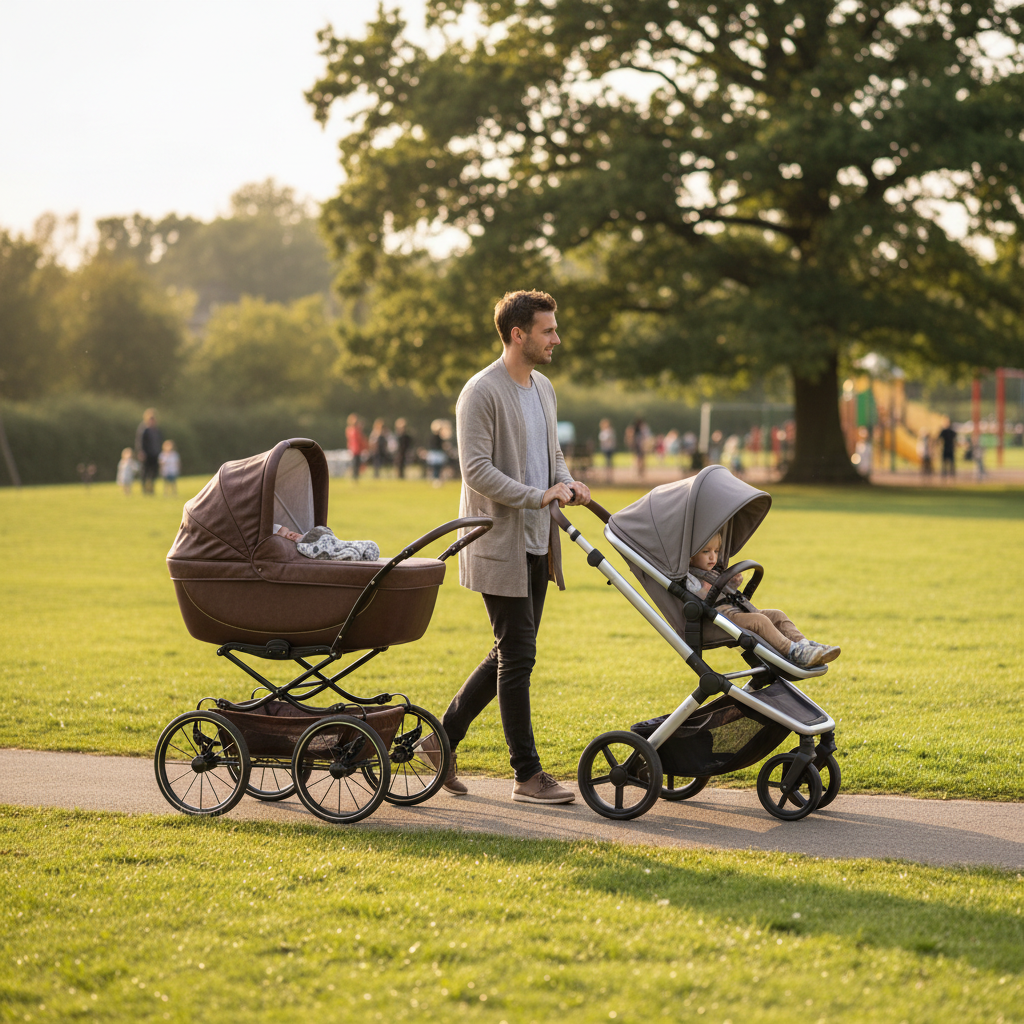
Here is the quick answer. A pram usually means a bassinet-style baby carriage designed for a young baby to lie flat. A stroller usually means a wheeled seat that lets a baby or toddler sit upright or semi-reclined. In everyday shopping, the words can blur, especially when a stroller frame accepts a bassinet attachment. But the design difference still matters, because newborn support, folding size, travel use, and daily convenience are not the same.
This guide walks through pram vs stroller language, the stroller definition parents actually need, what is a pram in practical terms, and how to choose the right setup for your baby's stage. If you are comparing Mamazing stroller options, this will also help you understand what type of product you are really looking for before you buy.
The simplest way to compare a pram and stroller is to look at the baby's position. A traditional pram is built around a flat bassinet or carriage body. A stroller is built around a seat. The U.S. federal stroller and carriage safety rule makes a similar distinction: carriages are wheeled products intended to transport infants lying down, while strollers transport children sitting up or semi-reclined, according to 16 CFR Part 1227.
| Feature | Pram | Stroller | Best Fit |
|---|---|---|---|
| Baby position | Flat lying | Sitting or reclined | Age and head control |
| Typical stage | Newborn months | Baby to toddler | Longer everyday use |
| Portability | Usually bulkier | Often foldable | Travel and errands |
| Shopping term | Carriage or bassinet | Seat stroller | Check product specs |
The language also changes by country. In the U.K. and Australia, "pram" is common in everyday speech. In the United States, "stroller" is the word most parents use. That is why a U.S. parent searching "what is a pram" may be looking at a product that another parent would call a bassinet stroller, carriage, or newborn stroller setup.
A pram is a wheeled baby carriage with a flat sleeping-bassinet style body. It is usually designed for younger babies who are not ready to sit with strong head and neck control. If you picture a baby lying on their back in a deep carriage, you are picturing the classic pram shape.

The appeal is obvious. A pram feels cozy, protective, and newborn-focused. It gives a young baby room to lie flat during walks, and it often looks more like a portable bassinet than a compact stroller seat. That can be helpful in the early months when parents want a setup that feels calm and supportive.
The tradeoff is practicality. Traditional prams can be larger, heavier, and less fold-friendly than many stroller designs. They may be lovely for neighborhood walks but awkward in small car trunks, apartment hallways, crowded stores, or airport security lines. A pram can be wonderful when your routine supports it. It can feel frustrating when your routine asks for quick folding, shoulder carrying, and tight turns.
One more detail matters: a pram is not automatically a safe sleep product just because it is flat. Always follow the manufacturer's approved use, age range, weight limits, and supervision guidance. For routine infant sleep, the American Academy of Pediatrics advises parents to use a firm, flat, non-inclined sleep surface, as summarized in HealthyChildren's safe sleep guide.
The practical stroller definition is simple: a stroller is a wheeled baby transport product with a seat. That seat may be upright, deeply reclining, parent-facing, forward-facing, full-size, lightweight, or compact. The common idea is that the baby is supported in a seat rather than lying in a pram-style bassinet.
Strollers are popular because they stretch across more of family life. A good stroller can handle errands, park walks, school pickup, travel days, and toddler outings. Many fold more compactly than a traditional pram, and some are designed specifically for airplane travel or everyday city use.
That does not mean every stroller is right for every baby. A newborn needs a setup that supports their body appropriately. An older baby who can sit well may benefit from a more upright seat, better view, and secure harness. A toddler may need stronger weight capacity, durable wheels, and easy in-and-out access.
If your question is less "pram vs stroller" and more "which stroller type fits real life," Mamazing's travel stroller vs everyday stroller guide is a helpful next step. It compares the kind of daily tradeoffs that matter once you know you want a stroller-style seat.
A pram stroller combo usually means a stroller frame that can take a bassinet or carriage attachment for the newborn stage, then switch to a regular stroller seat later. This is where shopping language gets messy. A product may be called a pram stroller, bassinet stroller, 2-in-1 stroller, convertible stroller, or travel system depending on the brand.
A convertible setup can make sense if you want one main frame from the newborn months into toddlerhood. In the early stage, the bassinet attachment gives the lie-flat pram feel. Later, the stroller seat gives your baby more visibility and flexibility. For many families, that feels more practical than buying a traditional pram for a short period and a separate stroller later.
But check the details carefully. The words on the box are not enough. Look for:
A pram stroller combo is best when it fits your actual routine. If you mostly walk from home and have space, the bassinet mode may feel worth it. If you travel often, use rideshares, or live upstairs, a lighter stroller may serve you better once your baby is old enough for it.
Parents can get stuck on the vocabulary, but the real question is whether the product matches your baby's stage. HealthyChildren, the American Academy of Pediatrics parent site, advises parents to choose a stroller that matches the child's age, height, and weight, and to look for practical safety features such as a wide base, brakes, and a secure restraint system in its safe stroller buying guide.
For newborns, the key issue is support. A very young baby cannot sit like an older baby. That is why flat carriage-style prams, approved bassinets, or stroller systems specifically rated for newborn use exist. For older babies, a secure stroller seat can be more useful because they can look around, interact, and sit with better support.
Before using any pram stroller setup, confirm these basics:
If you want a broader safety and lifestyle checklist, Mamazing's how to choose a baby stroller guide goes deeper into age fit, safety features, and common buying mistakes.
Start with your baby, then your routine, then the product category. That order sounds almost too obvious, but it prevents a lot of regret. Parents often buy the image first: the elegant pram, the tiny travel stroller, the feature-packed full-size system. The better move is to ask what the product must do every ordinary day.

Choose a pram-style setup if:
Choose a stroller if:
Choose a convertible pram stroller if:
For families who travel often, portability deserves extra weight. A beautiful carriage that is difficult to fold may become a special-occasion item instead of a daily helper. Mamazing's compact travel stroller guide can help you think through fold size, packing, and real-life travel use.
The first mistake is buying by word alone. "Pram," "stroller," "carriage," and "travel system" are useful clues, but they are not substitutes for specifications. A product called a pram may not fit your car. A stroller with a deep recline may still not be approved for your newborn. A travel system may include a car seat, but that does not mean the car seat should become a routine sleep space.
The second mistake is assuming a bigger product is always safer or more comfortable. Bigger can mean smoother wheels, more storage, and a sturdier feel. It can also mean hard lifting, awkward folding, and a product that gets left at home. Comfort belongs to the whole family routine, not just the seat padding.
The third mistake is planning only for the first month. A newborn-focused pram can be wonderful, but babies grow quickly. If you choose a single-stage product, know what your next stage will be. If you choose a convertible setup, make sure you actually like the stroller seat you will use later.
The fourth mistake is ignoring the caregiver. Parents push, lift, fold, store, clean, and steer the stroller. If one caregiver is much shorter, taller, recovering physically, or often managing stairs alone, the "best" product on paper may not be the best product at home.
A good pram stroller choice should make the next outing easier. It should not create a new puzzle every time you leave the house.
Imagine three families looking at the same search results. The first family has a newborn, a walkable neighborhood, and enough storage by the front door. A pram or convertible pram stroller could make sense because the baby gets a flat carriage mode and the parents are not lifting the product in and out of a car five times a day.
The second family lives in an apartment, uses elevators and rideshares, and wants one product that can fold quickly. A traditional pram may feel beautiful but too demanding. Once the baby is ready for an approved stroller seat, a compact stroller may fit that family's life better than a large carriage system.
The third family is still months away from birth and wants to buy once. A convertible pram stroller can be a smart middle path, but only if both modes are genuinely useful. The bassinet should work for the newborn stage, and the stroller seat should still feel good after the baby is older. If you dislike the toddler seat, the "one system" advantage disappears.
That is the quiet truth behind pram vs stroller shopping: the best choice is not the one with the most elegant name. It is the one that keeps showing up for the ordinary parts of parenting, like getting through the doorway, folding before rain starts, steering with one hand, and giving your baby the right support for their stage.
So, what is the difference between a stroller and a pram? A pram is usually a flat, bassinet-style carriage for a young baby. A stroller is usually a wheeled seat for a baby or toddler who can use that seat according to the product guidance. A pram stroller combo blends both ideas by using a stroller frame with newborn and older-baby modes.
The name matters less than the fit. Look at your baby's age, your storage space, your travel habits, and the product's approved use. If you want a stroller that supports real family life beyond definitions, Mamazing can help you move from "what does this word mean?" to "which stroller will I actually enjoy using?" You can also browse Mamazing's top strollers guide when you are ready to compare lightweight options.
Not exactly. A pram usually has a flat carriage or bassinet for a young baby, while a stroller usually has a seat for a baby or toddler to sit upright or semi-reclined. In shopping language, some convertible products are called pram strollers because they offer both modes.
A pram is used to transport a young baby in a flat, carriage-style position during walks or outings, following the product's approved age, weight, and supervision guidance. It is most associated with newborn and early-infant use.
A stroller is a wheeled baby transport product with a seat. Depending on the model, the seat may recline, face the parent, face forward, fold compactly, or support older babies and toddlers through daily outings.
A newborn can use a stroller only if that stroller or attachment is approved for newborn use. Many newborn setups use a bassinet, carriage mode, or fully supported infant mode. Always check the product manual and age guidance.
Switch when your baby meets the stroller seat's age, size, and developmental guidance and when the pram mode no longer fits your routine. Many families transition as the baby gains better head and trunk control, but the product manual should guide the exact timing.
Pram stroller usually means a stroller system that includes a bassinet-style pram mode, or a product marketed to parents comparing prams and strollers. Check whether it has a true bassinet, a reclining seat, or separate attachments.
A stroller is usually better for travel because it is often lighter, more compact, and easier to fold. A pram may be better for slow newborn walks, but it can be bulky for cars, airports, and crowded spaces.
Americans usually say stroller. Pram is more common in places such as the U.K. and Australia, though U.S. shoppers may still see pram used for bassinet-style or convertible stroller systems.
Featured Products


Global Mother's Day Greetings 2026: Dates by Country, Languages, and Messages
Newborn Feeding Schedule: Breastfeeding, Formula, and Combo Feeding