
- by xiaoyuyang
Newborn Crying in Sleep: Is It Normal, Active Sleep Signs, and When to Worry
- by xiaoyuyang
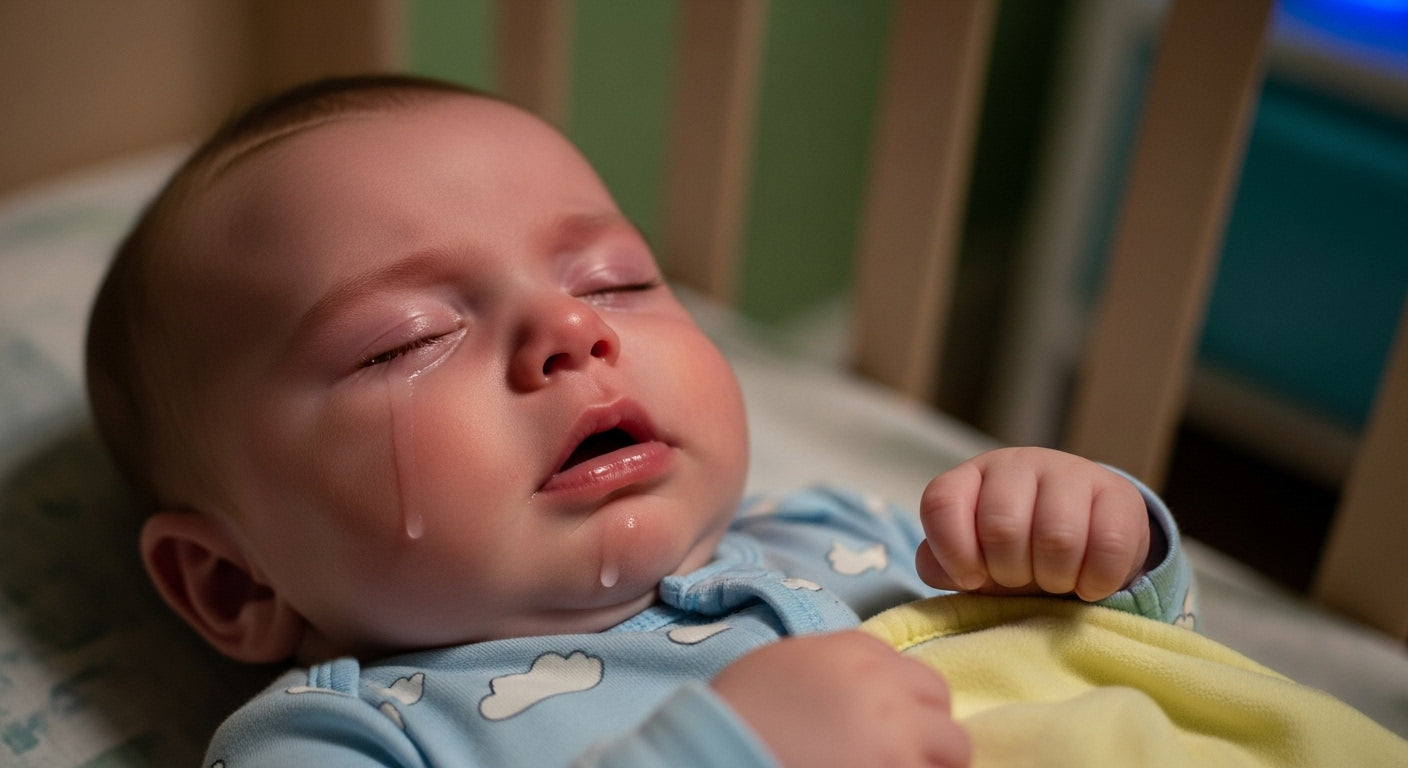
If your newborn is crying in sleep but their eyes stay closed, they may not be fully awake at all. Many babies cry, whimper, grunt, twitch, or make brief distressed sounds during active sleep and between sleep cycles. That can look alarming at 2 a.m., but it is often a normal part of newborn sleep development rather than an emergency.
The harder part is knowing when to simply pause and watch, when to step in with gentle soothing, and when sleep crying points to hunger, gas, reflux, illness, or another problem that deserves a call to your pediatrician. Parents searching for newborn cries in sleep, baby crying while sleeping, do babies cry during active sleep, or baby making whimpering noises in sleep are usually trying to answer that exact question.
In this Mamazing guide, you will get the short answer first, then the practical filter that matters most in real life: how to tell active sleep from true waking, why babies cry between sleep cycles, what is still normal at 2, 4, 6, and 8 weeks, how to soothe a baby without fully waking them, and which red flags mean it is time to call your pediatrician.
Quick answer: yes, newborn crying in sleep is often normal, especially when it is brief, your baby keeps their eyes closed, and the sounds happen with twitching, facial expressions, or short sleep-cycle transitions. Many babies also whimper in sleep or grimace in sleep during active sleep without actually waking up.
Yes, often. Newborn sleep is noisy, active, and much less settled than adult sleep. A baby can cry during sleep, fuss between sleep cycles, or make whimpering sounds while still technically asleep. That is why parents sometimes feel sure the baby is awake, only to find the crying stops on its own before they even reach the crib.
The most reassuring pattern is brief crying with closed eyes. If your baby whimpers, grimaces, flutters the eyelids, squirms, or gives a short cry and then settles, they may simply be moving through a normal active-sleep phase. If you want a broader picture of how much newborns sleep and why their rest feels so fragmented, that guide can help connect the dots.
The single most important concept for this topic is active sleep. Newborns spend a large share of sleep in a lighter, more active stage where their eyes may move under the lids, their breathing may vary, and their body may twitch or startle. During that stage, some babies also cry, whimper, grunt, or make faces. In other words, do babies cry during active sleep? Yes, many do.
This is also why Google is surfacing searches like baby making whimpering noises in sleep and baby grimacing in sleep. Parents are seeing the outward behavior first and only later learning that it may still fit normal sleep-state activity. The key is not whether your baby makes noise. The key is whether they look like they are settling through sleep or escalating into real distress.
| What you notice | More likely active sleep | More likely fully waking |
|---|---|---|
| Eyes | Closed or fluttering | Open, searching, alert |
| Cry pattern | Short, uneven, fades quickly | Builds in intensity and continues |
| Body language | Twitching, grimacing, brief startles | Rooting, strong kicking, obvious agitation |
| What happens next | Baby settles without help | Baby needs feeding, comfort, or a diaper change |
Newborns do not stay in long, smooth sleep blocks. Their sleep cycles are short, which means they pass in and out of lighter sleep more often. That is why baby crying between sleep cycles is such a common parent complaint. Your baby may briefly fuss as they shift from one cycle to the next, then drift back down without ever really waking.
If the crying is short and your baby still looks asleep, it often helps to pause before stepping in. Intervening too quickly can sometimes wake a baby who was about to settle independently. That does not mean ignoring your baby. It means giving yourself a tiny observation window before deciding whether the moment is normal sleep noise or a real need.
Active sleep explains a lot, but it is not the only reason a baby cries in sleep. If the pattern is longer, stronger, or more predictable, one of these triggers is often involved.
Newborn stomachs are small, and night feeding is still normal. Hunger crying is more likely when it has been a couple of hours since the last feed, the cry keeps building, or your baby starts rooting and sucking. If your baby cries while sleeping and then quickly escalates into a more urgent cry, hunger moves higher on the list.
Some babies cry in sleep because lying flat makes gas, spit-up, or reflux feel worse. Look for back-arching, knees pulling up, or crying that improves when held upright after a feed. This kind of sleep crying often happens shortly after feeding rather than randomly through the night.
The Moro reflex can jolt a newborn during light sleep and trigger sudden crying. Overtiredness can do the same thing in a slower way. A baby who stayed awake too long may fall asleep more hard and then sleep more restlessly, not more peacefully. That is why some babies cry more in sleep after a stimulating evening.
A wet diaper, a room that feels too warm or too cool, scratchy clothing, or a noisy sleep space can all tip a baby out of settled sleep. Your goal is not a perfect nursery. Your goal is a simple, safe sleep setup with a clean diaper, comfortable clothing, and as few avoidable disruptions as possible.

If nighttime crying is becoming a bigger pattern rather than a brief sleep-state behavior, our guide to baby crying at night can help you think through the larger sleep and soothing picture.
Usually, not immediately. The best first move is often to pause, watch, and listen for a short moment. If your baby is crying in sleep but still has closed eyes and the episode is brief, waiting 30 to 90 seconds may be enough to see whether they settle on their own.
When you do check, keep it gentle. Use dim light, soft hands, and the smallest intervention that fits the moment. A hand on the chest, a diaper check, or a quick resettle may work without fully waking your baby.
Parents rarely search for “normal newborn sleep behavior” in the abstract. They search for the age their baby is today. That is why narrow age windows matter here.
| Age | What is often still normal | What deserves more attention |
|---|---|---|
| 2 weeks | Frequent sleep-noise crying, day-night confusion, feeding every 2 to 3 hours | Crying that never settles, poor feeding, fever, or fewer wet diapers |
| 4 weeks | More fussiness, evening crying, active-sleep noise, short sleep cycles | Crying that is intense for hours or clearly worsening day by day |
| 6 weeks | Peak crying window for many babies, more visible overtiredness, cluster feeding | Inconsolable crying, vomiting, dehydration signs, or a sudden behavior change |
| 8 weeks | Still some sleep crying, but slightly longer stretches may begin | No sign of any settling pattern, feeding struggle, or illness symptoms |
If your main worry is how much fragmented sleep is still normal in these early weeks, it may help to compare your baby's pattern with our article on newborn sleep patterns. The goal is not to chase a perfect schedule. It is to know what is common enough not to panic over and what crosses into “something feels off.”
When your baby really does need help, use a short, repeatable plan instead of trying everything at once.
Swaddling can also reduce startling in younger newborns who are not rolling yet, and some families find white noise helpful for smoothing household sounds. If you are exploring broader calming strategies, our guide to soothe your crying baby offers more techniques that fit the newborn stage.
If you are considering a pacifier as part of the bedtime routine, keep the decision grounded in safe-sleep guidance. Our article on whether a newborn can sleep with a pacifier can help you weigh the pros, timing, and safety basics.
Most baby crying in sleep is not dangerous, but parents do need a clear line between normal and not-normal. Contact your pediatrician sooner if crying in sleep comes with:
The important question is not just “Is my baby crying?” It is “How does my baby look overall?” A baby who briefly cries between sleep cycles but feeds well, breathes comfortably, and settles again is very different from a baby who seems sick, floppy, dehydrated, or persistently distressed.
Yes. Many newborns cry briefly in sleep, especially during active sleep or short transitions between sleep cycles. If your baby's eyes stay closed and the crying fades quickly, they may still be asleep rather than fully waking.
Yes. Babies can cry, whimper, grunt, twitch, or grimace during active sleep. That stage is lighter and more visibly active than quiet sleep, so brief crying does not always mean your baby is awake or needs intervention right away.
Newborn sleep cycles are short, so babies move into lighter sleep often. Some cry or fuss during those transitions, then settle again on their own. If the crying is brief and your baby keeps their eyes closed, a sleep-cycle transition is a likely explanation.
Whimpering or grimacing in sleep is often part of active sleep, not a sign of a nightmare. Babies may make facial expressions, squirm, or vocalize while their nervous system is still maturing. It becomes more concerning when the behavior comes with prolonged distress, illness signs, or obvious pain.
Usually not right away. Brief crying with closed eyes often stops on its own, so it helps to pause for a short moment before intervening. If the cry builds, your baby seems uncomfortable, or it has been long enough that hunger is likely, go ahead and check.
Worry more when crying in sleep happens with fever, breathing trouble, poor feeding, fewer wet diapers, vomiting, unusual sleepiness, or a sudden change in your baby's usual pattern. In those situations, call your pediatrician instead of assuming it is only active sleep.
Newborn crying in sleep is often normal, especially when it is brief, happens with closed eyes, and fits active sleep or a short transition between sleep cycles. That is the reassurance most parents need first.
But reassurance works best when it is specific. If the cry builds, repeats around feeds, comes with obvious discomfort, or appears alongside fever, breathing changes, or poor feeding, treat it as something to assess rather than just “sleep noise.” At Mamazing, we believe the goal is not to make parents less attentive. It is to make that attention calmer, sharper, and more useful when the night feels long.



Newborn Not Pooping but Passing Gas: What's Normal at 24 Hours, 3 Days, and Beyond
Cluster Feeding 3 Weeks: Why Your Baby Wants to Nurse Every Hour