
- by EthanParker
How to Teach Kids Manners: Age-Appropriate Manners by Age
- by EthanParker
If you want to know how to teach kids manners, start smaller than most parents expect: teach one visible habit at a time, match it to your child's developmental stage, and model it often enough that it becomes part of daily life. Kids do not learn manners because they were lectured once. They learn because they see respectful behavior, practice it in low-pressure moments, and get calm guidance when they forget.
In real life, "manners for kids" means the social habits that help your child live well with other people: greeting others, making requests respectfully, taking turns, using a polite tone, listening, showing gratitude, and handling public spaces without steamrolling everyone nearby. The age-by-age part matters. A toddler who can hand over a cup when you ask is showing progress. A five-year-old can usually handle greetings and basic table manners. An older child can manage classroom etiquette, respectful disagreement, and digital manners.
This guide gives you the age-appropriate manners to teach first, how to teach manners to toddlers and school-age kids, and how to build manners and respect at home without turning every reminder into a power struggle. Throughout the article, Mamazing keeps the goal simple: raise a child who is not just performatively polite, but genuinely considerate.
A useful definition of manners for kids is this: manners are repeatable social behaviors that show awareness of other people's comfort, time, space, and feelings. That definition helps you avoid two common mistakes. First, you stop reducing manners to only "please" and "thank you." Second, you stop expecting advanced etiquette before your child can manage basic self-control.
If you want the highest-return starting point, teach these five manners first:
That order works because it follows daily life. Your child uses those skills at home, at meals, in stores, on playdates, and eventually in classrooms. It also matches development. The CDC notes that toddlers learn heavily through imitation and simple routines, while preschoolers grow into sharing, friendship, and more independent problem-solving on their way to school-age expectations. That makes modeling and repetition more effective than long explanations for young kids. You can see the age-based progression in the CDC's positive parenting tips for toddlers ages 2 to 3 and preschoolers ages 3 to 5.
A practical rule: if your child melts down every time you correct three different things at once, you are teaching too broadly. Pick one focus for two weeks. "We greet people." "We ask instead of yell." "We keep our bodies at the table." Manners stick faster when your child knows exactly what success looks like.
One reason parents feel discouraged is that they compare their child to an older sibling, a cousin, or a polished child they saw at a restaurant for seven minutes. Age-appropriate manners are not about perfection. They are about what your child can do consistently with reminders at this stage.
| Age | Manners to teach first | What progress usually looks like | What to avoid |
|---|---|---|---|
| 1-2 years | Waving hello, gentle hands, handing objects over, sitting briefly for meals | Imitates tone and short phrases, follows one-step prompts sometimes | Expecting consistent verbal politeness on cue |
| 2-3 years | Please, thank you, simple waiting, staying seated while eating, not grabbing | Uses polite words with reminders and copies your scripts | Public shaming or repeated drills |
| 4-5 years | Greetings, turn-taking, respectful requests, basic apology, classroom listening | Can understand why manners help other people feel comfortable | Overexplaining in the middle of conflict |
| 6-8 years | Table manners, guest manners, sportsmanship, polite interruption, thank-you notes | Can remember household rules and repair after mistakes | Assuming they should "just know better" every time |
| 9-12 years | Respectful disagreement, phone and text manners, empathy, responsibility in shared spaces | Can adjust behavior across home, school, and public settings | Only correcting tone without teaching self-management |
The biggest mindset shift is to judge manners by consistency, not by isolated wins. A four-year-old who remembers to greet the teacher three mornings out of five is learning. A seven-year-old who blurts out when excited but can repair with "Sorry, I interrupted" is learning. If you treat every imperfect moment like total failure, your child hears that effort does not count.
The CDC's milestones by age 4 page is a good reminder that many children still need adult help to use words for problem-solving and social situations. That is why the best manners teaching sounds more like coaching than judging.

Toddlers are the stage most parents worry about because this is when demand-heavy behavior is loud, public, and exhausting. But toddler manners are also the simplest to teach because the target is narrow. You are not aiming for polished etiquette. You are teaching rhythms: pause, ask, wait, accept help, and repair messes together.
Start with imitation. The CDC highlights that children ages 2 to 3 imitate adults and playmates while learning to follow simple instructions, which is exactly why your own tone matters so much. If you bark, rush, and interrupt, your toddler hears the lesson even if your words say "be polite." If you regularly say, "Can you pass the spoon, please?" and "Thank you for waiting," you are giving them a usable script.
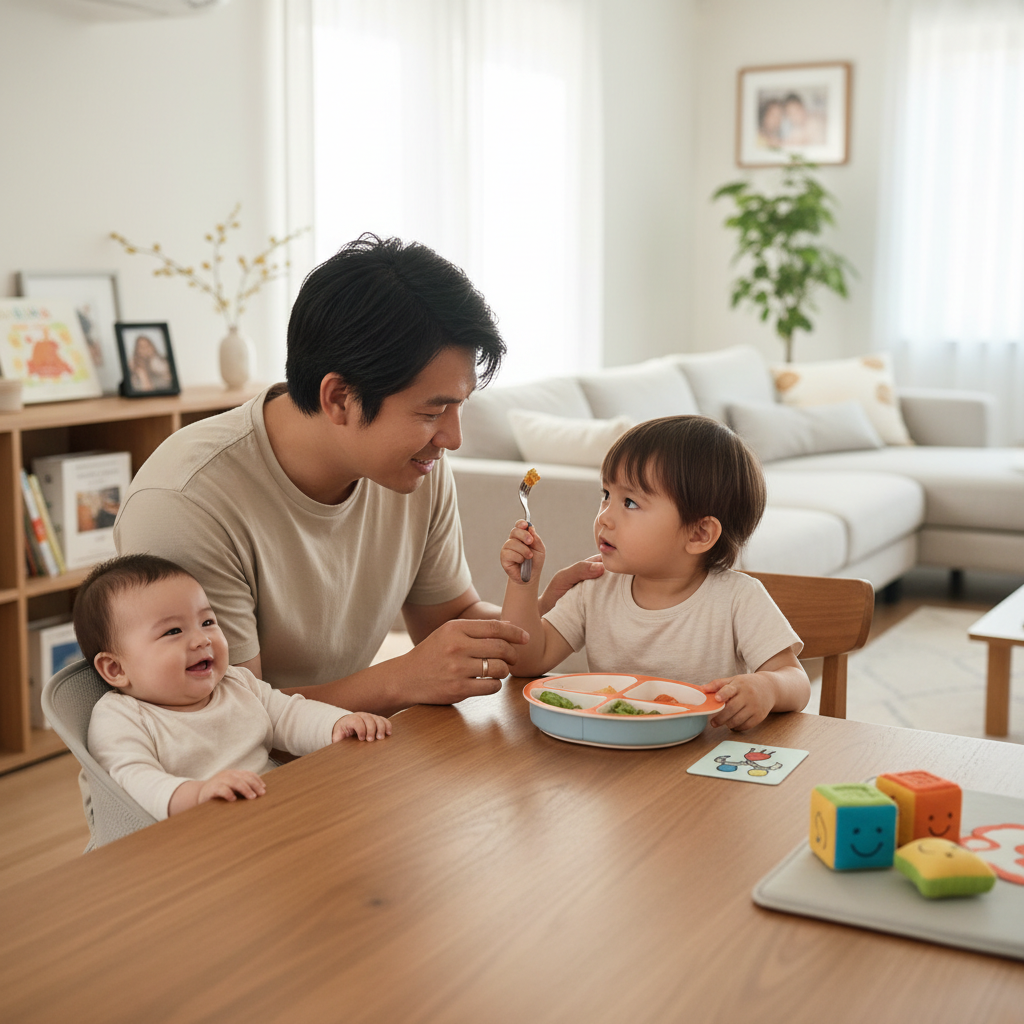
Next, reduce the number of manners you teach in the same setting. Mealtime works well because it is predictable. Pick two goals, not seven: for example, stay seated and ask for help instead of shouting. If your toddler throws food, handle it like a routine, not a character flaw. "Food stays on the plate. Let's clean up together." Calm repetition beats embarrassment every time.
For toddlers, these scripts work well:
There is also a counterintuitive truth here: toddlers often look least polite when they are overstimulated, hungry, or rushing between transitions. If you already know public meltdowns are a pattern, it helps to work on the underlying regulation piece too. This is where a related Mamazing guide on what motivates a toddler tantrum in public can support the behavior side of the same problem.

At this age, your win is not "my child impressed another adult." Your win is "my child practiced the same respectful habit enough times that it started to feel familiar." That is how toddler manners become preschool manners later.
Once your child reaches preschool and early elementary years, manners become more social and more visible. Teachers notice them. Other kids respond to them. And your child can finally connect the dots between behavior and how other people feel. That makes this stage perfect for teaching school manners for kids and classroom etiquette in a more explicit way.
Focus on the behaviors that help groups function:
The CDC's preschool guidance emphasizes helping children learn friendship, language, and problem-solving skills, and its age-4 milestone tips encourage parents to help children use words to ask for things and solve problems. That is a useful frame for classroom etiquette: children are not just memorizing school rules; they are learning how to be part of a shared environment.
One of the fastest ways to build classroom manners is role-play. Practice at home before the pressure is real. Pretend to be the teacher. Let your child practice entering a room, putting down a backpack, greeting an adult, asking for a turn, or saying, "Excuse me, I need help." This feels almost silly, but it works because it removes social pressure while giving your child a script they can reuse later.
If your child struggles with interruption, teach the difference between urgent and non-urgent interruptions. A strong school-age script is: "Put a hand on my arm, wait, then talk when I look at you." If they struggle with gratitude and noticing effort, keep it concrete. The American Academy of Pediatrics notes that gratitude grows best when families model appreciation consistently, not only by demanding thank-yous. Their piece on nurturing gratitude in children is a useful reminder that sincere appreciation goes beyond reciting a phrase.

For many families, school manners improve when home routines are less chaotic. Predictable mornings help kids remember greeting, listening, and transition skills because they are not already dysregulated before the day starts. If mornings are a constant scramble, it may help to tighten the routine first; Mamazing's guide on building a baby-friendly daily routine offers a useful reminder that structure often changes behavior more effectively than one more reminder.
Many parents search for how to teach kids manners and respect when what they really mean is this: "My child can act fine in public, but at home the tone is rough, the interruptions are constant, and every request sounds like a demand." That is common. Home is where children release stress, test limits, and assume they will still be loved. But home is also the best place to teach respectful habits because there is more repetition.
Teach respect at home in four lanes:
The easiest mistake here is making respect too abstract. Kids need visible rules. "We do not shout requests from another room." "We knock before entering." "We say 'I'm not done' instead of grabbing." "We clean up shared spaces because other people live here too." When the rule is observable, you can coach it. When the rule is just "be respectful," you and your child will argue about what that means.
A helpful distinction is manners versus submission. Respect is not forced affection, instant obedience, or silence. You can teach your child to say, "No thank you, I don't want a hug," in a polite tone. You can allow disagreement while still expecting them not to sneer, mock, or insult. That is a stronger long-term goal than producing a child who sounds polite in front of others but becomes explosive in private.
Use family practice moments. At dinner, let each person finish a sentence before the next one talks. During chores, have your child ask for help in a full sentence instead of whining. When siblings argue, coach repair language: "I was frustrated, but I should not have yelled. Can I try again?" These are small repetitions, but they teach that respect is something your family does, not something you only mention after a bad moment.

If your child is strong-willed, give limited choices inside the rule. "You still need to greet Aunt Maya. Do you want to wave or say hello?" That protects the boundary while preserving autonomy. Kids who feel cornered often fight the lesson rather than learn it.
Correction matters as much as instruction. A child can learn manners and still lose them when tired, embarrassed, excited, jealous, or overstimulated. The goal of correction is not to prove you are right. It is to move the child back toward the behavior you want.
That is why direct, immediate consequences work better than dramatic speeches. The CDC's guidance on consequences explains that what happens right after behavior affects whether it is likely to happen again. In practice, that means your response should be linked to the behavior:
Notice what is not on that list: humiliation, sarcasm, labeling, or performative punishment. "You are so rude" teaches shame, not skill. "Try that again respectfully" teaches the missing behavior. The most useful correction formula is short: describe what happened, restate the rule, prompt the repair. "You interrupted. We wait for a pause. Try again."
Parents often worry that calm correction looks too soft. In reality, calmness is what keeps the lesson clear. When the adult gets bigger than the behavior, the child starts reacting to your intensity instead of the manners problem itself. A firm, low-drama response is usually more effective because it is repeatable.
Older children still need manners coaching, but the focus shifts. Now the question is less "Can you say please?" and more "Can you manage your tone, your timing, and your impact?" That includes digital life, where many children feel bolder, faster, and less thoughtful than they do face-to-face.
For preteens and teens, teach:
The American Academy of Pediatrics recommends building digital rules around a family plan rather than improvising after every conflict. Their family media plan encourages screen-free zones such as the dinner table and before bed, which fits naturally with real-world manners. The same organization also reminds parents in its teen brain overview that adolescents are still developing judgment and impulse control. That does not excuse disrespect, but it does explain why older kids need rehearsal, boundaries, and repair practice instead of only lectures.
One of the most helpful shifts for this age is to stop treating manners as childish. Frame them as social competence. A kid who can greet adults, text clearly, apologize well, and manage disagreement respectfully has an advantage in friendships, classrooms, team settings, and eventually work.
If you only remember one thing, let it be this: the fastest path to better manners is not more pressure. It is clearer expectations, stronger modeling, fewer words, and more repetition in ordinary moments. That approach feels slower on day one, but it usually produces more genuine respect by month three.
Manners for kids are everyday social behaviors that show respect for other people's comfort, time, space, and feelings. For children, that usually starts with greetings, respectful requests, turn-taking, table basics, gratitude, and learning how to repair mistakes.
A simple definition is that manners are learnable habits that help a child live well with other people. They include what your child says, how your child says it, and how your child behaves in shared spaces like home, school, restaurants, and playdates.
Teach visible rules at home, such as greeting people, asking instead of demanding, not interrupting, knocking before entering, and cleaning up shared messes. Model the same behavior yourself, correct briefly in the moment, and have your child practice the repair instead of only hearing a lecture.
A toddler should learn a small set of high-frequency manners first: waving or saying hello, asking for help instead of grabbing, sitting safely for meals, using simple polite words like please and thank you with reminders, and practicing gentle hands.
Age-appropriate manners for a 3-year-old include basic greetings, using please and thank you with prompts, waiting briefly, staying seated for part of a meal, and beginning to ask for turns or help with words instead of shouting or snatching.
Age-appropriate manners for a 5-year-old include greeting adults, taking turns in conversation, following simple classroom etiquette, using a respectful tone most of the time, and understanding that manners help other people feel comfortable and respected.
Age-appropriate manners for an 8-year-old include stronger table manners, polite interruption, sportsmanship, handling guest situations respectfully, writing or dictating a thank-you note, and repairing behavior after speaking rudely or acting impulsively.
You can prompt polite words, but forcing them without teaching meaning usually creates performance more than character. It works better to model the phrase, explain what it communicates, and guide your child to use it naturally in repeated daily situations.
If you are trying to teach kids manners, think less about polishing your child for other people's approval and more about building a repeatable family culture. Teach the next right skill, not the entire etiquette handbook. Match the lesson to your child's age. Practice it in ordinary moments. Correct without shame. Over time, those small habits become the kind of manners that travel well: at home, at school, with relatives, online, and eventually out in the world on their own.
If you want a steady, realistic goal, aim for this: a child who knows how to notice other people, ask respectfully, repair mistakes, and carry that skill from room to room. That is the kind of confidence Mamazing wants parents to build, because it helps your child sound polite, feel secure, and act with genuine respect.


When Do Toddlers Start Asking Why? Age Guide for Questions, Milestones, and When to Worry
How to Teach Kids Good Hygiene Habits: Complete Guide for Parents