
- by EthanParker
How to Stop Sibling Rivalry: What to Do When Siblings Fight All the Time
- by EthanParker
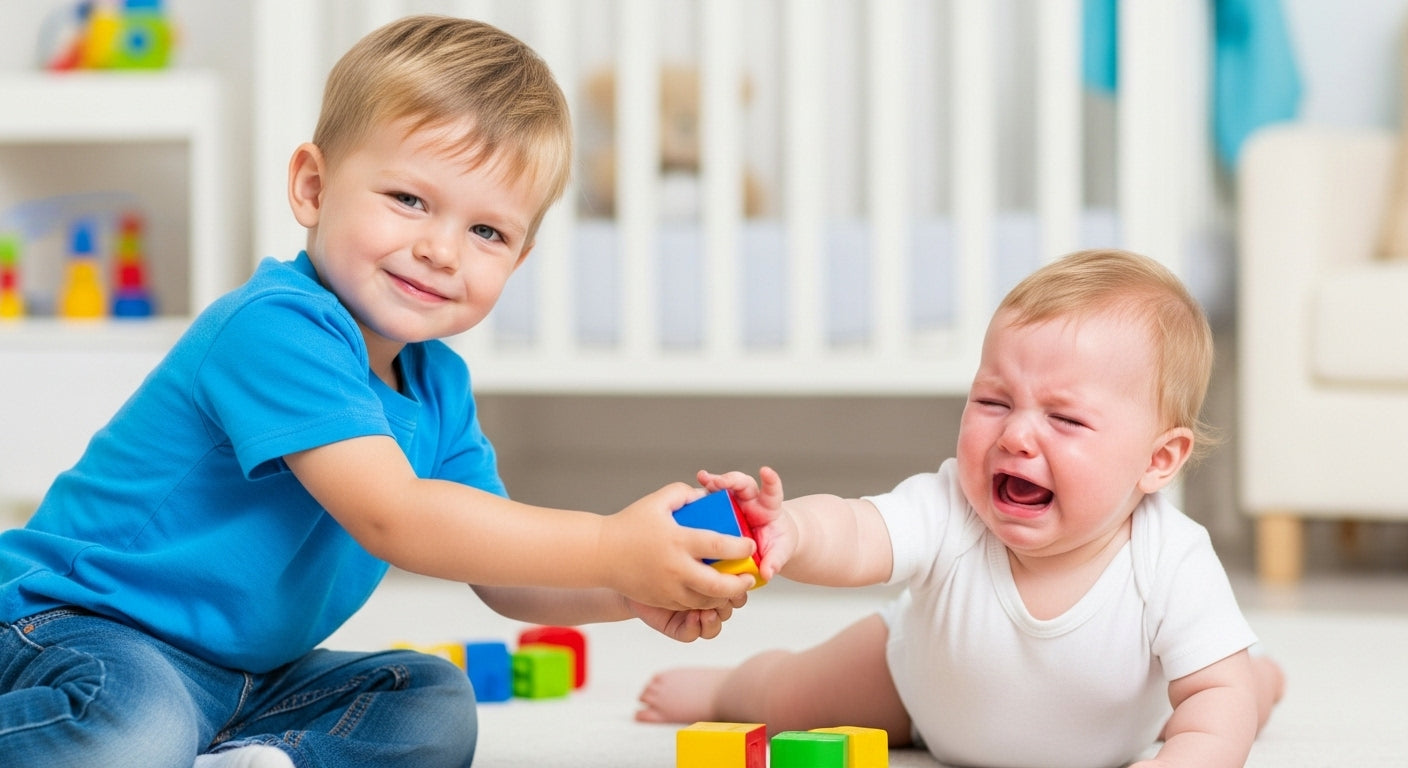
If your kids are fighting all the time, the fastest way to reduce sibling rivalry is to stop playing referee, enforce one clear safety rule, and coach both children through the same calm routine every time. Most siblings do not suddenly stop fighting at one exact age, but conflict usually gets less physical and easier to manage as language, impulse control, and perspective-taking improve through later childhood and the teen years. If you are dealing with toddler sibling rivalry, focus first on prevention: supervise high-trigger moments, protect the child who is getting hit or grabbed, and give the older child simple words and predictable one-on-one connection. In other words, the goal is not zero conflict. The goal is fewer explosions, faster repair, and safer habits at home.
Sibling conflict is common in almost every home with more than one child, but that does not mean you have to live in survival mode. Parents usually search for help when the fighting feels constant, loud, unfair, or emotionally draining. This guide focuses on what actually helps: how to respond in the moment, what is normal by age, when sibling fighting usually eases, and how to tell the difference between typical rivalry and a pattern that needs more support.
Research on early childhood sibling relationships is often summarized with a striking number: young siblings may clash multiple times an hour during free play. The important takeaway is not that conflict is harmless or that parents should ignore it. It is that frequent disagreements can be developmentally normal, especially in the preschool years, and parents usually get better results by teaching skills and reducing triggers than by trying to eliminate every disagreement.
When siblings are fighting all the time, use this sequence:
If you are exhausted, start smaller than you think. One script used consistently works better than a new strategy every day.
Parents often ask how to stop siblings from fighting when the conflict feels nonstop. The first step is to separate urgency from pattern. Not every fight means you have a deep relationship problem. Many families are dealing with a handful of repeat triggers that keep producing the same argument in different forms.
Children can unintentionally learn that fighting is the fastest route to intense parental attention. That does not mean you should ignore them. It means your response should be steady, brief, and predictable.
If siblings are fighting all the time, write down when, where, and why the conflict starts. You do not need a detailed journal. A few notes are enough:
This is where many families find the real leverage. The fight about the toy may actually be a fight about connection, predictability, or a hard part of the day.
Constant sibling conflict often drops when you make the environment easier to navigate:
This is one of the most reassuring questions in search, and the honest answer is that siblings usually do not stop at one exact age. Instead, the nature of the conflict changes over time. Preschoolers tend to fight often and impulsively. School-age children argue more about fairness, rules, and comparison. Teens may fight less physically but more emotionally, especially around privacy and independence.
In many families, the most intense everyday friction happens between about ages 2 and 8, then gradually becomes easier to coach as children gain language and self-control. That does not mean conflict disappears in adolescence. It usually means the fights become shorter, less physical, and easier to repair when parents have laid down consistent ground rules.
| Age range | What conflict often looks like | What usually helps most |
|---|---|---|
| 2 to 4 | Grabbing, hitting, screaming, jealousy, conflict over toys and parent attention | Close supervision, simple scripts, duplicate items, short turns, more prevention than explanation |
| 5 to 8 | Fairness battles, tattling, rule arguments, exclusion from play | Family rules, coached problem-solving, protecting routines, reducing comparison |
| 9 to 12 | Competition, teasing, privacy issues, power struggles | Clear boundaries, respect for belongings, shared repair expectations |
| 13 to 18 | Sarcasm, social embarrassment, privacy conflict, resentment about different rules | Autonomy, private coaching, fair but not identical expectations, family reset conversations |
If you are searching for what age siblings stop fighting, a better question is: when does sibling conflict become more manageable? For many families, the answer is gradually, not suddenly, and only when parents stop comparing children and start teaching repair.

Toddler sibling rivalry is intense because toddlers are still building language, impulse control, and patience. If one child keeps hitting, biting, pushing, or grabbing, do not expect a long talk to solve it in the moment. Your job is to make the interaction safe, calm, and predictable.
Older toddlers can love the baby and still feel furious about the changes. Jealousy after a new sibling arrives often shows up as clinginess, baby-like behavior, hitting, or regression during routines. That does not mean the toddler is rejecting the baby. It usually means they are overwhelmed by a major shift in attention and predictability. If that is your situation, this guide to introducing a sibling to your new baby is a strong next read.
If you want to know how to deal with sibling rivalry in toddlers, the biggest win usually comes before the conflict starts:
If the aggression includes biting, use a more specific plan for impulse-driven behavior. Mamazing's toddler biting guide can help if sibling conflict is crossing into repeated biting episodes.
The most effective sibling rivalry solutions are simple enough to repeat when everyone is tired. Think in four lanes: prevent, intervene, coach, and repair.
Step in quickly for safety, but do not automatically solve every dispute. School-age children and teens often improve when adults supervise lightly, then coach after the first attempt at solving it themselves.
One of the best ways to stop sibling rivalry is to make the process repeatable. A simple family routine might look like this:
This works because it moves the focus from blame to skill-building.
Children need help learning what comes after a hard moment. Repair can be brief: putting a toy back, getting ice for a hurt sibling, redoing words respectfully, or checking in later. A strong sibling relationship is not a relationship with no conflict. It is a relationship where children slowly learn that conflict does not erase safety and care.
Some family habits accidentally intensify sibling conflict even when parents are trying hard to help.
Many parents worry they are missing something serious. Most sibling rivalry is mutual, episodic, and easier to calm with adult structure. Red flags usually look different: one child is consistently fearful, one child holds most of the power, or the conflict keeps escalating despite strong boundaries and support.
| Usually within the normal range | More concerning and worth a closer look |
|---|---|
| Frequent arguments over toys, turns, noise, and fairness | One child repeatedly targets, humiliates, or terrorizes the other |
| Occasional pushing, shouting, or grabbing that stops quickly with adult intervention | Injuries, choking, threats, cornering, or severe aggression |
| Both children are upset and both recover | One child seems consistently afraid, withdrawn, or hypervigilant around the other |
| Conflict rises during developmental shifts such as a new baby or puberty | Conflict leads to school refusal, sleep problems, self-harm talk, or major emotional decline |
| Parents can spot predictable triggers and reduce them | The pattern stays severe even with supervision, structure, and consistent consequences |
If you are searching for help with extreme sibling rivalry, trust the pattern more than any one isolated bad day. Safety, fear, and power imbalance matter more than frequency alone.

You do not need to wait for a crisis to ask for help. Consider outside support if:
Your pediatrician is often a good starting point. Depending on the situation, a family therapist, child psychologist, or parent coach may help you build a more targeted plan. If there is sexualized behavior between siblings, serious threats, or self-harm statements, treat that as urgent and get professional support right away.
Yes, daily sibling conflict can be normal, especially in the preschool and early school years. What matters most is whether the fights are getting safer, shorter, and easier to repair over time.
Most siblings do not stop completely at one exact age. Conflict usually becomes less physical and easier to manage as children mature, especially when parents use clear routines, boundaries, and repair skills.
Step in for safety, describe the problem neutrally, and coach one next step instead of deciding who is the "bad" child. Predictable process works better than repeated blame.
Block the hit, comfort the hurt child, keep the language short, and practice one replacement behavior such as asking for a turn or getting your attention. Long explanations usually do not work in the heat of the moment with toddlers.
Severe sibling conflict can be intensified by temperament differences, developmental challenges, big family stress, chronic comparison, unclear boundaries, trauma, or one child having much more power than the other. Persistent fear or injury is a sign to get more support.
Many siblings become much easier to manage with age, but the biggest change usually comes from skill-building, not time alone. Children who learn repair, respect, and emotional regulation often carry those habits into adulthood.
If you want to stop sibling rivalry, start by lowering the temperature of the repeated fights instead of chasing perfect harmony. Protect safety, reduce the predictable triggers, stop comparing your children, and teach one simple repair process that fits their age. Most sibling conflict is a coaching opportunity, not proof that your children are destined to dislike each other. And if the pattern feels extreme, fearful, or unsafe, getting help early is a strength, not an overreaction.
Mamazing is here to support the messy middle of parenting with practical, realistic guidance. If today's struggle is a new baby transition or toddler aggression, the linked guides above can help you build the next layer of your plan.



How to Bond With Your Child: Simple Daily Ways to Build a Stronger Connection
How to Balance Work and Parenting: 27 Proven Strategies for Working Parents