
- by Artorias Tse
Best Travel Stroller for Flying With a Baby: Airline Guide
- by Artorias Tse
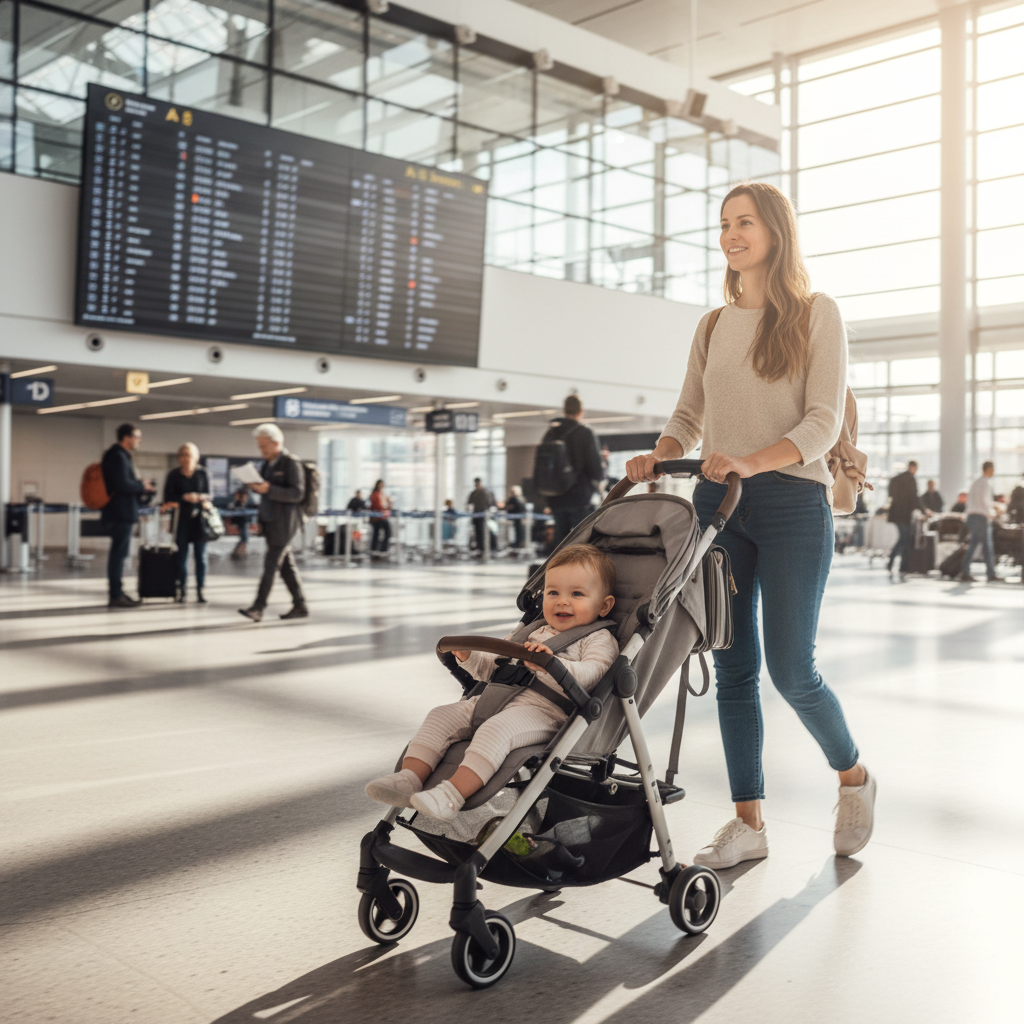
If you want the short answer, the best stroller for travel is the one you can fold quickly, push one-handed through a crowded terminal, and either gate-check without worry or bring on board if your airline allows it. For most families, that means a lightweight travel stroller with a compact fold, a usable recline, and enough storage to handle the airport without turning every transfer into a juggling act.
This is also where many flying-with-a-baby articles miss the real question. You are usually not asking for ten generic tips. You are trying to figure out whether your stroller is airline-friendly, whether it can be checked for free, whether it works for a 3-month-old or a toddler, and what happens when you hit security with a diaper bag, bottles, and a sleepy child. That is what this guide covers.
If you want one stroller that can handle airport days and still feel practical for everyday use, a compact option like the Mamazing Ultra Air is a strong place to start. First, though, it helps to know what actually makes a stroller good for flying.
The best stroller for air travel is light, compact, fast to fold, and stable enough to handle long walks between check-in, security, and the gate. If it is awkward to close, too bulky for a quick gate-check, or uncomfortable for naps, it will feel much heavier than the spec sheet suggests.
When you compare models, start with the five features that matter most in airports:
| Feature | Why it matters at the airport | What to look for |
|---|---|---|
| Weight | Easier to lift into a scanner area, shuttle bus, or overhead space | A true lightweight frame you can lift with one arm |
| Fold style | Helps at security, boarding, and gate-check | One-hand or quick two-step fold with a lock |
| Seat recline | Keeps naps possible during delays and layovers | Enough recline for your child's age and routine |
| Storage | Lets you keep essentials accessible before boarding | Basket space that still works when the seat reclines |
| Travel durability | Gate-checked gear gets bumped around | Strong hinges, wheel locks, and washable fabrics |
A final reality check: the best stroller to fly with is not always the lightest stroller on the market. If it saves two pounds but sacrifices recline, canopy coverage, or steering, you may regret it halfway through a delayed connection. The better goal is a balanced travel stroller that is easy to manage without becoming a throwaway airport tool.

The right stroller depends on your child's age more than on the flight itself. For infants, seat support and recline matter most. For toddlers, the bigger question is whether the stroller can handle airport walking, nap timing, and quick boarding without fighting you every step of the way.
If your baby is very young, choose the stroller around safety and sleep rather than the tiniest possible fold. HealthyChildren.org says it is generally safe to fly once a newborn is at least 7 days old, though waiting until 2 to 3 months is ideal when possible. The same guidance also notes that the safest way for a baby to fly is in an FAA-approved restraint when you have a ticketed seat.
That means your stroller choice should support the parts of the trip that happen before boarding: long terminal walks, naps between flights, and hands-free movement while you manage a car seat or carrier. For a 3-month-old, prioritize:
If you are traveling with a very young baby, it is also smart to separate two questions that often get blended together: the stroller for the airport, and the restraint for the seat. The FAA says the safest place for a child under 2 on a U.S. airplane is in an approved child restraint system or device, not on a lap. In practice, many parents still travel with a lap infant, but it is worth knowing the safety baseline before you decide.
Once your child can sit well and stay awake for longer stretches, portability moves higher on the list. A toddler travel stroller should still recline enough for a short nap, but the bigger wins are fast folding, easier carrying, and reliable steering when you are moving quickly between gates.
This is where a compact stroller really earns its keep. Toddlers often want to walk until they suddenly do not. They may want snacks in the security line, a rest while you wait to board, and a calm place to sit when the gate gets noisy. A good stroller turns those transitions from mini-meltdowns into routine pauses.
If you are torn between using your everyday stroller and buying a dedicated travel model, ask yourself three questions:
If the answer is yes to at least two of those, a compact travel stroller usually pays off quickly.

Most families can check a stroller for free, but the better question is which checking method fits your trip. Counter-check works when you want fewer items in the terminal. Gate-check works when you need the stroller all the way to boarding. Carry-on only works when your stroller meets cabin-size rules and your airline allows it.
Here is the simple framework:
Airlines do not follow one universal stroller rule, so it helps to confirm the policy for every itinerary. For example, American Airlines says each ticketed customer traveling with a child may check one stroller and one car seat free, but non-collapsible strollers and stroller wagons without built-in child safety straps must be checked at the ticket counter. Delta says strollers and child safety seats are not counted toward standard baggage and may be checked free at the curb, counter, or gate. easyJet says each infant or child can take up to two items such as a pushchair, buggy, or car seat into the hold for free, and if you use them to reach the gate they are collected before boarding.
| Airline example | Free stroller check? | Useful detail to verify |
|---|---|---|
| American Airlines | Yes | Non-collapsible strollers and stroller wagons without built-in safety straps go to the ticket counter, while other strollers are usually gate-checked. |
| Delta Air Lines | Yes | You can check at curbside, ticket counter, or gate, and child safety seats may come on board only in certain circumstances. |
| easyJet | Yes, up to two child travel items in the hold | If you want a stroller in the cabin, it must fit the airline's large-cabin-bag dimensions and be booked that way. |
This is also why the best stroller for travel is usually a collapsible stroller. Even when you do not plan to carry it on, a compact fold gives you more options and fewer surprises. If your stroller is bulky, wide, or wagon-shaped, expect fewer choices and more counter-check scenarios.
One practical tip that saves stress: before you leave home, photograph your stroller, note its folded dimensions, and keep a lightweight gate-check tag or bag in the basket. If something changes at the gate, you can make the handoff quickly instead of refolding, repacking, and hunting for ID labels while boarding starts.
The smoothest way through security is to treat the stroller like a temporary workstation, not a storage closet. Keep only the items you need before boarding in it, and be ready to remove your child, collapse the stroller, and move basket contents into bins or a carry-on in one fast sequence.
TSA says strollers, umbrella strollers, baby carriers, car seats, and booster seats must be screened by X-ray when possible, and larger equipment that does not fit gets a visual or physical inspection. TSA also says to remove infants and children from strollers and carry them through the metal detector. If you are bringing formula, breast milk, toddler drinks, or baby food in quantities over 3.4 ounces, the same TSA guidance explains that these are allowed in carry-on bags as medically necessary liquids, but you should tell the officer at the start of screening and remove them for separate screening.
Use this order at the checkpoint:
Boarding works best when you already know what will happen to the stroller. If you are gate-checking, collapse it before the line compresses at the door. If you are trying to bring it into the cabin, ask the gate staff before boarding starts whether it will fit that flight's storage plan. That gives you time to switch to gate-check without the rushed, everyone-is-watching moment parents dread.
For connections, assume you may need to carry your child for part of the transfer. A travel stroller makes a layover easier, but a baby carrier is still your insurance policy if the stroller returns late, a bus gate appears, or the next aircraft has stricter cabin rules.

The best stroller basket setup is not the one that carries the most. It is the one that lets you reach the right item in ten seconds while holding a baby or steering with one hand.
Keep the basket limited to airport-use essentials:
The trick is to avoid making the basket so full that security becomes a full unpack-and-repack cycle. If you are bringing formula, breast milk, or baby food, group those items together so you can pull them out quickly when screening starts. If you are bringing a car seat, think about where it lives during the airport walk before you leave home, not at the curb.
One small but useful habit is dressing your child in travel layers and packing yourself a shirt too. Babies spit up at the gate. Toddlers spill at turbulence-prone moments. A parent change of clothes sounds excessive right up until it saves the second half of your flight.
A dedicated travel stroller is worth it when you will use it more than once, when you regularly handle airports without another adult, or when your everyday stroller is heavy enough to make travel feel like moving furniture. If none of that sounds familiar, you may be fine gate-checking the stroller you already own.
This is the slightly contrarian part of the guide: not every family needs a second stroller. If you take one short domestic flight a year, your child still naps well in the main stroller, and your airport is mostly curb-to-gate with no transfers, an existing stroller may be enough. The hassle of shopping, learning a new fold, and storing another stroller may outweigh the benefit.
But travel changes the math quickly if any of these are true:
In those cases, buying a compact stroller is less about luxury and more about reducing friction. You move faster through the airport, you spend less energy on each transfer, and you are more likely to keep using the stroller after the trip for errands, parks, and everyday car-trunk life.
If you want one stroller that can cover airport days without feeling overly stripped down for normal use, a compact Mamazing model is the most sensible place to start. The goal is not to buy a stroller just because it is marketed for travel. The goal is to pick one that still feels good on an ordinary Tuesday after the vacation is over.
The Mamazing Ultra Air Compact Stroller for Travel fits the current search intent well because families looking for the best stroller for travel usually want the same mix of portability, quick folding, and daily usability. If you are still comparing features, the brand's baby stroller buying guide is a helpful next read for weight, age, wheel, and comfort criteria. If you are already in shortlist mode, the broader Mamazing stroller can help you compare travel-friendly options without jumping between unrelated product categories.
A good way to stay objective is to use a simple pass-fail filter before you click buy:
If the answer is yes across the board, you are close. If not, keep shopping. A stroller that looks great in a product grid but feels awkward in transitions is rarely the best stroller to fly with.
These are the quick answers parents most often need the night before a flight.
Usually, yes. Major airlines such as American Airlines and Delta let you check a stroller free when you are traveling with a child, but the exact rules on weight, gate-check, and wagon-style models depend on the carrier.
Yes. TSA says strollers, umbrella strollers, baby carriers, car seats, and booster seats must be screened, and you should remove your child from the stroller before going through the checkpoint.
A stroller either gets gate-checked, checked at the counter, or stored in the cabin if it meets that airline's carry-on size rule and there is space in the overhead bin. Always check your airline's dimensions before travel day.
In most cases, yes. HealthyChildren.org says it is generally safe once a newborn is at least 7 days old, and ideally parents wait until 2 to 3 months when possible, especially to reduce infection exposure in crowded airports.
Not always, but it is the safest option when your baby has their own ticketed seat. The FAA and the American Academy of Pediatrics both recommend using an approved child restraint system instead of relying on a lap infant setup when possible.
The best travel stroller for flying with a baby is the one that solves the whole airport day, not just the walk to the gate. You want a compact fold, a seat that matches your child's age, and a setup that works with real airline rules rather than wishful packing. Once you have that, the rest gets easier: security is faster, boarding is calmer, and connections feel manageable instead of chaotic.
If you are narrowing down options now, start with your child's age, your most common trip type, and whether you need gate-check flexibility or a truly compact stroller. Then use Mamazing's stroller guides and travel-ready models to shortlist something that works beyond this one flight. That is usually the difference between a stroller you tolerate on travel day and one you are genuinely happy to own.


Parenting 101: Must-Know Hacks for the First Year
How to Choose a Baby Stroller: Pediatrician Tips for Safety, Age, and Lifestyle Fit