
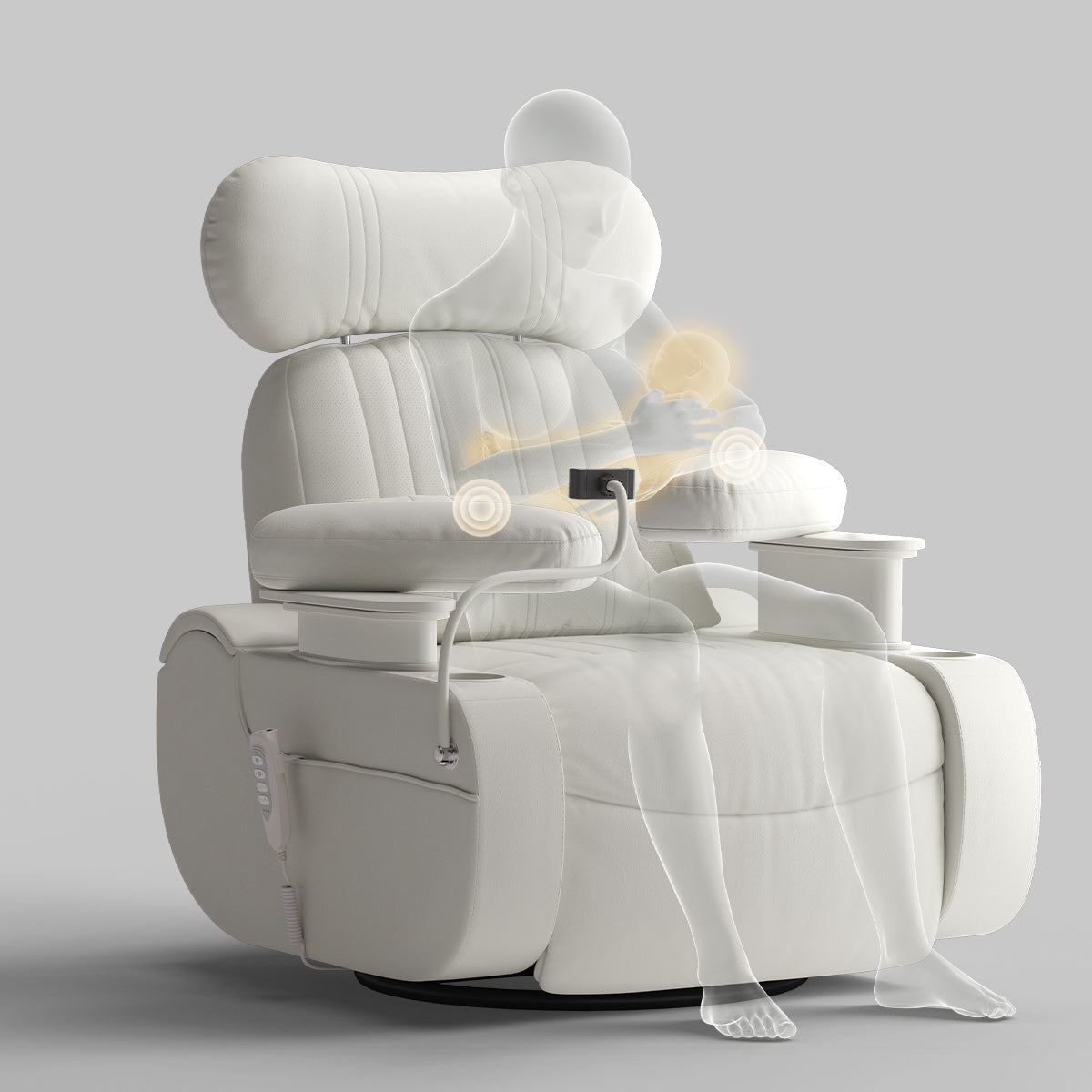
If you are choosing between a rocking chair and a glider for your nursery, the short answer is this: a glider is usually the easier choice for feeding, quiet motion, and smaller rooms, while a rocking chair is often better if you want a classic nursery feel and a more traditional soothing motion. If you want extra support for long nights, a recliner or hybrid chair can make even more sense.
That is why this decision matters more than it first seems. Nursery chairs are not just decorative pieces. They influence how comfortable you feel during feeding, how easy it is to soothe your baby, and whether the chair still feels useful after the newborn stage.
This guide compares rocking chairs, gliders, and recliner-style nursery chairs in a more practical way: how they feel in real life, which one tends to work better for feeding, which one fits a smaller nursery more easily, and when a hybrid chair like the Mamazing Lullapod Max is worth considering.
Rocking chair vs glider for nursery: the quick answer
For many parents, a glider wins because it feels smoother, quieter, and more stable during feeding. The motion stays more controlled than a traditional rocker, which can be helpful when you are feeding a newborn, settling a baby after a night waking, or simply trying not to jolt yourself fully awake at 2 a.m.
A rocking chair still has clear strengths. It brings a timeless nursery look, a familiar arc motion, and a soothing rhythm that many parents genuinely enjoy. If your top priority is traditional rocking rather than maximum stability, a rocker can still be a great nursery chair.
Where things get more interesting is the recliner or hybrid category. If you care about feeding support, recovery comfort, recline, swivel, and longer-term use beyond the nursery, a hybrid glider-rocker recliner can be the most versatile choice of all.
How rocking chairs, gliders, and recliners actually feel different
On paper, these chairs can sound similar. In practice, they feel very different once you imagine yourself holding a baby, reaching for a burp cloth, or settling in for the fourth feed of the night.
Rocking chair
A rocking chair moves in the classic arc that most people picture immediately. That motion feels familiar and comforting, and it can be especially appealing if you want a nursery with a more traditional look. Rockers also tend to feel emotionally cozy in a way some parents really love.
The trade-off is that the arc can feel more active and can require a bit more floor clearance. Some parents also find that a rocker feels less steady than a glider during longer feeding sessions.
Glider
A glider moves in a smoother, more linear path, which is why it often feels quieter and more controlled. For feeding, that can be a real advantage. The motion is usually easier to maintain without feeling like you are shifting your center of gravity with every movement.
Gliders also tend to feel friendlier in smaller nurseries because the motion is more contained. That does not automatically make every glider better, but it does explain why so many feeding-focused parents lean this way.
Recliner or hybrid chair
A recliner adds a different kind of value: support. If you are trying to feed, recover, rest, or contact nap more comfortably, the ability to recline changes the experience. A hybrid chair goes one step further by blending rocking or gliding with recline, swivel, and often better arm support.
That is why comparison searches like glider vs recliner for nursery or rocking chair vs recliner for nursery keep appearing. For many families, the real question is not just “rocker or glider?” It is “do I want a simpler motion chair, or do I want a chair that works harder for me during long nights?”
| Chair type | Best for | Main trade-off |
|---|---|---|
| Rocking chair | Classic nursery feel, traditional motion, story time | Can feel less stable and needs more rocking clearance |
| Glider | Feeding, quiet motion, smaller rooms, smoother comfort | Some models lack recline or deeper support features |
| Hybrid glider-rocker recliner | Long sessions, recovery comfort, all-in-one versatility | Usually bigger investment and more feature-heavy design |
One reason this choice feels surprisingly hard is that parents are often comparing three different problems at once: how they want the chair to move, how they want their body to feel during feeding, and how much room the chair can realistically take up. A chair can score well on one of those and still feel wrong overall. That is why a traditional rocker can be beautiful but less ideal for frequent night feeds, while a feature-rich recliner can feel amazing but still be too large for the nursery layout you actually have.
It also helps to think beyond the newborn phase. Some families want a chair that mainly supports the first year: feeding, rocking, and the occasional contact nap. Others want something that can move into a reading corner or living room later without feeling overly nursery-specific. That longer timeline can make gliders and hybrid recliners more appealing, especially if you are trying to get both comfort and long-term value from one larger purchase.
Which nursery chair is better for feeding and long sessions?
If feeding comfort is your main priority, a glider usually beats a traditional rocking chair. The smoother motion and more stable feel tend to work better when you are trying to hold a baby in position, adjust pillows, or stay comfortable during a long breastfeeding or bottle-feeding session.
This is also where arm support matters more than many parents expect. A chair can look beautiful and still feel tiring if the arms sit too low, too high, or too far apart. When people search for the best rocking chair for nursery or wonder what makes a nursery chair comfortable for feeding, they are often really asking about posture, arm placement, and how supported they will feel after 30 or 40 minutes in the chair.
A recliner or hybrid chair can be even more appealing if you expect longer feeds, cluster-feeding evenings, or you simply want more recovery-friendly comfort. Being able to adjust your angle or shift your position without leaving the chair can make a surprisingly big difference over time.
That does not mean a rocker cannot work for feeding. It can. But if feeding is the center of your nursery-chair decision, glider-style stability usually has the edge.
Feeding comfort is usually where parents notice the biggest real-world difference between chair types. When a chair supports your elbows well, keeps your back from collapsing, and lets you settle without constant readjustment, even a long cluster-feeding evening feels more manageable. When it does not, you start compensating with pillows, shifting your shoulders, or ending feeds more tired than you expected.
This is why a “best nursery chair” search often blends categories that sound separate on paper. People may type rocking chair, glider, or recliner, but what they are often evaluating is the same core question: which chair will still feel comfortable when I am using it every day, sometimes for longer than I planned?
Which nursery chair works best in small spaces?
For small nurseries, gliders usually make more sense than traditional rocking chairs because the motion stays more contained. A rocker needs room for its forward-and-back arc, while a glider often feels easier to place closer to a wall without the same sense of movement spillover.
That said, size still matters within every category. A large recliner can overwhelm a small nursery just as easily as a bulky rocker can. What matters most is not just the label on the chair, but the actual footprint, the motion clearance, and whether you still have room for a crib, side table, and safe walking space.
If your room is tight, think in layers:
- Choose the motion first: glider if you want smoother, more contained movement.
- Check the footprint second: not every glider is compact.
- Think about reach: you still need access to feeding essentials, not just the chair itself.
This is also where rocker-versus-glider debates often get simplified too much. A small nursery does not automatically rule out a rocker, but it does increase the value of contained motion and cleaner room flow.
Small-space planning also benefits from thinking about what happens around the chair, not just the chair itself. You may need room for a side table, a basket for burp cloths, a lamp, or safe foot placement when you stand up while holding a baby. Sometimes the better small-room choice is not the tiniest chair, but the chair whose motion pattern creates the least awkward clearance problem.
If you are deciding between a rocker and a glider in a tighter room, it can help to tape out the chair footprint on the floor before you buy. That quick exercise often makes the decision feel much more obvious because you can see whether the chair competes with the crib, blocks drawer access, or leaves too little room for relaxed movement during real night-time routines.
When a hybrid glider-rocker recliner makes sense
A hybrid chair makes sense when you do not want to choose between soothing motion and deeper comfort. If you want a chair that can help with feeding, rocking, resting, and longer-term use beyond the nursery, this category can be the strongest fit.
The Mamazing Lullapod Max is a good example of why this category keeps gaining attention. It is not just trying to be a glider or just trying to be a rocker. It is meant for parents who want more support features in one chair, including recline, swivel, and stronger feeding ergonomics.

That kind of chair is especially appealing if you:
- want more support during breastfeeding or bottle-feeding
- expect to spend a lot of time in the chair
- want recline and swivel in addition to motion
- hope to keep using the chair after the nursery stage ends
The trade-off is that hybrid chairs are usually a more intentional investment. They work best for families who know comfort and versatility are high priorities, not just “nice extras.”
How to choose the best nursery chair for your routine
The best nursery chair is not the one with the longest feature list. It is the one that matches your actual routine. That is the easiest way to make sense of all the “best rocking chair,” “best glider,” and “best nursery recliner” advice online.
Choose a traditional rocking chair if you care most about classic nursery style, traditional soothing motion, and a simpler chair that feels timeless.
Choose a glider if you care most about feeding comfort, quieter motion, contained movement, and a chair that often feels easier to use in a smaller nursery.
Choose a recliner or hybrid chair if you want support for long sessions, recovery comfort, flexible positioning, and a chair that may still feel useful well after the baby years.
The most practical features to prioritize are:
- comfortable, supportive arms
- a back that feels good after more than a few minutes
- motion you actually enjoy rather than just tolerate
- easy-clean upholstery
- a footprint that makes sense in your room
If you want a deeper comparison of rocking-chair comfort and buying criteria, Mamazing's guide to the best rocking chairs for nursery is the natural next read. If you are leaning more glider-focused, the guide to the best glider rockers for your nursery is the better branch. And if you want a broader category overview, see best nursery rocking chairs and gliders.

Use-case mapping can simplify the decision fast. If you picture yourself mainly using the chair for quick soothing and occasional cuddle time, a rocker may be enough. If you picture long feeds, repeated overnight wakings, and a lot of seated time in the first year, a glider or hybrid chair usually starts making more sense. And if the chair also needs to feel at home outside the nursery later, that can push the decision toward more versatile designs.
The good news is that there is no single correct answer for every nursery. The better question is which chair reduces the most friction in your specific routine. Once you focus on that, the comparison feels much less abstract and much more useful.
Frequently asked questions
Which is better for a nursery: rocking chair or glider?
For many parents, a glider is the better nursery choice because the motion is quieter, gentler, and often easier to use during feeding. A rocking chair is still a good fit if you want a classic look and prefer a more traditional rocking feel.
Is a glider or recliner better for feeding?
A glider usually feels smoother and more upright for feeding, while a recliner can be more comfortable for recovery, resting, and longer sessions. A hybrid chair can make sense if you want both support and flexible positioning.
Do nursery gliders really help with breastfeeding?
Yes, many parents find that nursery gliders help with breastfeeding because the motion is calm, the seat often feels more stable, and the chair is easier to stay balanced in during longer feeds.
Is a rocking chair enough for a small nursery?
A rocking chair can work in a small nursery, but you need to account for its rocking arc and clearance. Many parents prefer gliders in smaller rooms because the motion usually stays more contained.
What features matter most in a nursery chair?
The most important nursery chair features are supportive arms, a comfortable back, smooth motion, easy-clean upholstery, and enough space efficiency for your room. If you feed often, arm support and posture matter even more.
Are nursery gliders necessary?
No, nursery gliders are not strictly necessary, but they can make feeding and soothing much easier if you expect to spend a lot of time in the chair. The best choice depends on your room, your routine, and how much comfort and support you want built in.
Another practical tip is to think about how you want to feel getting out of the chair, not just sitting in it. During the newborn stage, you may be standing up one-handed, reaching for a bassinet, or shifting a sleepy baby from chest to crib. Chairs that feel too low, too deep, or too hard to exit can look fine in a showroom but feel frustrating during repeated nursery routines. That is one more reason stability, arm support, and seat height deserve just as much attention as motion style.
Final recommendation
If you want the most traditional nursery experience, a rocking chair still has plenty of charm. If you want a chair that usually feels better for feeding, quiet motion, and small-space practicality, a glider is often the stronger all-around choice. And if you want something that supports feeding, recovery, and long-term comfort in one package, a hybrid glider-rocker recliner is worth serious consideration.
That is why the best answer is not really “rocker vs glider” in isolation. It is “which chair best fits the way you will actually feed, soothe, sit, and live in this room?” Once you answer that, the right nursery chair usually becomes much easier to see.
How to Clean a Leather Recliner Without Damaging the Finish
Comfortable Rocking Chair for Nursery: Top Picks & Buying Guide