
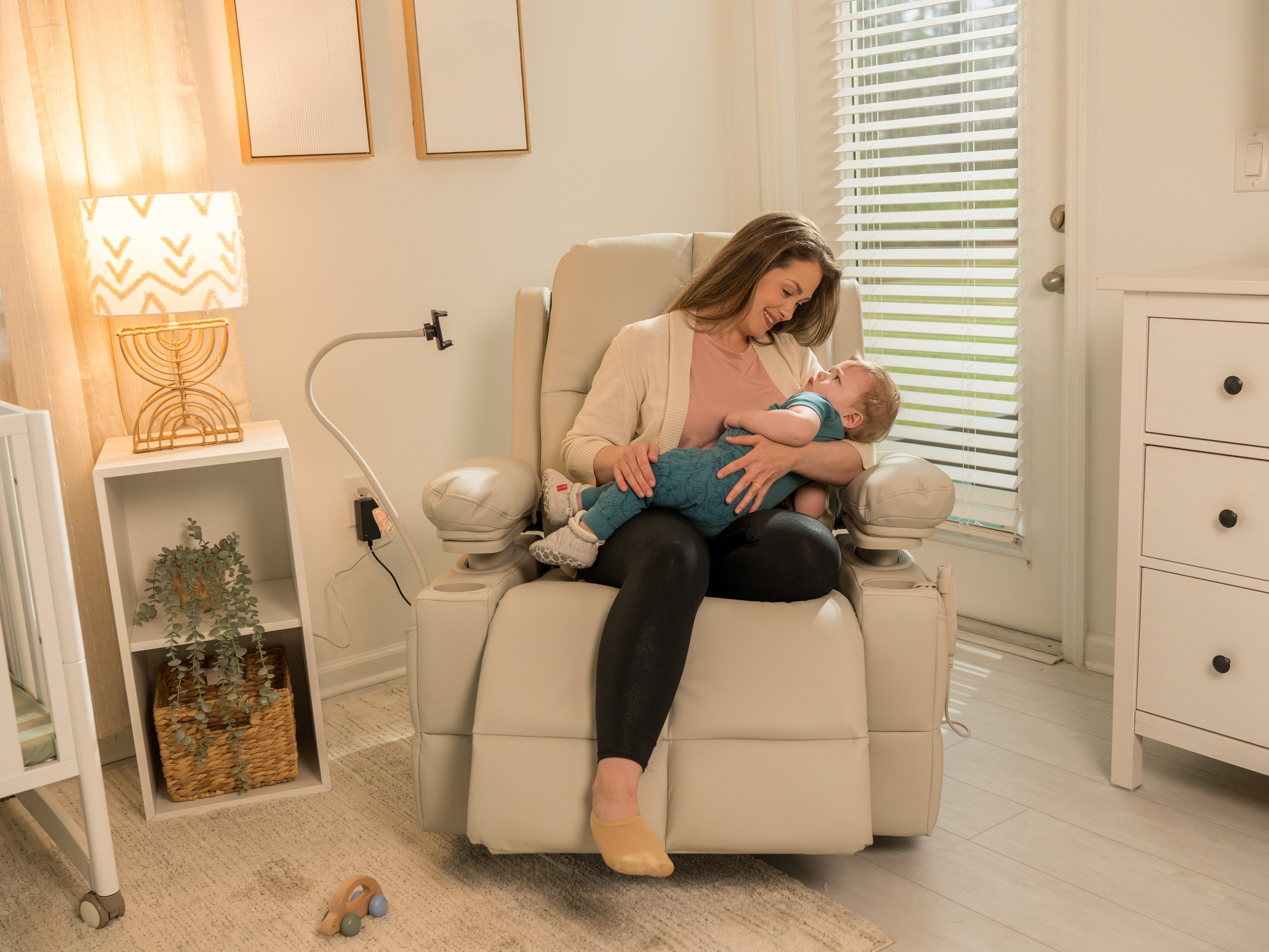
- by FangRussell
Is a Recliner Necessary for Nursery? Who Needs One, Alternatives, and How to Choose
- by FangRussell
You do not need a recliner to have a functional nursery. But if you expect long feeding sessions, a rougher postpartum recovery, or lots of night shifts in the baby's room, a recliner can earn its footprint faster than almost any other nursery chair. The real question is not whether every parent needs one. It is whether your feeding routine, room size, and recovery needs make a recliner a better tool than a glider, rocking chair, or armchair.
That distinction matters because this is one of the easiest places to overspend on the wrong “essential.” Some families are perfectly fine with a supportive chair and ottoman. Others end up wishing they had bought a nursery recliner from day one because their back, shoulders, and sleep routine take a bigger hit than expected. If you are trying to make a smart registry call, this guide will help you decide what is truly necessary, what is simply nice to have, and where a Mamazing chair fits if you want one seat to handle feeding, soothing, and late-night resets.
No, a recliner is not mandatory. A baby can be fed, soothed, and settled without one. But a nursery chair becomes much more valuable when it solves a daily friction point: poor support during feeds, nowhere comfortable to sit for 30 to 40 minutes, a room that is too small for multiple pieces, or a recovery period that makes constant repositioning harder.
A good way to think about it is this:
That does not mean you should plan to sleep in it with your baby. The American Academy of Pediatrics' safe sleep guidance says babies should sleep on a firm, flat sleep surface, not on an armchair, sofa, or other seating device. So the value of a recliner is not “safe baby sleep in the chair.” Its value is helping you stay comfortable enough to feed, settle, and then return your baby to a safe sleep space.
That is also why room setup matters. The AAP's guidance for parents recommends room-sharing for at least the first 6 months, which often means you will do a lot of feeds and soothing in or near the bedroom. A chair that is easy to get in and out of can make that rhythm much more manageable.
If you are asking, “Do you need a recliner for nursery life?” the honest answer depends on how demanding the chair's job will be in your home. These are the families most likely to feel the difference.
If you are recovering from a C-section, changing positions can be harder than you expect during the first weeks. The NHS breastfeeding guidance notes that side-lying or rugby hold positions can feel easier after a cesarean because they reduce pressure on the abdomen. MedlinePlus also recommends positions such as football hold and side-lying after a C-section. In practical terms, that means a chair with stable arm support, enough room to adjust pillows, and a smoother way to shift your body can be worth paying for.
I would not call a recliner a medical necessity for every postpartum parent. That would be too broad. But if you know you will need support getting upright, changing angles, and staying comfortable through repeated feeds, a recliner moves from luxury to high-value equipment very quickly.
Some babies feed fast and settle easily. Others keep you in one spot for what feels like your entire evening. The HealthyChildren breastfeeding guide says a chair used for feeding should have sturdy back and arm support, and that a low footstool can make seated feeding more comfortable. That advice is simple, but it explains why many parents end up disappointed by a random accent chair: it looks great, then feels terrible after the third feed of the night.
If one parent is handling the early shift and the other takes over later, a nursery recliner can reduce the amount of pillow-stacking, twisting, and slumping that makes nighttime care harder. It is not just about softness. It is about whether the chair helps you stay in a neutral, repeatable position when you are tired.
This is where a nursery recliner often beats the “we can just improvise” plan. In a small room, you may not have space for an armchair, ottoman, and extra stool. A recliner can replace all three if it gives you back support, a leg rest, and soothing motion in a single footprint.
That is especially useful if you plan to keep the chair in your bedroom for the newborn stage and move it later, or if you want one seat that still feels useful after the feeding-heavy months are over. If you are weighing that tradeoff, our what a nursery recliner actually adds guide can help you compare feature sets without starting from a blank slate.

Not every nursery chair has to recline. You can likely skip a recliner if most of these are true:
This is where many “is a nursery chair necessary?” questions land. A chair is helpful. A recliner is selectively helpful. If you are feeding comfortably on a supportive sofa corner or an armchair with an ottoman, the recliner may be nice but not necessary.
The mistake is buying the wrong category for your actual routine. If you want a beautiful reading chair, buy that. If you want a feeding-and-soothing workstation, buy for that job. Those are not always the same product.
A useful reality check is to picture your hardest hour of the day, not your best one. If your toughest moment is a daytime bottle feed while everyone is awake, you may not need much chair support. If your toughest moment is the 2 a.m. feed after broken sleep, when you are trying not to hunch over and your baby only settles with movement, your seating choice matters far more. That is why many parents who skip a recliner are still happy with the decision, while others regret not choosing a more supportive nursery chair earlier.
A nursing chair is a broad label. It can mean anything from a cushioned armchair to a glider to a full nursery recliner. A recliner is just the most feature-rich end of that category.
Here is the practical difference:
If you are comparing a recliner vs nursing chair for nursery use, the key test is whether you need more than a seat. Do you need easier repositioning? Better support for late-night feeds? A leg rest? More reuse beyond the newborn phase? If yes, a recliner starts making more sense.
On the other hand, if you mainly want a compact chair for short daytime feeds, a non-reclining nursery chair can be the smarter buy. That is why broad statements like “every nursery needs a recliner” are not very useful. Your body, room, and feeding routine decide this more than trend lists do.
This is where many parents get stuck, because each option solves a slightly different problem.
| Chair type | Best for | Main advantage | Main tradeoff |
|---|---|---|---|
| Rocking chair | Parents who want simple soothing motion | Classic feel, often lighter and visually softer | Usually less arm, back, and leg support for long feeds |
| Glider | Families who want smoother motion without a large recline | Gentler movement, often easier for repetitive soothing | May still need an ottoman for proper leg support |
| Recliner | Parents who want one chair to handle feeding, soothing, and recovery comfort | Best all-in-one support, especially for long sessions | Can cost more and needs clearance planning |
If you are leaning toward motion over recline, our detailed glider vs recliner guide goes deeper. But for a quick decision:
One subtle point that gets missed: a chair that feels “less bulky” in the store can actually create more clutter in a nursery if it still needs an ottoman, extra pillow support, or a second place to stretch out. Sometimes the bigger-looking chair is the simpler room plan.
There is also a temperament factor. Some babies calm down with almost any rhythmic movement, so a simple rocker may do the job. Others need long holding sessions, repeated relatching, and more parent comfort than a basic rocker can offer. That is where the recliner argument gets stronger: you are not paying only for motion, but for how long you can stay in the chair without feeling like you need to escape it.

If you decide not to buy a nursery recliner, do not default to “anything will do.” Good alternatives work when they reproduce the support you actually need.
This is the closest substitute. It can work very well if the chair has real back support, usable arm height, and enough seat depth for pillows. It is often the best option if you want the chair to blend into a living room later.
A glider is a strong alternative if your baby responds well to motion and you do not care much about leg elevation. This is often a better answer than a basic rocker for parents who expect lots of soothing but do not want a full recliner.
This can work for daytime feeds, but it is usually the weakest long-term plan. Sofas often encourage slouching, and beds rarely give the upright arm support that helps during repetitive feeding. If you go this route, be extra careful about sleepiness. The AAP's safe sleep guidance says to avoid infant sleep on a couch, armchair, or other seating device, which is another reason a “we'll just use the sofa” plan can backfire during exhausted nights.
The best alternative depends on what problem you are solving. If your issue is budget, an armchair plus ottoman may be enough. If your issue is room size, a glider could fit better. If your issue is postpartum comfort, a recliner usually pulls ahead.
If you have landed on “yes, a recliner is necessary for my nursery,” focus less on the label and more on how the chair performs during feeding and soothing.
This is also the point where brand-specific features become relevant. If you already know you want a recliner and want to compare feature priorities, you can jump to our best recliner for nursery picks or look directly at the Mamazing nursery recliner. That is a better moment for product consideration than the very beginning of the decision.
So, is a recliner necessary for nursery planning? Not universally. But it can be one of the smartest buys in the room if you need support for long feeds, a smoother recovery setup, or one seat that can handle several roles without extra furniture.
If your current plan already gives you good back support, arm support, and a comfortable feeding position, you may not need one. If your setup still sounds like “we'll just use the sofa and see,” you may be underestimating how much time you will spend in that chair. That is usually the difference between a recliner being optional and a recliner being worth every inch.
For many parents, the best answer is neither “every nursery needs one” nor “you can always skip it.” The best answer is to buy the seat that matches your hardest daily task. If you want that seat to feel supportive now and still useful later, Mamazing is a good place to start comparing realistic nursery options rather than registry myths.
A nursery chair is helpful, but it is not essential for every family. It becomes worth it when you expect long feeds, frequent night soothing, or need better body support than a sofa or bed can offer.
They can be, especially if one chair replaces an armchair, ottoman, and extra seating corner. In a small nursery, a compact recliner or glider often works better than several separate pieces.
Yes, if it fits the room, feels supportive for feeding, and is easy to get in and out of. The main downside is that a regular recliner may be bulkier, louder, or less practical to clean than a nursery-specific model.
An armchair with an ottoman is the closest substitute. A glider is another strong option if you want soothing motion, while a sofa setup works best only when it already gives you proper back and arm support.
No, a rocking chair is not necessary for a baby. It can be useful for soothing, but babies do not require rocking furniture as long as you have a safe sleep space and a comfortable place to feed and settle them.



Best Nursery Rocking Chairs and Gliders: How to Choose a Glider, Rocker, or Recliner
What Is a Nursery Recliner? Do You Need One?