
- by FangRussell
Most Comfortable Rocking Chair for Nursery: Top Picks and Buying Guide
- by FangRussell
If you are shopping for a comfortable rocking chair for a nursery, the real question is not simply whether a chair feels soft in a showroom photo. The chair you choose has to support feeding, soothing, contact naps while you stay awake, and all the tired moments when you need to sit down without fighting the seat.
That is why the most comfortable nursery chair usually balances three things at once: strong arm and back support, motion that feels smooth instead of distracting, and a shape that still works for your room after you add a side table, a feeding pillow, or a basket of burp cloths. A chair that looks plush but leaves your shoulders unsupported can feel disappointing fast. A chair that reclines beautifully but dominates the room can also become a daily frustration.
For many families, comfort is most obvious during feeding. HealthyChildren notes that supportive arm and back positioning can make breastfeeding more comfortable and sustainable, which is why nursery chair comfort is really about body support, not just cushioning.
This guide breaks down what actually makes a rocking chair comfortable, when a glider or recliner may feel better than a classic rocker, and which Mamazing chairs make the most sense depending on whether you care most about feeding support, compact width, or long-session comfort.
A comfortable nursery rocking chair should help you settle in quickly and stay supported for longer sits. That means comfort comes from a combination of posture, motion, and practicality rather than one oversized cushion.
| Comfort factor | Why it matters in a nursery | What to watch for |
|---|---|---|
| Arm support | Helps during breastfeeding and bottle-feeding | Arms should land naturally without forcing your shoulders up |
| Back and lumbar support | Reduces neck and mid-back strain during long feeds | Look for upright support, not a seat that swallows you |
| Quiet motion | Keeps soothing smooth and less disruptive | Avoid jerky movement or squeaks that break the rhythm |
| Recline and foot support | Useful for cluster feeds and recovery time | Should feel supportive, not so deep that standing up gets hard |
| Easy-clean upholstery | Milk, spit-up, and snack messes are part of normal use | Choose finishes that can be wiped down without stress |
| Seat depth and exit ease | You will sit down and get up while tired and often holding a baby | Comfort should not come at the cost of awkward exits |
If a nursery chair feels good for five minutes but leaves your elbows floating, it usually stops feeling comfortable once the real feeding routine begins. Unsupported arms can push strain into your wrists, upper back, and shoulders, especially when feeds run long or happen several times in a night.
That is one reason adjustable or well-shaped armrests matter so much. They help keep your baby closer to a natural feeding height and reduce the urge to compensate with stacked pillows. For parents who plan to both breastfeed and bottle-feed, this is often the comfort feature that separates an attractive chair from a genuinely useful one.
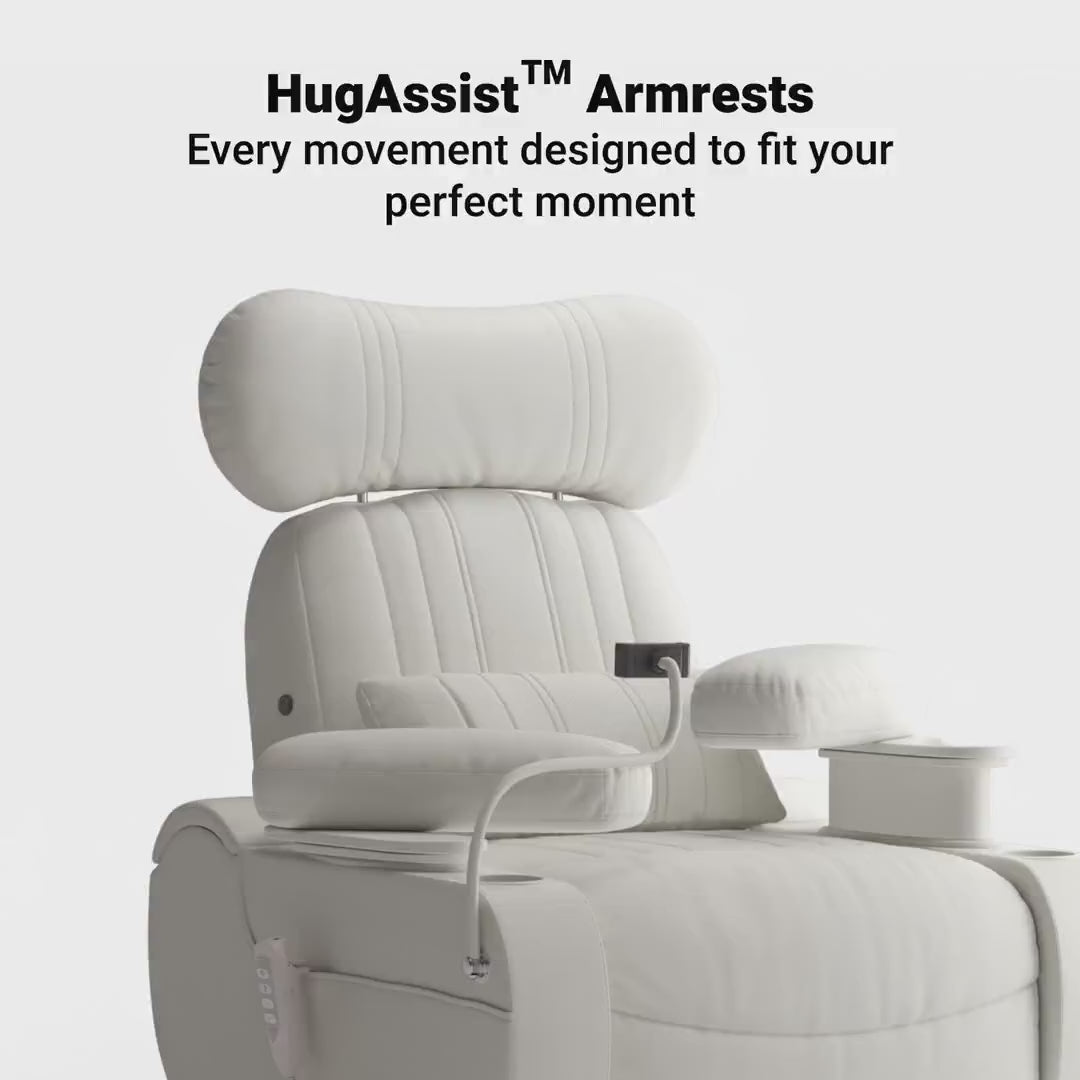
Mamazing's HugAssist armrest design stands out here because it is built around that exact feeding problem. If arm support is your main buying priority, it deserves more weight than decorative details or extra-soft cushioning.
The most comfortable rocking chair for nursery use is rarely the one with the puffiest look. In practice, many parents feel better in a chair that keeps them supported and upright enough to feed comfortably, then reclines when they actually want to rest.
Look for a backrest that supports your mid-back and helps you avoid curling forward. If you plan to use the chair for reading, pumping, or soothing after feeds, neck and head support also start to matter more than you might expect.
A good nursery chair should let you change posture without feeling like you are constantly readjusting your whole body.
Comfort is not only about padding. The movement itself matters. Some parents love the familiar arc of a traditional rocker, while others prefer the steadier feel of a glider. If your goal is the most relaxing, least distracting motion during soothing sessions, the smoother option usually wins.
This is why gliders and rocker-recliner hybrids often feel more comfortable over time than simple rockers. They tend to ask less effort from your body while still giving your baby the rhythmic motion many families want.
Not every family needs a recliner, but many families end up appreciating one. Recline can make longer feeding sessions easier, give you more flexibility during recovery, and make the chair more useful after the newborn stage.
At the same time, recline only helps if the chair still fits your room and if the seated position remains supportive. A chair that reclines but demands too much floor clearance can feel less practical in a smaller nursery than a more upright glider with better feeding support.
Also, a recliner can support awake comforting and resting, but it should not blur the line between a feeding chair and a sleep surface. NICHD's Safe to Sleep guidance emphasizes that babies are safest on a firm, flat sleep surface, so even the most comfortable nursery chair should still be treated as a place for awake care rather than routine sleep.
A nursery chair can feel wonderful on day one and become annoying if the upholstery traps heat, shows every milk drip, or makes cleanup feel like a project. Comfort lasts longer when the material feels soft enough for skin contact but practical enough for everyday messes.
That is part of the appeal of wipeable, breathable finishes. If you expect frequent feeding, pumping, or snack time in this chair, easy cleaning is not a bonus feature. It is part of long-term comfort because it keeps the chair easy to use without adding chores.
There is no universal winner for every family, but each type tends to feel best in different situations.
| Chair type | Best for | Tradeoff |
|---|---|---|
| Classic rocking chair | Parents who want a simple, traditional feel | Often lighter on padding, ergonomics, and recline |
| Glider | Long feeding sessions and quiet soothing | Some models stay upright and offer less full-body rest |
| Rocking recliner / hybrid | Families who want feeding support plus recline and swivel | Usually costs more and needs more planning for room fit |
For many parents searching specifically for the most comfortable rocking chair for nursery use, a hybrid design ends up being the strongest fit because it supports more than one stage of the routine: feeding, soothing, resting, reading, and everyday nursery downtime.
If you want a practical shortlist instead of general theory, these are the Mamazing chairs most worth comparing.

The Lullapod Max Nursery Recliner is the strongest choice if you want the most feature-rich comfort setup. Its product page lists a width of about 36.2 inches and a depth around 38.9 inches, which means it is not the bulkiest-looking option in the line even though it offers recline, swivel, and more lounge-like support.
Its biggest comfort advantage is that it is built around feeding posture as much as relaxation. The HugAssist armrests, recline capability, adjustable head support, and swivel movement make it easier to adapt the chair to how you actually sit at different times of day. If your priority is fewer compromises, this is the chair to start with.
The Lullapod Nursery Chair is a strong option if you care most about arm support and nursery-specific comfort but do not necessarily need the most premium rest features. Mamazing lists it at about 38.9 inches wide and 37.4 inches deep, so it still sits in a manageable range for many nurseries.
This is the better pick when you want a chair that feels purpose-built for feeding and soothing without pushing quite as far into the all-in recliner experience.
The Lullapod Zen Nursery Chair is another practical choice for parents who want comfort without an oversized look. Mamazing lists it at about 41.7 inches high, 38.2 inches wide, and 37.4 inches deep.
If you like the idea of a supportive nursery chair but want the room to stay visually lighter, the Zen is worth comparing against the standard Lullapod and the Max before you decide.
| Model | Best for | Published size snapshot |
|---|---|---|
| Lullapod Max Nursery Recliner | Parents who want the most complete comfort feature set | About 36.2 in. wide and 38.9 in. deep |
| Lullapod Nursery Chair | Feeding-focused comfort with a balanced footprint | About 38.9 in. wide and 37.4 in. deep |
| Lullapod Zen Nursery Chair | Supportive comfort with a slightly cleaner profile | About 38.2 in. wide and 37.4 in. deep |
If you are still deciding between models, this usually works better than chasing a single "best" answer:
It also helps to think about your hardest daily use case instead of your easiest one. If the chair still feels like a good answer for a 3 a.m. feed, a contact nap while you stay awake, and a quick sit-down when your shoulders are already tired, it is probably the right comfort fit.

Not every family wants a premium hybrid chair, so it is still helpful to compare the other routes parents often take.
This can work if you care most about a traditional look and do not plan to use the chair for long feeds every day. The tradeoff is that comfort usually depends on add-on cushions rather than built-in support.
This often feels more cozy than a wooden rocker, but many basic rockers still fall short on feeding ergonomics and adjustability. They can be a decent middle ground if your use is lighter.
These can feel smooth and calming, but the ottoman itself can become one more object to navigate in a nursery. For some parents, an integrated recline ends up feeling simpler than managing a separate footrest.
That last point matters. New-parent fatigue is real, but your chair should not add avoidable strain on top of it.
If you want to compare more options after this guide, Mamazing's nursing chair collection is the fastest way to see the current lineup in one place. For broader buying help, you can also read Mamazing's guide on how to choose the best nursing chair and its more glider-specific roundup of the best glider rockers for your nursery.
For many parents, the most comfortable option is the chair that combines strong arm support, a supportive back, smooth motion, and a recline that still feels easy to get out of. In Mamazing's lineup, the Lullapod Max is the strongest fit if you want the most complete comfort feature set.
Many parents find gliders more comfortable for longer feeding sessions because the motion feels smoother and more stable. A classic rocker can still feel great if you prefer a more traditional movement and do not need as much ergonomic support.
No, but many families end up appreciating recline for longer feeds, recovery time, and everyday resting. The key is making sure the chair still fits your room and supports good posture when you are upright.
The best material is usually the one that feels comfortable against skin and stays easy to clean when real nursery messes happen. Wipeable, breathable finishes or removable covers are often the most practical choices.
Yes, a supportive nursery chair can be a very useful place for awake feeding and soothing. The important part is using the chair as an awake-care space and moving your baby back to a firm, flat sleep surface for routine sleep.
Yes. A well-made nursery chair often transitions naturally into a reading corner, bedroom chair, or quiet spot in another room, which can make a higher upfront investment feel more worthwhile.
Armrests that support your elbows at a natural feeding height usually feel best. Adjustable or feeding-focused arm designs are especially helpful if you expect to spend a lot of time in the chair every day.
The most comfortable rocking chair for nursery use is the one that supports your real routine, not the one with the softest marketing language. If you want the most complete comfort setup, start with the Lullapod Max. If you want a more streamlined nursery-specific option, compare the standard Lullapod and the Zen side by side.
Either way, prioritize the features that change how your body feels after repeated use: arm support, back support, quiet motion, cleanability, and easy exit. Those are the details that make a nursery chair feel genuinely comfortable long after the first week home.



Rocking Chair vs Glider for Nursery: Which Is Better for Feeding, Comfort, and Small Spaces?
Best Travel Stroller for Airplane: Lightweight & Carry-On Friendly Picks