
- by xiaoyuyang
When Can Baby Wear Sunscreen? FDA Guidance Before 6 Months and What to Use After
- by xiaoyuyang
If you want the short answer, most babies can start wearing sunscreen at around 6 months old. Before that, the safer plan is shade, lightweight clothing, hats, and timing your outings to avoid strong midday sun. The FDA says infants under 6 months should be kept out of direct sunlight whenever possible, and sunscreen should be used only in small amounts on tiny exposed areas if shade and protective clothing are not available.
That means you do not need to panic every time you step outside with a newborn. You do need a clear plan. If your baby is 2 or 3 months old, your goal is not to find the strongest SPF on the shelf. Your goal is to limit direct sun, create shade, and cover exposed skin. Once your baby is older than 6 months, sunscreen becomes part of the routine, but it still works best alongside hats, breathable layers, and common-sense timing. At Mamazing, we like this approach because it is simple, realistic, and much easier to follow than trying to treat sunscreen as the only line of defense.
Quick answer:
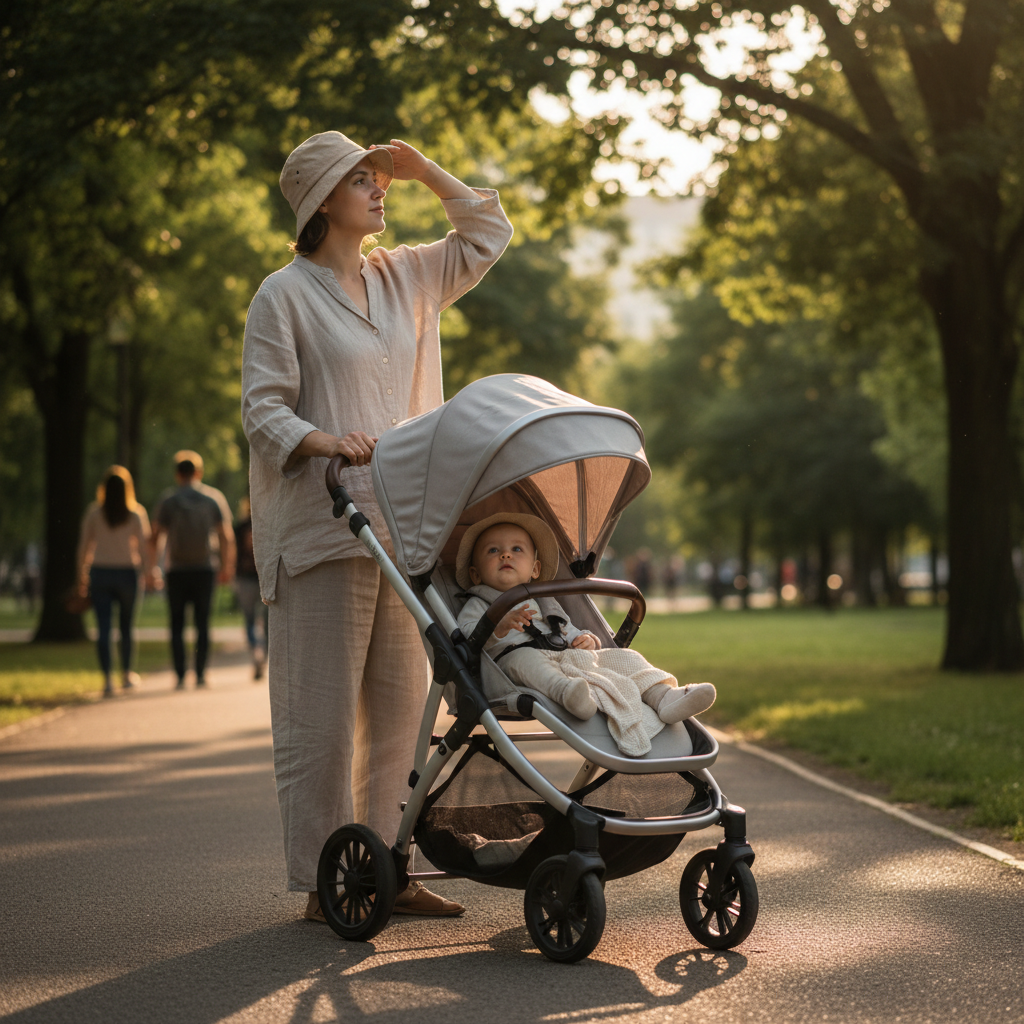
Most babies can start wearing sunscreen once they are about 6 months old. That is the age most pediatric guidance uses as the practical line between “avoid sunscreen unless you truly need it” and “use sunscreen as part of normal outdoor protection.”
There is a reason this question comes up so often: parents are not usually asking whether sunscreen exists. They are asking when it becomes the right tool. For a newborn or young infant, sunscreen is the backup plan. For an older baby, sunscreen becomes one of the main tools, especially for walks, park time, beach days, pool time, and car-to-stroller transitions when sunlight hits exposed skin.
| Baby age | Best sun protection approach | Is sunscreen okay? | What to remember |
|---|---|---|---|
| Newborn to 6 months | Shade, hat, breathable long sleeves, stroller canopy | Avoid routine use | Use a tiny amount only if exposure is unavoidable |
| 6 to 12 months | Shade plus sunscreen | Yes | Choose broad-spectrum mineral SPF 30+ |
| 12 months and up | Full sun routine | Yes | Reapply every 2 hours and after water play |
If your baby is 9 months old, yes, sunscreen is appropriate. If your baby is 3 months old, the answer is different: prioritize covering and shading first, then use only a minimal amount if you truly cannot avoid sun on a small exposed area. That age-by-stage distinction is what many parents are actually looking for, and it is much more useful than a vague “ask your pediatrician” answer with no practical next step.
The official guidance is straightforward: babies younger than 6 months should be kept out of direct sunlight as much as possible. The FDA explains that infants are at greater risk of sunscreen side effects, which is why shade and protective clothing come first.
The nuance matters. “Avoid sunscreen” does not mean “do nothing if you are caught outside.” The FDA also notes that if clothing and shade are not available, you can use a small amount of sunscreen on small exposed areas such as the face and the backs of the hands. The American Academy of Dermatology makes the same practical point: the best plan for young infants is staying in the shade, dressing them in lightweight protective clothing, and using sunscreen only when those options are not enough.
In real life, that might look like:
Those are the moments when a tiny amount on exposed skin may make sense. The bigger takeaway is that babies under 6 months should not be treated like older kids who can simply be coated in SPF and sent outside.
Usually, no. A newborn, 2-month-old, or 3-month-old should not use sunscreen as a normal daily solution. The safer approach is still to keep your baby in the shade, use clothing and hats, and limit direct exposure during stronger UV hours.
Here is the practical version by age:
This is where many families get tripped up. A 3-month-old can look much sturdier than a newborn, especially if your baby is alert, smiling, and enjoying stroller walks. But the sun-safety rule has not really changed yet. If your baby is still under 6 months, think “cover and shade first.”
If you want a simple decision filter, ask yourself two questions: Can I keep my baby in shade? and Can I cover the exposed skin instead? If the answer to both is yes, do that instead of reaching for sunscreen.
You protect a baby under 6 months from the sun by reducing exposure, not by relying on products. In practice, that means choosing your timing, creating shade, covering the skin, and watching for heat as closely as you watch for sunlight.
The CDC recommends a layered sun-safety routine that includes shade, protective clothing, and hats. For babies, that layered approach matters even more because their skin and heat regulation are still immature.
If you need a hat-specific refresher, Mamazing’s guide on when newborns should wear hats pairs well with this topic. If your baby spends a lot of time outdoors in a stroller, our article on when baby can sit in a stroller is also useful for thinking about canopy use, recline, and comfort during longer walks.

One detail parents sometimes miss: shade from a canopy or umbrella is helpful, but reflected light can still reach exposed skin. That does not mean you need to rush to sunscreen on a 2-month-old. It means you should combine shade with clothing, a hat, and shorter exposure windows.
Usually, no. Even after 6 months, it is smarter to choose a baby-friendly mineral sunscreen instead of assuming a standard adult sunscreen is the best option.
The main reason is not that every adult sunscreen is automatically unsafe. It is that many adult formulas are made for different priorities: lighter cosmetic finish, fragrance, sports wear, spray convenience, or chemical filters that can sting sensitive skin. The American Academy of Pediatrics’ parent guidance recommends a broad-spectrum sunscreen with an SPF of at least 15, and many parents prefer mineral options with zinc oxide or titanium dioxide for babies because they are simple, gentle, and easy to see during application.
If your baby is under 6 months, “regular sunscreen” is still not the answer for routine use. If your baby is older than 6 months, using an adult product occasionally is not always a disaster, but it still makes sense to choose a fragrance-free, broad-spectrum mineral sunscreen designed for sensitive skin whenever you can. That choice gives you more margin for error and usually causes fewer complaints from cheeks, folds, and freshly drooled-on chins.
Sprays are another place to be careful. They can be harder to control around the face, easier to miss in windy conditions, and less reassuring when you are trying to see where coverage actually landed. For most babies, a lotion or cream is the easier and more reliable choice.
After 6 months, the best sunscreen for most babies is a broad-spectrum mineral sunscreen with SPF 30 or higher. Look for zinc oxide, titanium dioxide, or both, and pick a simple lotion or cream you can spread evenly.
The HealthyChildren guidance from the AAP also recommends testing a small amount on your child’s back first if you are worried about a reaction. That is especially helpful if your baby has eczema, highly reactive skin, or a history of irritation from lotions.
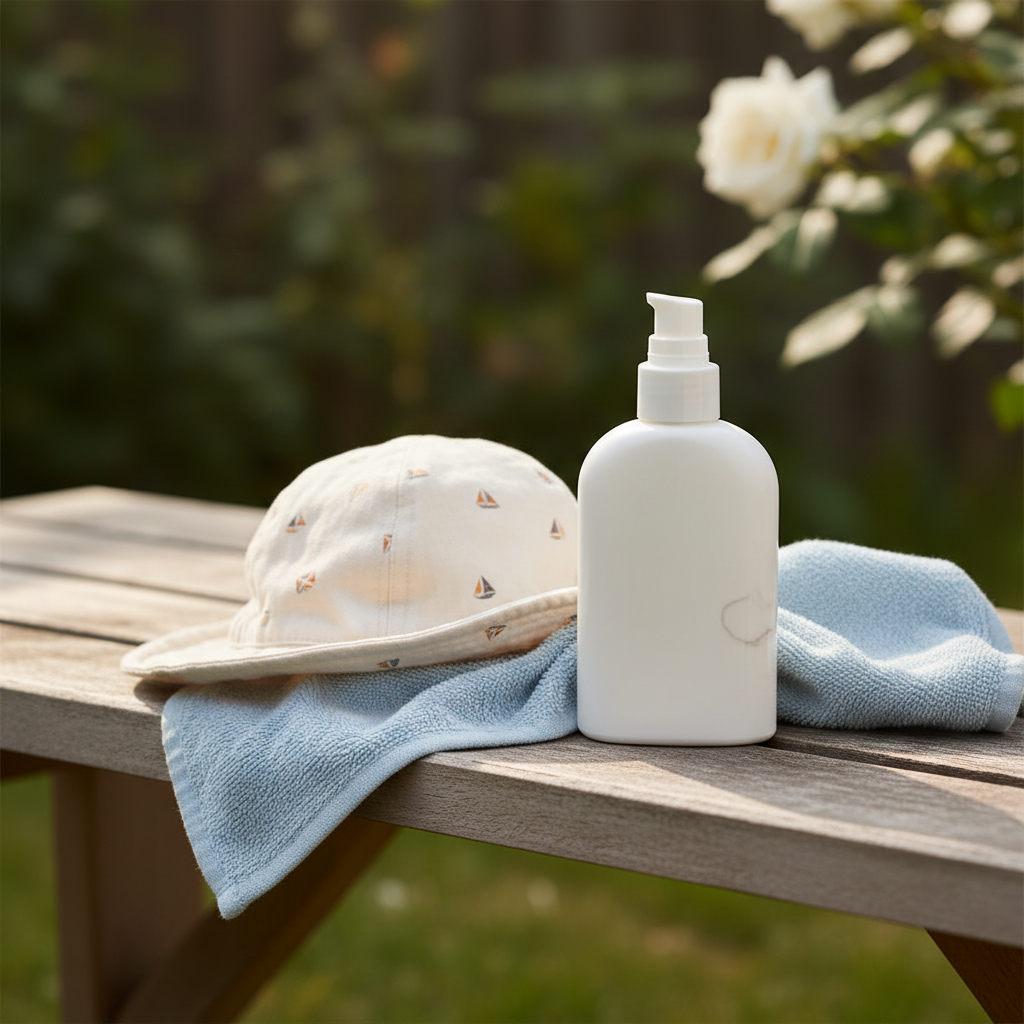
What should you skip? Heavily fragranced formulas, products that sting near the eyes, and anything that feels so unpleasant that you will be tempted to use too little. The best sunscreen is the one you can apply well, reapply on time, and trust on your baby’s most exposed areas.
After your baby is old enough to use sunscreen routinely, correct application matters almost as much as the product itself. A great mineral sunscreen used too late or too lightly will still leave exposed skin behind.
If your baby fights lotion, break the task into zones instead of trying to do a full-body application in one frantic minute. Cheeks, forehead, ears, hands, and feet first. Then the arms and legs. A calmer, more thorough application beats a rushed one every time.
You should step out of the sun or wash sunscreen off if your baby looks uncomfortable, develops a rash, or seems too warm. Sun safety is not only about preventing a burn. It is also about avoiding overheating and skin irritation.
Parents sometimes assume a fussy baby outdoors is simply tired. Sometimes that is true. Sometimes your baby is hot, overstimulated, or telling you that the outing has already gone long enough.

Usually no. For a 2-month-old, use shade, a hat, breathable clothing, and a stroller canopy first. If sun exposure is truly unavoidable, you can use a very small amount on small exposed areas, but sunscreen should not be your regular plan yet.
A 3-month-old is still in the under-6-month group, so routine sunscreen use is not the first choice. Prioritize shade and clothing, and use only a minimal amount on exposed skin if you cannot avoid direct sun.
Newborns should not use sunscreen on the face as a routine habit. Keep your newborn out of direct sun whenever possible, and if you are in an unavoidable situation, use only a tiny amount on small exposed areas.
It is better not to rely on regular adult sunscreen for babies. After 6 months, a broad-spectrum mineral sunscreen made for sensitive skin is usually the better choice because it is simpler, gentler, and easier to apply evenly.
A broad-spectrum mineral sunscreen with SPF 30 or higher is the safest starting point for most babies after 6 months. Look for zinc oxide or titanium dioxide, and choose a fragrance-free lotion or cream if your baby has sensitive skin.
Use timing, shade, lightweight clothing, a brimmed hat, and a stroller canopy instead of relying on sunscreen. Those steps should do most of the work for babies under 6 months, with sunscreen saved for small exposed spots only when you cannot avoid direct sun.
If you remember only one thing, remember this: most babies can start wearing sunscreen at about 6 months old, but babies under 6 months need shade and coverage first. That one sentence clears up most of the confusion around newborn sun care.
The good news is that protecting your baby does not have to be complicated. A hat, a breathable layer, a canopy, good timing, and a baby-friendly mineral sunscreen after 6 months will cover most real-world situations. If you are building your warm-weather routine now, Mamazing has more baby gear and parenting guides to help you make outdoor time safer, calmer, and easier to manage.


Cognitive Development in Early Childhood
Baby Mosquito Bite: What It Looks Like, How to Treat It, and When to Worry