If you want the short answer, a newborn hospital bag should stay simple: pack one well-organized baby section with 2-3 everyday outfits, 1-2 going-home outfit options in more than one size, a properly installed infant car seat, and a few comfort items you know you will actually use. Most hospitals already provide the true basics like diapers, wipes, blankets, and simple shirts, so the goal is not to pack for every possible scenario.
For most first-time parents, the smartest timing is to have the baby's hospital bag ready by about 35 to 36 weeks, or earlier if your provider thinks labor could happen ahead of schedule. This guide walks you through what to pack for baby, what size clothes to bring, what the hospital usually provides, and what you can safely leave out.
In this guide, you'll find a baby-only packing list, a simple timeline for when to pack, clothing-size advice for the hospital, a realistic look at what hospitals usually provide, and clear answers to the questions first-time parents ask most.
What to Pack in a Newborn Hospital Bag
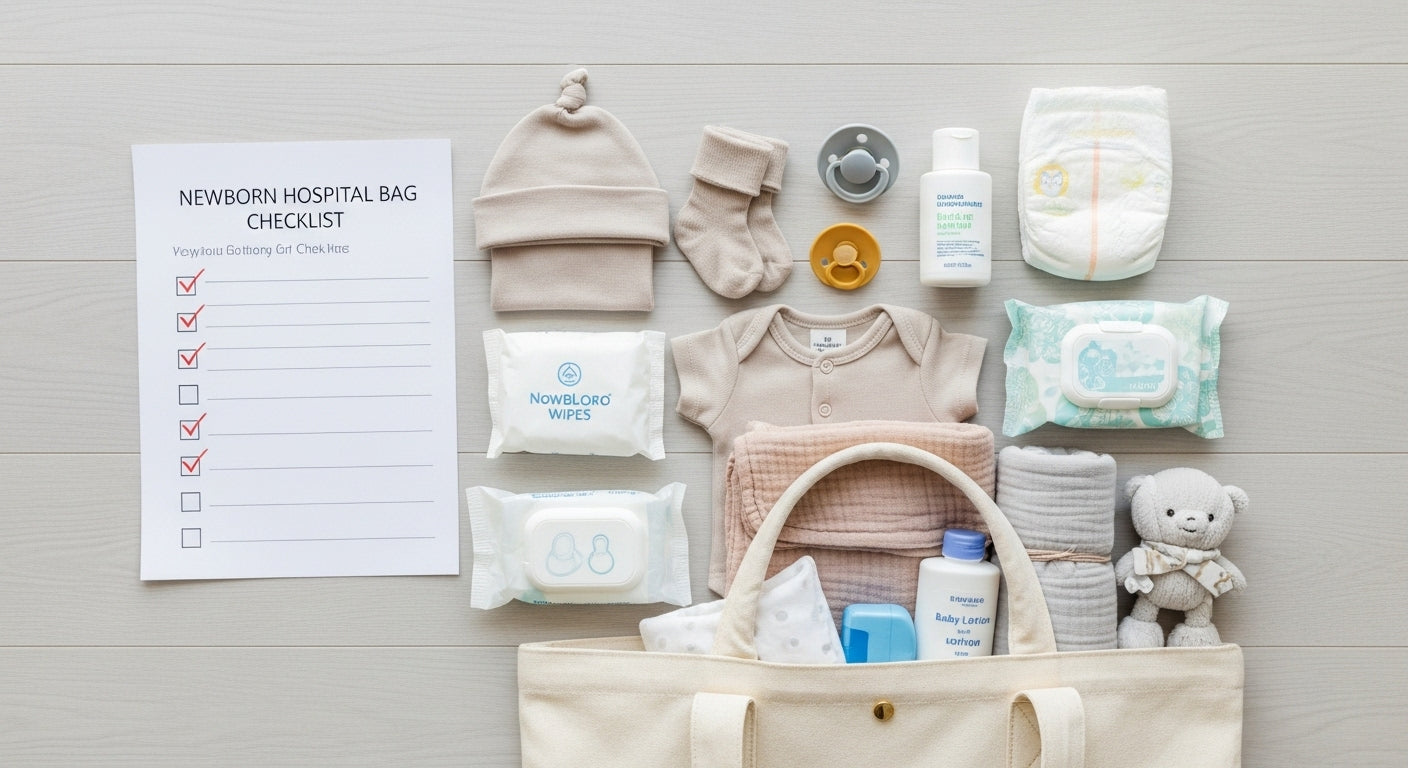
The easiest way to build a baby hospital bag is to think about the first 24 to 48 hours and the ride home, not every "just in case" moment. In most cases, your newborn needs only a few categories covered: safe transportation, simple clothing, feeding support items if your hospital told you to bring them, and a small number of comfort extras.
Your true essentials are an installed infant car seat, 2-3 basic outfits, 1-2 going-home outfit choices in different sizes, a hat if your hospital or climate makes it useful, and a swaddle or blanket only if you prefer your own. If you are formula feeding or expect NICU care, ask your hospital before adding bottles, pumps, or specialty supplies, because what parents need to bring varies more than many packing lists suggest.
One helpful rule: if the item will not make feeding, diapering, dressing, skin-to-skin time, or the ride home easier, it probably does not belong in the baby's bag.
A simple layout works better than a long packing list. Many parents do well with one small baby cube for clothes, one zip pouch for optional comfort items, and one note or checklist that reminds them the car seat is installed and ready. That kind of setup is easy to hand off to a partner, nurse, or grandparent without a long explanation, which matters a lot more than squeezing in five extra "backup" items.
When to Pack Your Baby's Hospital Bag
Pack the baby's hospital bag before you feel "fully ready." For a straightforward pregnancy, many parents feel most comfortable having it done by 35 to 36 weeks. If you have a higher-risk pregnancy, are carrying multiples, or your care team has mentioned early-delivery risk, pack earlier and use your provider's timing instead of a generic checklist date.
The point is not superstition. It is simply easier to think clearly about sizes, paperwork, and what the hospital provides when you are not rushing through contractions or a last-minute call from your provider.
Hospital Bag Checklist by Pregnancy Week Timeline
| Pregnancy week |
Recommended action |
Priority |
Why it helps |
| 32-35 |
Gather baby basics and confirm hospital policy |
Low to medium |
You still have time to adjust sizes and remove extras. |
| 35-36 |
Finish packing the baby's bag |
High |
This is the sweet spot for most first-time parents. |
| 36-38 |
Keep it by the door or in the car plan |
Critical |
You want grab-and-go access, not a finished bag hidden in a closet. |
| 38+ |
Recheck the last small items and the car seat |
Essential |
This is the stage for a quick refresh, not a full repack. |
If you tend to delay because you are unsure what belongs in the bag, make one baby pouch first: one newborn outfit, one 0-3 month outfit, one hat, one swaddle, and the paperwork note that reminds you the car seat is ready. Getting the core packed early is more useful than waiting to build a perfect list later.
You can also make the final days easier by treating a few items as \"last-minute drop-ins\" instead of keeping the whole bag open. If there is a favorite blanket, a weather-specific outfit, or one specific feeding item you may use, keep those on a short note near the bag so you are not unpacking and repacking everything at the end.
What Size Baby Clothes Should You Pack for the Hospital?
This is one of the most practical questions on any newborn hospital bag checklist, because size uncertainty is real. The safest plan is usually to pack one newborn-size option and one larger option for the trip home, rather than assuming ultrasound estimates or late-pregnancy guesses will be exact.
For many families, the going-home outfit is the place where size flexibility matters most. Daily hospital basics can stay very simple, but the discharge outfit should be easy to put on, comfortable around the umbilical area, and realistic for the weather and car seat fit.
Simple size strategy
-
Bring more than one size. One newborn outfit plus one 0-3 month option covers most uncertainty.
-
Choose easy fastenings. Side-snap or front-open pieces are easier than tight overhead outfits when you are new to dressing a baby.
-
Keep the fabric soft and practical. Hospital photos matter, but comfort and easy diaper changes matter more.
-
Think about the ride home. Puffy, bulky layers may look cute but can make car-seat fit harder.
Going Home Outfit Size Guide for Unexpected Baby Sizes
| Estimated baby size |
Best first choice |
Backup option |
Why |
| Very small / early baby |
Preemie or tiny-baby size |
Newborn |
Keeps the outfit from swallowing the baby. |
| Average newborn range |
Newborn |
0-3 months |
Gives you a reliable first choice with a simple backup. |
| Larger baby / longer baby |
0-3 months |
Newborn with stretchy fit |
Avoids a too-tight car-seat outfit on discharge day. |
If you are unsure what happens after discharge, Mamazing's newborn care guide for first-time parents is a useful next read, especially for feeding, sleep, and basic first-week care.
What the Hospital Usually Provides vs What You Should Bring
This is where many baby hospital bag lists get bloated. In many hospitals, newborn basics such as diapers, wipes, standard blankets, simple shirts, and immediate post-birth care supplies are already covered during your stay. That does not mean every hospital is identical, but it does mean you should check policy before filling your bag with bulky duplicates.
What you are usually bringing for your own comfort or preference is different: a preferred swaddle, a better going-home outfit, a nicer hat for photos, or a pacifier only if your care team says it fits your feeding plan. Bring the things that improve the first day for your family; do not assume you need to recreate a nursery inside the hospital room.
One practical crossover item is clothing that works well around cord care and diaper changes. If you want a quick refresher on what changes after discharge, Mamazing also has a guide on umbilical cord care after the stump falls off.
Complete Newborn Hospital Bag Checklist
If you only want one section to screenshot or save, use this one. Start with the true essentials, then add only a few optional items that fit your hospital's rules and your family's preferences.
| Category |
Pack this |
How much |
Notes |
| Ride home |
Infant car seat already installed |
1 |
This is the non-negotiable item. |
| Everyday clothes |
Onesies or sleepers |
2-3 |
Enough for a short stay without overpacking. |
| Going-home outfit |
One main option plus one backup size |
2 outfits |
This is where size flexibility matters most. |
| Warmth / comfort |
Hat, swaddle, lightweight blanket |
1-2 each max |
Bring only what you expect to use. |
| Optional extras |
Mittens, photo outfit, pacifier if approved |
Minimal |
Only if they solve a real need. |
-
Pack by function, not by store category. Keep dressing items together, ride-home items together, and optional comfort extras together.
-
Label the baby section. If your partner or support person needs to grab something quickly, they should not need to guess.
-
Leave room for what the hospital sends home. Families often go home with at least a few basic supplies or printed care information.
-
Keep the bag lightweight. If you would not want to carry it during a stressful moment, cut it down.
What to Leave Out of a Newborn Hospital Bag
A lot of first-time parents do not underpack. They overpack because they are trying to feel prepared for every possible version of birth, feeding, weather, and discharge. The problem is that extra items rarely make the hospital stay easier. They usually make the bag heavier, harder to search, and more stressful to manage when you actually need something fast.
For most routine births, you can usually leave out bulky packs of diapers and wipes, too many outfit changes, thick blankets, toys, multiple swaddles, backup bottles you have not been told to bring, and anything that only makes sense once you are already settled at home. If the item solves a newborn-hospital problem, keep it. If it solves a week-two-at-home problem, it probably belongs somewhere else.
-
Skip a full wardrobe. Newborns usually need simple, easy-change clothing, not lots of outfit choices.
-
Skip bulky comfort extras unless you know you will use them. One preferred swaddle or blanket is reasonable; an entire stack is not.
-
Skip products your hospital already stocks. A quick policy check can save a lot of wasted space.
-
Skip "maybe someday today" gear. If you are only packing it because an online checklist mentioned it once, take it back out and ask whether it serves a real first-48-hours need.
One practical test is this: if your partner had to find the baby's going-home outfit with no help from you, could they do it in ten seconds? If the answer is no, the bag is probably carrying too much low-value stuff. A shorter checklist almost always performs better than a more ambitious one.
Another useful reset is to separate items into three groups: must be in the bag now, only pack if your hospital asked for it, and better left at home. When parents do that, the bag usually shrinks fast. It also becomes easier to spot what still matters on delivery day: the car seat, the discharge outfit, a few easy clothes, and a couple of comfort items you know you will use.
Common Hospital Bag Mistakes First-Time Parents Make
The most common mistake is not forgetting one magical item. It is packing too many low-value things and making the essentials harder to find. A newborn hospital bag works best when it is boringly practical.
-
Overpacking clothes. For a routine stay, you usually do not need a full wardrobe.
-
Packing only one size. The going-home outfit is where this mistake causes stress fastest.
-
Assuming you need to bring diapers and wipes in bulk. Check your hospital before using up bag space.
-
Forgetting the car seat plan. A bag can be perfect and still fail the discharge moment if the seat is not ready.
-
Mixing baby items with adult recovery items. A baby-specific section works much better than one giant, messy bag.
If you also need a broader labor-and-delivery packing guide for the parent side, Mamazing's hospital bag guide for mom and baby is the better fit for that mixed-intent question.
Special Situations: C-Section, Preemie, and NICU Packing Adjustments
Most baby hospital bag checklists get stronger when you keep the core bag simple and adjust only the parts that truly change. A planned C-section usually affects the length of stay and the parent's recovery setup more than the baby's basic list. For the baby, the checklist often stays mostly the same, with perhaps one extra clothing change and a little more organization.
If you think your baby may arrive early or need NICU care, the biggest difference is size and policy. A preemie-size option may matter more than a cute photo outfit, and some units have more specific rules about clothing, swaddles, pacifiers, and what can stay bedside. In that situation, ask the unit before packing extras and focus first on practical basics, not quantity.
If you are trying to prepare for uncertainty, think in terms of swaps instead of additions. For example, you might swap one standard newborn outfit for a preemie option, or swap a decorative blanket for a simpler blanket that is easier for staff to work around. That mindset keeps the bag practical instead of growing every time a new concern pops up.
For the parent's recovery side after birth, Mamazing's witch hazel postpartum recovery guide can help you plan what matters once the baby is home and the hospital bag phase is over.
Helpful Mamazing Guides for the Next Step
If you are packing now, you are probably thinking one step ahead too. These guides fit naturally after your newborn hospital bag checklist:
Frequently Asked Questions
Do I need both newborn and 0-3 month clothes in the hospital bag?
Yes, bringing one newborn option and one 0-3 month backup is usually the simplest way to avoid a last-minute size mismatch. You do not need a full set in both sizes, but having two discharge options is more practical than guessing wrong.
How many outfits should I pack for my newborn?
For a routine stay, 2-3 simple everyday outfits plus 1-2 going-home options are usually enough. Pack more only if your hospital expects a longer stay or your baby's medical team has already suggested special needs.
What does the hospital usually provide for my baby?
Many hospitals provide basics like diapers, wipes, simple blankets, and immediate newborn care supplies during the stay. Policies vary, so it is worth checking before you use bag space on bulky duplicates.
When should I pack the baby's hospital bag if I might deliver early?
If you have a higher-risk pregnancy or your provider thinks early delivery is possible, pack earlier than the standard 35- to 36-week target and follow your care team's advice. The goal is to have the essentials ready before urgency takes over your decision-making.
What should I pack differently if my baby may need NICU care?
Keep the core bag simple, but add a preemie-size clothing option and verify your hospital's NICU rules before packing extras. In NICU situations, policy and practicality matter more than bringing a larger volume of baby items.
Final Takeaway
A good newborn hospital bag checklist does not try to predict every version of birth. It helps you cover the basics calmly: pack the car seat, bring a few simple clothes in flexible sizes, know what your hospital already provides, and finish the baby's bag early enough that you are not making decisions under pressure. If you can find everything fast and the bag still feels light, you are probably already closer to ready than you think.




Third Trimester Nausea: Causes, Relief, and When to Worry at 37-38 Weeks
Postpartum Exercise Progression Timeline for Diastasis Recti