
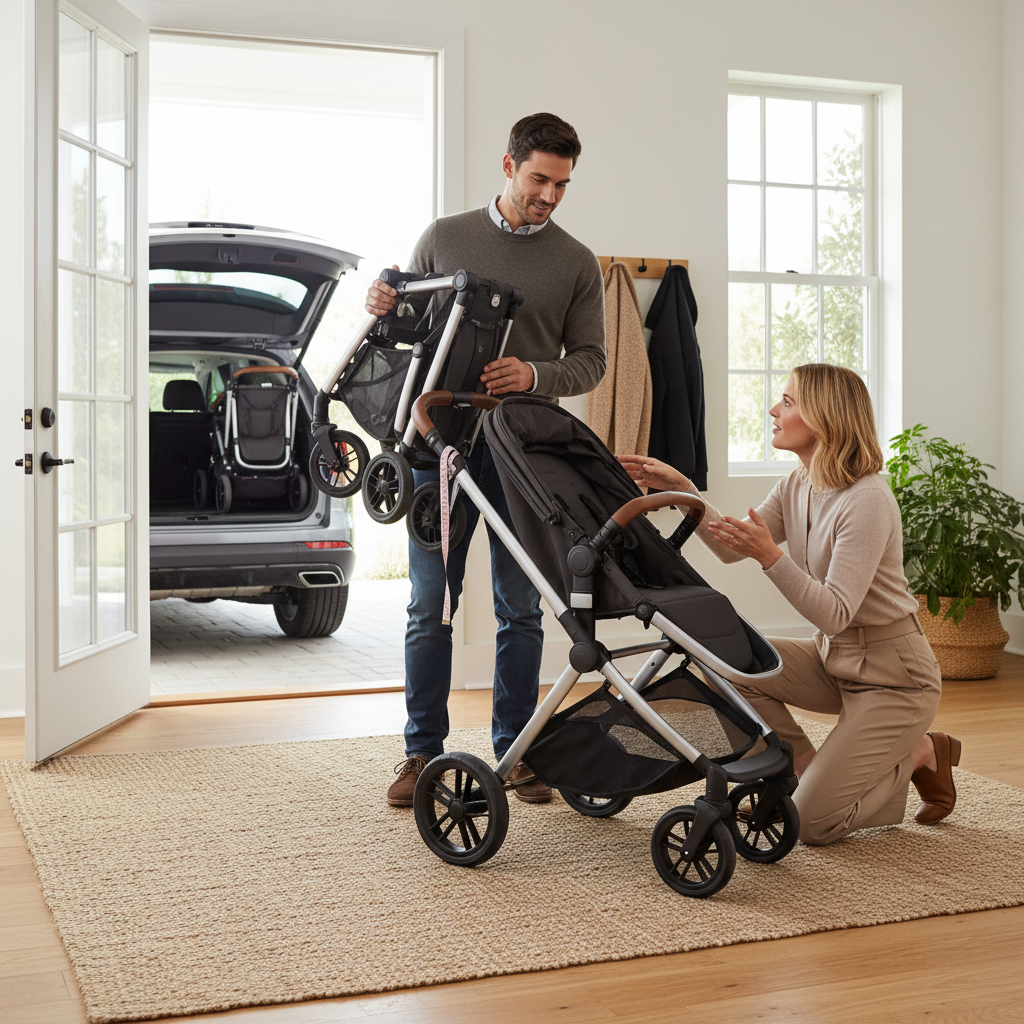
If you are trying to compare stroller sizes and prices without getting buried in specs, start here: most parents choose between a compact travel stroller, a full-size everyday stroller, or a larger jogging or double model, and the right pick usually comes down to width, folded size, child stage, and how often you will lift it into a trunk. In practice, that means many compact strollers stay in the low-20-inch range or narrower, many full-size singles sit in the mid-20-inch range, and side-by-side doubles push close to 30 inches wide, while prices can start near $100 and climb well past $800 depending on suspension, seat flexibility, and travel-system compatibility.
This guide focuses on the questions parents usually need answered first: what stroller dimensions actually matter, how strollers are measured, what the average stroller cost looks like by category, and how to choose a size that fits your baby, your car, and your daily routine. Once you know those guardrails, it becomes much easier to judge whether a Mamazing stroller matches your real setup, especially if you want a lighter everyday stroller that is easier to fold, store, and travel with.
What stroller size should you buy?
You should buy the smallest stroller that still fits your child stage, daily terrain, and storage limits, because the wrong stroller usually feels too bulky long before it feels too small. For most families, that means choosing a compact travel stroller for city errands and frequent folding, a full-size stroller for newborn support and everyday comfort, or a double or jogging stroller only when your routine truly needs the extra frame or bigger wheels.
A fast way to narrow stroller sizes is to ask four practical questions before you compare brands:
- How narrow is your tightest path? Measure your apartment doorway, elevator opening, favorite coffee-shop aisle, and trunk opening before you shop.
- How old is your child? Newborns usually need a lay-flat seat, bassinet, or infant car seat pairing, while older babies can use lighter seats with less bulk.
- How often will you fold it? If you lift a stroller in and out of the car every day, folded size and stroller weight matter almost as much as ride quality.
- What surfaces do you actually use? Smooth sidewalks reward compact frames, while cracked pavement, parks, and longer walks often justify a sturdier stroller with bigger wheels.
| Stroller type | Best for | Typical size feel | Typical price feel |
|---|---|---|---|
| Compact or travel | Frequent folding, city errands, travel days, backup stroller use | Narrower frame, easier carry, smaller folded footprint | Budget to premium depending on materials and fold |
| Full-size single | Daily use, newborn support, more storage, smoother ride | Wider seat, bigger basket, more stable on longer outings | Usually mid-range to premium |
| Jogging | Long outdoor walks, rougher terrain, running-specific use | Longer wheelbase, larger tires, more garage space needed | Usually above compact travel pricing |
| Double | Twins or two children who both still ride | Much wider or longer, hardest to store and transport | Often higher than comparable single strollers |
If you want the short version, buy compact when space is your limiting factor, buy full-size when comfort and flexibility matter more, and move up to jogging or double only when your routine makes the bigger frame worthwhile.
If your answers point to apartment living, frequent folding, trunk loading, and everyday errands, start by comparing Mamazing's lighter stroller options before you look at bulkier categories. For a brand-specific next step, read our Ultra Air vs. Ultra Air X comparison to see which Mamazing setup fits your routine better.
How are strollers measured?
Strollers are measured by their unfolded dimensions, folded dimensions, frame width, stroller weight, and seat or child limits, and each number answers a different shopping question. Unfolded size tells you how much floor space the stroller takes while in use, folded size tells you whether it fits your trunk or closet, width tells you whether it clears doorways and elevators, and the child and seat specs tell you whether it still works as your baby grows.
When you compare product pages, focus on these measurements in this order:
- Width: the fastest reality check for doors, narrow stores, and side-by-side parking.
- Folded length, width, and height: the real test for trunks, hall closets, and travel days.
- Unfolded footprint: how much room the stroller takes in restaurants, elevators, and small entryways.
- Weight: what your shoulders feel every time you lift it in and out of the car.
- Seat use and recline: whether it works from birth, later infancy, or only once your child has stronger head and trunk control.
In real shopping, that means one stroller may look "compact" because it folds shorter, while another looks compact because it folds flatter or stands more neatly in a trunk. Instead of chasing one marketing label, compare four numbers side by side: unfolded width, folded dimensions, stroller weight, and the child stage the seat is built for. That is the quickest way to tell whether a stroller is truly space-saving for your routine or just sounds that way on a product page.

For newborn use, measurement is not just about inches. The American Academy of Pediatrics stroller safety guidance recommends a wide, stable base, a five-point harness, reliable brakes, and a stroller that is appropriate for your child’s stage. That is why a small folded size alone should never decide the purchase if your baby still needs deeper recline or bassinet support.
What is the average stroller width and why does it matter?
The average stroller width matters because it predicts your everyday friction: whether you can get through your building entrance, turn inside a small cafe, or load the stroller without scraping your trunk opening. If width does not work for your home and errands, the stroller will feel inconvenient no matter how nice the seat fabric or suspension feels in a showroom.
As a practical shopping benchmark, compact single strollers often land around 18 to 21 inches wide, many full-size singles land around 23 to 24 inches wide, and side-by-side doubles often approach 30 inches. That is not a government average and it is not one fixed rule for every model. It is a category-level range that helps you decide what to measure at home before you buy.
Use width as a gatekeeper, then check the rest:
- Apartment living: measure the narrowest inside doorway, not just the front entrance.
- Car use: measure the smallest trunk opening, because folded dimensions can be less forgiving than cargo capacity.
- Frequent elevators: check both width and turning room, especially if you often ride with bags.
- Disney, airports, and theme parks: size rules can be strict enough that a full-size or double stroller changes your plans.
If you live in a tighter space, width is usually the number that saves you from buyer’s remorse. If you live in a suburban home with a garage and wide vehicle opening, folded size and lift weight often matter more than an extra inch of width.
How much does a stroller cost?
Most parents can think about stroller cost in three bands: budget, mid-range, and premium. Budget strollers usually cover basic transport and quick folds, mid-range models tend to give you better wheels, stronger frames, and more comfort, and premium strollers usually add reversible seating, smoother suspension, better fabrics, stronger baskets, and more flexible newborn-to-toddler use.
A more useful way to think about stroller pricing is by category instead of by competitor name. Entry-level strollers often cover basic transport and quick errands, mid-range models usually add better wheels, smoother folds, and more everyday comfort, and premium models often charge more for suspension, modular seating, newborn flexibility, and upgraded materials. That broad spread is real, but the right budget still depends on whether you need a backup stroller, an everyday main stroller, or a newborn-ready system.
What actually pushes the price up?
- Frame strength and suspension: bigger wheels, smoother suspension, and sturdier frames usually cost more.
- Seat flexibility: reversible seats, deeper recline, and better calf support tend to move a stroller out of entry-level pricing.
- Newborn compatibility: bassinets, lay-flat seats, and infant car seat systems raise the total budget fast.
- Convenience features: one-hand fold, compact self-standing storage, magnetic buckles, and larger baskets often show up in the middle and upper tiers.
A useful rule is to spend for the feature you will use every day, not the feature that only sounds nice in a comparison chart. If you fold your stroller four times a day, a cleaner fold is worth more than an oversized basket. If you walk on broken sidewalks, better wheels are worth more than a trendier canopy fabric.
| Budget band | What you usually get | Best fit |
|---|---|---|
| About $100 to $250 | Basic compact frames, lighter builds, fewer seat configurations | Occasional use, travel backup, short errands |
| About $250 to $600 | Better ride quality, stronger fold, more comfort, more everyday durability | Most single-stroller households |
| $600 and up | Premium suspension, modular options, better newborn flexibility, more polished materials | Heavy daily use, long walks, premium modular setups |
That is why the average stroller cost question is best answered by type, not by a single number. A travel stroller, a jogging stroller, and a modular newborn-ready stroller are solving different problems, so they should not be expected to cost the same.
Stroller sizes and prices by type and age
The best stroller size by age is usually the one that gives your child the support they need now without saddling you with extra bulk you will hate later. Newborns benefit most from a lay-flat seat, bassinet, or infant car seat setup; older babies often do well in a lighter everyday stroller; and toddlers usually care more about comfort, sun coverage, and easy in-and-out access than newborn-specific features.
Newborn to about 6 months
This is the stage when support matters more than ultra-compact folding. A stroller with a near-flat recline or bassinet-style option is usually the safer and more practical choice, and many parents also want a travel system for car-to-stroller transfers. The AAP’s guidance is a good reminder to prioritize stability, harness use, and age-appropriate design over convenience alone. If newborn support is your main concern, start with our Mamazing bassinet and car seat system guide so you can narrow the decision before comparing larger categories.
About 6 to 18 months
This is the stage where many families start wanting a lighter stroller without giving up comfort. If you go out daily, a mid-weight stroller with a good basket and easy fold often feels more useful than the absolute smallest model. If you mostly use the stroller for restaurants, quick errands, and travel, a compact stroller becomes easier to justify.
Toddler years
Toddlers can handle simpler seats, but that does not mean every lightweight stroller is automatically the best choice. If naps on the go still matter, keep a generous recline and canopy on your checklist. If your toddler prefers walking half the time, it can be smarter to downsize to a lighter stroller rather than keep storing a bulky newborn setup.
Twins, siblings, or high-mileage walking
If two children still need to ride, or if you walk long distances on rough surfaces, size becomes a feature rather than a burden. Side-by-side doubles give both riders equal visibility but create width challenges, while tandem doubles trim width but feel longer to steer. For a more detailed framework on balancing size, wheels, suspension, and age needs, read our complete stroller buying guide. If you are specifically deciding whether a lighter Mamazing stroller can handle daily use or travel, follow it with this travel stroller vs. everyday stroller guide.

The simplest way to avoid overspending is to match stroller size to the stage you are in today and the routine you expect over the next year, not the fantasy version of every outing you might someday take.
When should you choose compact, full-size, jogging, or double?
You should choose compact, full-size, jogging, or double based on the trigger that appears in your real life most often. The clearest sign you need a compact stroller is repeated folding and carrying; the clearest sign you need a full-size stroller is daily comfort from newborn through toddler; the clearest sign you need a jogging stroller is longer outdoor mileage; and the clearest sign you need a double is that two children actually need seats on most outings.
Use this decision frame when you are stuck between categories:
- Choose compact if: you drive often, store the stroller in a small trunk or closet, fly or travel regularly, or hate lifting a heavy frame.
- Choose full-size if: you want one stroller to handle everyday walks, diaper-bag hauling, naps, and newborn-to-toddler use without feeling stripped down.
- Choose jogging if: you spend serious time on uneven pavement, trails, or running routes and want larger tires and a longer wheelbase to do that comfortably.
- Choose double if: both children still ride often enough that managing turns or wider doorways is easier than managing a tired second child on foot.
A good tie-breaker is to look at the moment when you are most rushed. If your hardest moment is folding with one hand in a parking lot, pick the cleaner fold. If your hardest moment is a long neighborhood walk with a sleepy baby, pick the better ride and seat support. If your hardest moment is squeezing through a narrow entry, pick the narrower frame every time.

Is a secondhand stroller worth it?
A secondhand stroller can be worth it when the model is in good condition, still fits your routine, and passes a careful safety check, but it is never a bargain if you cannot verify recalls, harness function, brake performance, and missing parts. Used strollers make the most sense when you know the exact model you want and you are buying a cleaner version of a stroller you would have purchased new anyway.
Before you buy used, check the CPSC stroller recall database and compare the model against the federal stroller safety requirements summarized by CPSC. Then inspect the brake, harness, folding hinges, wheel attachment, and any signs of frame damage. The AAP’s stroller safety checklist is also helpful when you need a quick pass-fail standard.
If you are deciding between a used premium stroller and a new mid-range stroller, the better choice is usually the one that fits your space, your child’s stage, and your maintenance tolerance. A stroller that is harder to fold, harder to clean, or missing key parts is not a bargain just because the resale price looks attractive.
Frequently asked questions about stroller sizes and prices
How much does a stroller cost?
Most single strollers fall somewhere between about $100 and $900, but your real budget depends on the type. A simple umbrella or compact model can stay near the low end, a strong everyday stroller usually lands in the middle, and premium modular systems cost more because you are paying for suspension, larger seats, reversible seating, and add-on compatibility.
How are strollers measured?
The measurements that matter most are width, unfolded length and height, folded size, stroller weight, seat capacity, and whether the seat lies flat or works with a bassinet or infant car seat. If you only check one number before buying, check width first because it affects doorways, elevators, and narrow aisles right away.
What is the average stroller width?
A compact travel stroller is often around 18 to 21 inches wide, many full-size single strollers are around 23 to 24 inches wide, and side-by-side doubles are much wider at roughly 30 inches. That is why your doorway, trunk opening, and elevator space matter just as much as your child’s age.
What stroller size is best for a newborn?
For a newborn, the best stroller size is usually a full-size or travel-system frame that offers a lay-flat seat, bassinet option, or approved infant car seat compatibility. A very small stroller can work later, but the newborn stage is when support, recline, and head positioning matter most.
Are double strollers more expensive?
Usually, yes. Double strollers cost more because they use wider frames, larger canopies, extra seat materials, and heavier-duty wheels, and they also take up more storage space at home and in the car. They are worth it when you truly need two riding spots, but they are usually overkill for a single-child routine.
Final takeaway
The best stroller is rarely the one with the longest feature list. It is the one whose width fits your real paths, whose fold fits your real storage, and whose seat fits your child’s real stage without making daily life harder. If you start by measuring your tightest doorway, your trunk opening, and your must-have newborn or toddler features, you can cut through most of the noise in a single afternoon.
Once you have those limits written down, it becomes much easier to evaluate which Mamazing stroller fits your actual space, budget, and routine. If you want the quickest next step, use your answer from this guide to narrow the choice: families prioritizing low weight and frequent travel should start with the Ultra Air comparison, while families needing more newborn support should start with the bassinet and car seat guide before moving into product pages.
Used Stroller vs New: Are Secondhand Strollers Worth Buying and Safe?
Carbon Fiber Stroller Guide: Benefits, Tradeoffs, and Who It Fits Best