
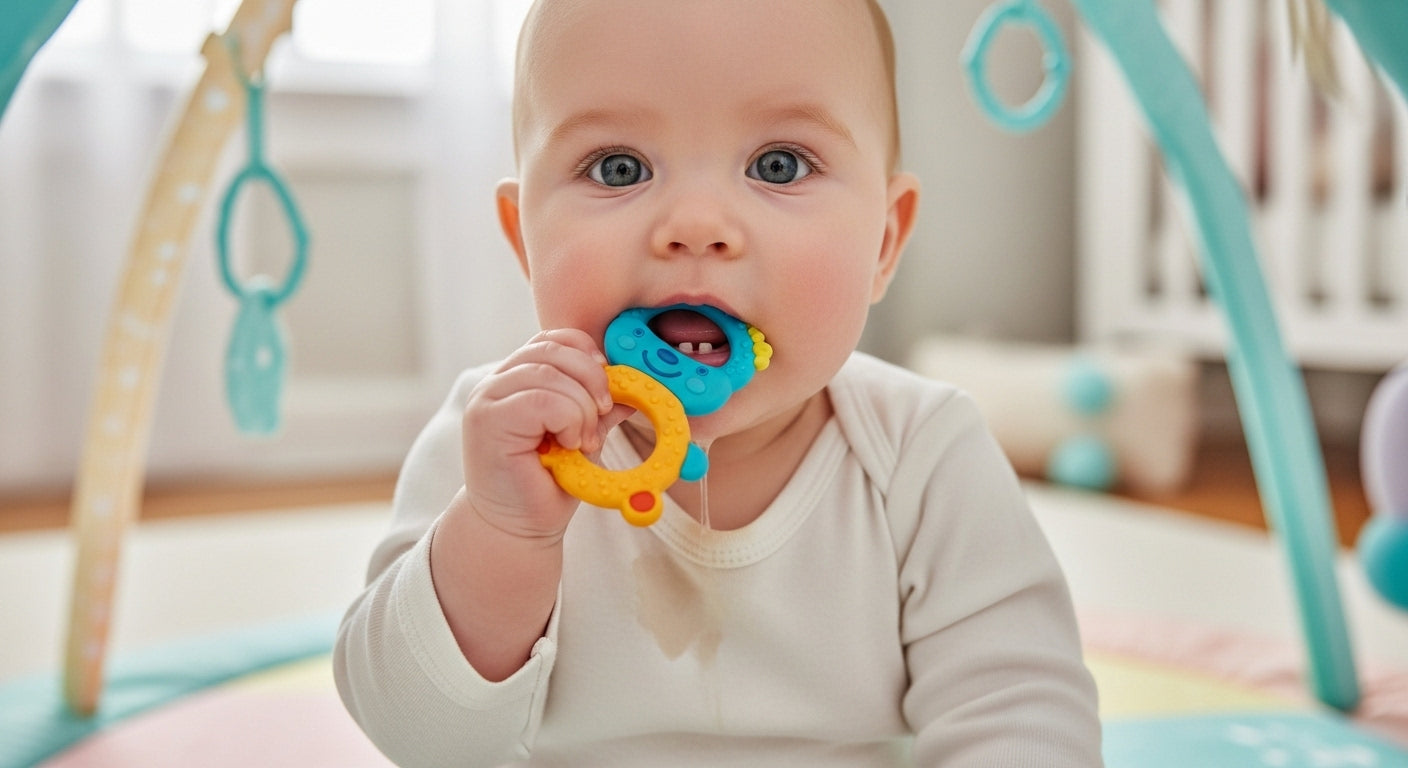
If your baby is suddenly drooling through bibs, chewing on everything in reach, and waking up miserable at 2 a.m., teething is a very reasonable suspect. The hard part is that parents hear a lot of advice during this stage, and not all of it is helpful. Some remedies are genuinely soothing. Others are outdated, overhyped, or not safe for babies.
This guide keeps the focus where it belongs: safe baby teething relief that is practical, evidence-based, and realistic for tired parents. You will find what teething usually looks like, what actually helps, what to avoid, when medicine may make sense, and when symptoms deserve a call to your pediatrician.
At Mamazing, we think parents need calm, usable answers more than miracle claims. So instead of chasing every viral teething tip, this article helps you build a simple plan that works in real life.
When teething usually starts and what is considered normal
Most babies start teething around 4 to 7 months, although normal timing can vary more than many parents expect. HealthyChildren notes that the first teeth are usually the front teeth, and AAP guidance also explains that many babies do not get that first tooth until around 6 months.
That means two things can both be true at once: early drooling at 3 months does not automatically mean a tooth is coming tomorrow, and later teething does not automatically mean something is wrong. Teething timing varies a lot from baby to baby.
| What you may notice | What it usually means | What to do |
|---|---|---|
| More chewing, drooling, fussiness | Common early teething behavior | Try simple soothing and keep watching |
| Swollen or tender gums | Very common when a tooth is close | Use gum massage or a chilled teether |
| No teeth yet around the first birthday | Can still be within normal range | Mention it at your next pediatric or dental visit |
If your baby seems generally well, is drinking normally, and mainly just wants to chew and cuddle more, you are probably dealing with an ordinary teething stretch rather than a true illness.
How to tell teething from illness
Teething can make a baby uncomfortable, but it should not become the explanation for every symptom. The most common teething signs are sore gums, chewing, drooling, mild irritability, and disrupted sleep. HealthyChildren says that a true fever over 100.4°F is not associated with teething and should be treated as a possible sign of illness instead.
This distinction matters because teething and illness can overlap in the same week. A baby who is cutting a tooth can also catch a virus, react to a new food, or be overtired. It is understandable to want one simple answer, but the safer approach is to ask whether the symptoms fit basic teething or whether something else is going on.
- Usually teething: drooling, chewing, swollen gums, clinginess, mild fussiness, short-term changes in sleep, wanting to bite on firm things.
- Not something to shrug off as teething: fever over 100.4°F, repeated vomiting, obvious diarrhea, breathing symptoms, signs of dehydration, or a baby who looks truly sick.
- Worth a closer look: refusing liquids, crying as if in real pain for a long stretch, or symptoms that keep escalating instead of easing.
The FDA also reminds parents not to assume bigger symptoms are just teething, especially when a child seems unwell overall. If your instinct says “this feels like more than teething,” that is a good reason to check in.
Safe teething remedies that usually help the most
The best baby teething relief is usually simple, low-risk, and repeatable. You do not need a drawer full of specialty gadgets. In most homes, the most useful relief tools are your clean hands, one or two good teethers, and a calm routine.
1. Gum massage
Gum massage works because counter-pressure often feels good on swollen gums. Wash your hands well, then gently rub the sore area with a clean finger for a few seconds at a time. This is one of the most practical remedies because you can do it almost anywhere, even when your baby refuses every toy in the house.
2. A firm chilled teether
A cool teether can be soothing, especially when your baby wants to bite down. FDA guidance and AAP guidance via HealthyChildren both point parents toward firm rubber or silicone teethers rather than numbing gels. The key detail is not to freeze teethers solid, because they can get too hard for tender gums.
3. A cool washcloth
A clean damp washcloth can be one of the best teething remedies because it is easy to grip, easy to wash, and naturally textured. Chill it first so it is cool, not painfully hard. Some babies love the combination of cold and fabric texture more than any store-bought teether.
4. Comfort feeding and extra cuddles
Many babies want to nurse, bottle-feed, or suck more often when they are teething. That does not always mean they are extra hungry. Sometimes they simply want soothing, closeness, and pressure on the gums. If feeding is comfort-based for a day or two, that is usually fine as long as your baby is still staying hydrated.
5. Cold soft foods once solids are established
If your baby has already started solids, chilled soft foods can be useful for short-term relief. HealthyChildren suggests cool foods and cool water for older babies. Think along the lines of cold applesauce, chilled yogurt, or soft fruit in a way that matches your baby’s current feeding stage.

If you are already using solids in a self-feeding style, Mamazing’s baby-led weaning guide can help you choose textures that are more appropriate for your baby’s stage.
The bigger principle is this: choose relief that is easy to repeat during an ordinary day. The best teething remedy is often the one you can safely use five times in a row without turning it into a project.
What to avoid, even if other parents recommend it
This is where many teething articles become too casual. Plenty of remedies sound harmless until you look at the safety guidance more closely. For teething, it is worth being a little boring. Babies do not need trendy risk.
Numbing gels and tablets
The FDA warns against teething products that contain benzocaine or lidocaine, and also against homeopathic teething tablets. Benzocaine products can be especially dangerous for children under 2 and offer little to no meaningful benefit for teething pain.
Amber teething necklaces and bracelets
HealthyChildren is clear that amber teething necklaces are not recommended. The risks are choking and strangulation, and there is no good evidence that they relieve pain.
Frozen-solid items
Parents often hear “the colder, the better,” but that is not always true. A teether or object that is frozen rock-hard can be too harsh on swollen gums. Cool is helpful. Hard-frozen is often not.
Herbal or DIY remedies without clear safety guidance
Teething tends to bring out a lot of homemade advice: herbal teas, essential oils, alcohol-based rubs, folk remedies, and random freezer hacks. The problem is not that every traditional idea is automatically dangerous. The problem is that infants are small, sensitive, and not great subjects for guesswork. If something is not part of mainstream pediatric guidance, treat it as optional at best and risky at worst.
That is why this guide does not treat chamomile tea, homemade numbing mixtures, or “just try this” social media tricks as first-line remedies. When you are caring for a baby in pain, safer basics beat creative experiments.
How to help a teething baby sleep at night
Nighttime is often when parents feel teething the hardest. Babies have fewer distractions, the house is quiet, and everyone is more tired. Even mild gum pain can feel bigger in that setting.
A good nighttime teething plan is usually simple:
- Do your soothing before lights out. Try gum massage or a chilled teether during the bedtime routine, not only after the crying starts.
- Keep the routine familiar. Bath, pajamas, feeding, story, white noise, or the same wind-down cues still help.
- Offer comfort without reinventing bedtime. Extra cuddles are reasonable. A whole new sleep system usually is not necessary for a short teething stretch.
- Use safe relief, not desperate relief. Rough nights make risky products more tempting, which is exactly when it helps to already know what you will not use.
If your baby is also going through a rocky sleep phase unrelated to teething, Mamazing’s sleep regression guide may help you separate short-term pain from bigger sleep pattern changes.
It also helps to lower your expectations for a few nights. Teething discomfort often comes in waves, so bedtime may feel normal one night and messy the next. You do not need a perfect sleep fix for that stretch. What usually works better is a short repeatable sequence: soothe the gums, keep the room calm, feed if appropriate, and then settle your baby the same way you normally would.
If your baby keeps waking, try to notice what actually changes the mood. Some babies calm down with pressure on the gums. Others mostly want closeness. That small observation can keep you from cycling through five random tricks at 3 a.m. and help you stick with the one or two things that genuinely make the night easier.
One more practical note: if your baby settles much better once you offer gum pressure or a chilled teether, teething is a reasonable explanation. If nothing helps and your baby seems increasingly uncomfortable, think beyond teething.
When medicine may make sense for teething pain
Natural remedies are a good starting point, but sometimes a baby has a genuinely rough evening. In those moments, medicine can be reasonable. HealthyChildren notes that acetaminophen can help on an occasional rough night, and that ibuprofen may be an option for babies over 6 months when your pediatrician agrees.
The key is to treat medicine as a backup tool, not the whole plan.
- Use medicine when comfort measures are not enough. If your baby is clearly miserable after massage, a teether, cuddling, and normal soothing, a dose may be worth discussing.
- Use the right dose for your baby’s weight. That is worth confirming with your pediatrician, especially if you are sleep-deprived and guessing.
- Do not mix up “pain at bedtime” with “I should medicate every time.” Many teething nights can still be handled without medicine.
- Never use adult oral pain products on baby gums. That includes numbing gels and random household products not meant for infants.
A helpful question to ask yourself is whether the pain relief is supporting a short rough patch or becoming the default answer to every hard evening. If it is the second one, it is worth stepping back and asking your pediatrician whether teething is really the whole story. Sometimes babies are also dealing with a cold, an ear infection, constipation, or plain overtiredness at the same time.
If you find yourself reaching for medicine every day for several days, or if your baby still seems unusually uncomfortable after it, that is a signal to ask your pediatrician whether something else is going on.
When to call your pediatrician instead of assuming it is teething
Teething is common, but not every miserable baby is teething. The safest rule is this: if symptoms feel bigger than sore gums and crankiness, call.
You should contact your pediatrician if your baby has:
- a true fever over 100.4°F,
- vomiting or repeated diarrhea,
- poor fluid intake or signs of dehydration,
- breathing problems, wheezing, or unusual lethargy,
- pain that seems out of proportion to what basic teething support should relieve, or
- symptoms that keep getting worse instead of easing.
HealthyChildren specifically says that if a baby seems particularly miserable or has a fever higher than 101°F, it is probably not just from teething. That kind of line is helpful because it reminds you not to dismiss real illness during a teething week.
It is also okay to call simply because you are unsure. Parents often feel like they need a dramatic symptom to justify reaching out. You do not. If you are debating between “probably teething” and “I am not comfortable watching this overnight,” the phone call is usually the right move.
Final takeaway
The best baby teething relief is usually also the simplest: gentle gum massage, a firm chilled teether, a cool washcloth, extra comfort, and careful use of medicine only when it truly helps. You do not need miracle gadgets, and you definitely do not need risky products to get through this phase.
If you remember only a few things, make them these:
- Stick to low-risk soothing first.
- Avoid amber necklaces, benzocaine gels, lidocaine products, and hard-frozen teethers.
- Do not brush off a true fever or bigger symptoms as teething.
- Ask your pediatrician when medicine or persistent symptoms enter the picture.
Teething can make a normal week feel long, but it is still a temporary phase. A calm, safe plan usually does more for both you and your baby than chasing every remedy you see online.
Frequently Asked Questions
When do babies usually start teething?
Most babies get their first tooth somewhere around 4 to 7 months, but a wider range can still be normal. If your baby has no teeth by the first birthday, it is usually still not an emergency, but it is worth mentioning at your next pediatric or dental visit.
What actually helps a teething baby most?
Usually, the simplest things help the most: a clean finger for gum massage, a firm chilled teether, a cool washcloth, and extra comfort. If your baby has already started solids, cold soft foods can also help for a short stretch.
Can teething cause fever or diarrhea?
Teething can come with drooling, sore gums, fussiness, and maybe a slight temperature rise, but a true fever should not be brushed off as teething. If your baby has a temperature over 100.4°F, repeated diarrhea, vomiting, or seems unusually sick, think illness first and call your pediatrician.
Is it OK to give Tylenol or ibuprofen for teething?
Sometimes, yes, especially on a rough night when comfort measures are not enough. Ask your pediatrician for the right weight-based dose of acetaminophen, and if your baby is over 6 months, ibuprofen may also be an option.
Are teething necklaces or numbing gels safe?
No, they are not a good idea. The FDA and the AAP warn against amber teething necklaces because of choking and strangulation risk, and they also advise against benzocaine or lidocaine numbing products for teething pain in babies.
Is chamomile tea a good teething remedy?
Usually, no. It is not the first thing pediatric guidance points parents to for teething relief, and it is better to stick with safer basics like gum massage, a firm chilled teether, or a cool washcloth unless your pediatrician specifically suggests something else.
Are teething biscuits worth it?
They can work for some older babies, but they are not the first or safest option for every family. Chunks can break off, so if you use a teething biscuit, stay close and supervise the whole time.
Can You Overfeed a Newborn? Signs of Overfeeding and When to Worry
Guide to Baby Fever: When to Worry&How to Help Your Child Feel Better