

If you are wondering whether swimming while pregnant is actually safe, you are probably not asking a fitness question first. You are asking a safety question. Can you still get in a pool? Does first trimester swimming change anything? Are public pools safe during pregnancy? What about the ocean, heated pools, or the last few weeks before birth?
Here is the short answer: for many people with an uncomplicated pregnancy, swimming is generally considered a safe and useful form of exercise. ACOG's exercise during pregnancy FAQ lists swimming and water workouts among the safer options, and the NHS says exercise in pregnancy is not dangerous for your baby and specifically notes that swimming can be a good choice because the water supports your extra weight.
But "safe" does not mean "ignore the details." Pregnancy changes your balance, temperature regulation, endurance, and comfort in the water. This guide is built around the real search intent behind swimming while pregnant, swimming during first trimester, are public pools safe during pregnancy, can you swim in the ocean while pregnant, and are heated pools safe during pregnancy. You will get a quick answer first, then practical trimester-by-trimester advice, pool-versus-ocean guidance, overheating precautions, and a clear list of when to stop and call your maternity clinician.
Key Takeaways
- For many uncomplicated pregnancies, swimming is one of the safer low-impact exercises because the water supports body weight and reduces joint strain.
- The advice changes more with symptoms and pregnancy complications than with a simple yes-or-no trimester rule.
- Public pools are usually about hygiene and slip prevention, while oceans and lakes add current, wave, and water-quality concerns.
- Hot tubs, saunas, and any water that makes you feel overheated are a clearer concern than an ordinary lap pool.
- You should stop swimming and call your clinician if you have vaginal bleeding, leaking fluid, chest pain, severe shortness of breath, dizziness, painful contractions, calf swelling, or feel that something is not right.
Quick Answer: Is Swimming Safe While Pregnant?
In most uncomplicated pregnancies, yes. Swimming is often recommended because it gives you aerobic activity without the pounding, joint stress, or balance challenges that land exercise can bring later in pregnancy. ACOG's broader Committee Opinion on physical activity during pregnancy says exercise is safe and desirable for most pregnant women without obstetric or medical complications or contraindications.
That said, the right question is not just "can I swim?" It is "what changes do I need to make now?" Someone in the first trimester dealing with nausea has a different set of decisions than someone at 34 weeks who feels breathless climbing stairs, has pelvic pressure, or is trying to figure out whether ocean swimming still feels realistic.
| Situation | Usually okay? | Main thing to watch |
|---|---|---|
| Uncomplicated pregnancy in a regular pool | Usually yes | Comfort, hydration, overexertion, and getting in and out safely |
| Public pool | Usually yes | Water hygiene, slipping on wet surfaces, and not swimming when sick |
| Ocean or open water | Sometimes | Rip currents, waves, cold water, footing, and swimming with a buddy near lifeguards |
| Heated lap pool | Depends on how warm it feels | Stop if you feel hot, flushed, dizzy, weak, or cannot cool down |
| Hot tub, sauna, or steam room | Best avoided | Overheating, dehydration, and fainting risk |

If you have a pregnancy complication, have been told to limit activity, or feel new symptoms in the water, pause and ask your obstetric clinician what applies to you specifically. The safest answer during pregnancy is often a personalized one.
Benefits of Swimming During Pregnancy
Swimming gets recommended so often during pregnancy because it solves several common problems at once. It keeps you moving, but it also takes some of the load off your back, hips, knees, and feet. That matters more as your bump grows and daily movement starts to feel heavier than it did a few weeks ago.
ACOG notes that regular exercise during pregnancy may help reduce back pain, support healthy weight gain, improve fitness, and lower the risk of some complications such as gestational diabetes, preeclampsia, and cesarean birth. Swimming is not magic, but it is one of the easier ways for many pregnant people to stay consistent because water changes how heavy the body feels.
- Less joint impact: Water supports your body weight, so movement usually feels smoother and less jarring than jogging or higher-impact classes.
- A practical way to stay active later in pregnancy: Many people who stop enjoying land exercise still tolerate water walking, light laps, or prenatal aqua classes well.
- Help for swelling and general heaviness: Some pregnant swimmers feel more comfortable in the water when feet, ankles, or legs are puffy. If swelling is one of your biggest complaints, Mamazing's guide to reducing edema in pregnancy is a useful companion read.
- Back and pelvic comfort: The supported environment can make it easier to move without constantly bracing against gravity.
- Mental reset: For some people, the pool is one of the few places in late pregnancy where movement still feels light and rhythmic instead of effortful.
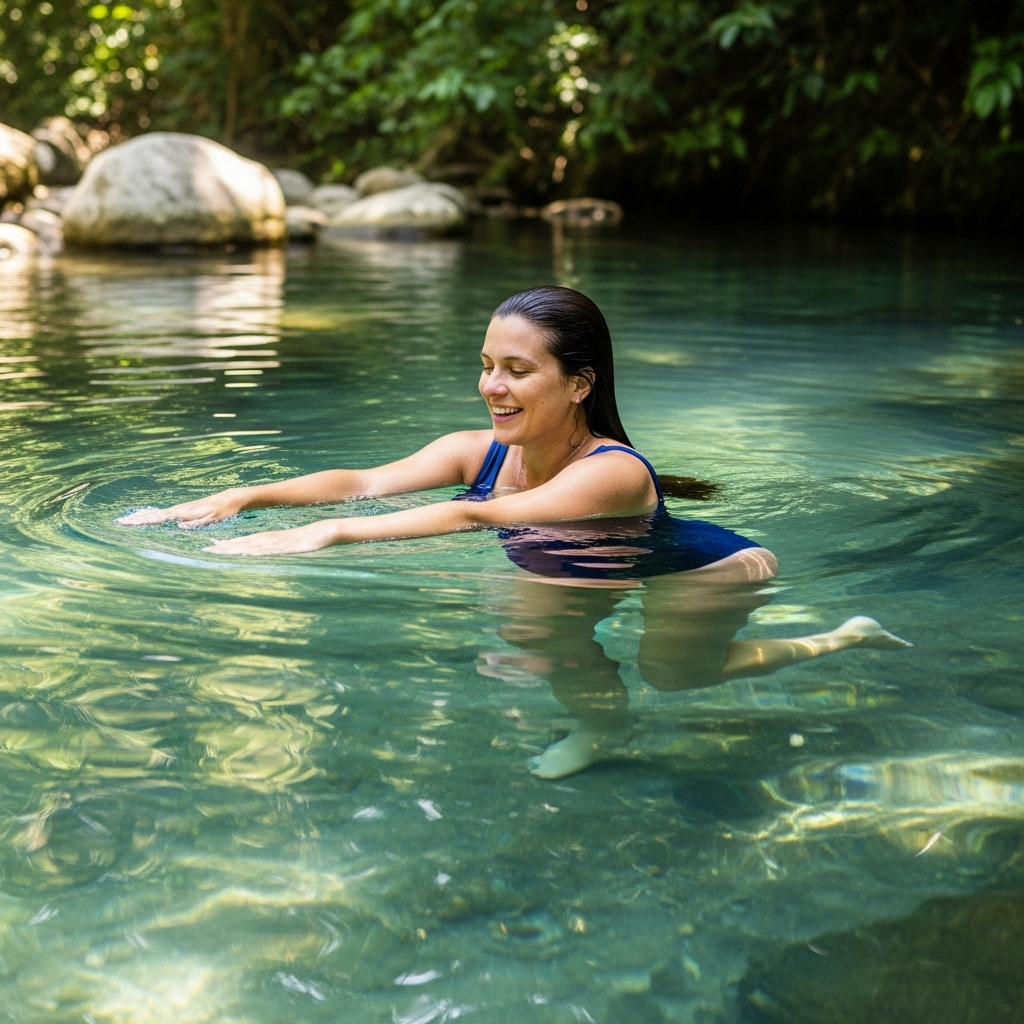
The main benefit is not that swimming gives you a perfect pregnancy workout plan. The main benefit is that it remains flexible. On a good day, you might swim easy laps. On a rough day, you might just walk the shallow end, stretch gently, and still feel better than when you arrived.
Swimming by Trimester: First, Second, and Third
Searches like swimming during first trimester and swimming while pregnant 2nd trimester imply that the rules suddenly change at a calendar cutoff. In practice, the shift is usually more gradual. Your symptoms, balance, and comfort change, so your version of swimming changes too.
| Trimester | What swimming may help with | Typical adjustments |
|---|---|---|
| First trimester | Keeping activity going while fatigue or nausea come and go | Shorter sessions, slower pace, careful hydration, and easy exits if nausea hits |
| Second trimester | More comfortable aerobic work as the bump grows | Use strokes that feel natural, avoid pushing through round-ligament or pelvic discomfort |
| Third trimester | Relief from heaviness, swelling, and general movement discomfort | Prioritize gentle sessions, easy entry and exit, and calm water over workout intensity |
First trimester swimming
During the first trimester, the main challenge is often not your bump but how you feel. Some people love the pool because cool water helps them feel less nauseated or overheated. Others find chlorine smells, locker-room heat, or getting changed while exhausted makes the whole idea unappealing.
If early pregnancy fatigue is your limiting factor, keep the session short and ordinary. Ten or fifteen easy minutes still counts. There is no bonus for pushing through dizziness or nausea. ACOG's FAQ also reminds pregnant exercisers to drink plenty of water and avoid becoming overheated, especially early in pregnancy.
Second trimester swimming
For many people, the second trimester is the easiest time to swim. You may have more energy than you did earlier, and the water starts to feel especially good as your center of gravity shifts. This is often when lap swimming, water aerobics, or a steady water-walking routine feels most sustainable.
The main caution is comfort rather than fear. If a certain stroke pulls at your pelvis, lower back, or round ligaments, change it. Pregnancy is not the time to force perfect technique. It is the time to choose movements you can repeat without aggravating symptoms.

Third trimester swimming
Late pregnancy swimming is usually less about exercise intensity and more about feeling mobile, supported, and comfortable. Water can be one of the few environments where standing and moving no longer feel so heavy. If you are dealing with growing-belly discomfort, Mamazing's pregnant belly expansion guide can help explain why everyday movement feels so different now.
This is also the trimester when logistics matter most. Choose a pool with easy steps or a rail. Avoid slippery deck areas. Consider swimming with someone else if you feel less steady. If you are also managing late-pregnancy nausea or just feeling "done," Mamazing's third trimester nausea guide may help you decide whether the pool still sounds restorative or whether it is a skip-it day.
There is no universal rule that says you must stop swimming at a certain week. Many people keep swimming comfortably late into pregnancy. The real question is whether it still feels safe, steady, and symptom-compatible for you.
Pool, Public Pool, or Ocean: What Changes?
This is where many high-impression searches are coming from. People are not only asking whether swimming itself is safe. They are asking whether the setting changes the answer.
Regular pools and public pools
When people ask whether public pools are safe during pregnancy, the main issues are usually water quality, germs, and slips, not the fact that you are pregnant in the water. CDC guidance for preventing swimming-related illnesses says properly treated pools are less likely to spread germs, and it advises swimmers to stay out of the water if they have diarrhea, not swallow pool water, and think about recent inspection results when available.
So if the pool looks well maintained, the deck is not a slipping hazard, and you are otherwise feeling well, a public pool is often reasonable. Skip it if you are sick with diarrhea, have a wound that should stay out of pool water, or the pool itself looks poorly maintained. CDC also notes that diarrheal illness is a common swimming-related outbreak issue, which is a good reminder that hygiene still matters even when chlorination is present.
Ocean swimming during pregnancy
Ocean swimming adds factors a standard pool does not: waves, currents, uneven entry points, colder water, and the possibility that getting out is harder than getting in. If you are a confident ocean swimmer and conditions are calm, this may still feel fine. If you are not, pregnancy is not the best time to be experimental.
CDC's healthy swimming safety guidance says natural bodies of water can come with additional hazards and that knowing safety and water-quality conditions matters. The National Weather Service rip current guidance also emphasizes swimming at beaches with lifeguards and treating rip currents as a real hazard. Practically, that means choosing calm days, staying close to shore, avoiding rough surf, and skipping the ocean altogether if you feel off balance, easily fatigued, or unsure about conditions.
If you want the simplest rule, it is this: a well-run pool is usually the more controlled option; the ocean can still be reasonable, but it requires stronger judgment about conditions.
Heated Pools, Hot Tubs, and Overheating
This is one of the biggest content gaps in many pregnancy swimming guides because people lump every kind of warm water into one category. Official guidance is much clearer about hot tubs, saunas, and steam rooms than about every heated pool. ACOG advises pregnant exercisers to avoid becoming overheated, and the NHS warns against strenuous exercise in hot weather and highlights hydration. ACOG's guidance on sauna and hot tub use early in pregnancy also says it is best not to use them because raising core body temperature can be harmful.
That is why a heated lap pool is not automatically the same as a hot tub. The more practical question is: can your body stay comfortable and cool? If the water feels very warm, the air is muggy, or you start to feel flushed, weak, headachy, or dizzy, get out. A pool workout is supposed to leave you feeling supported, not cooked.
In other words, there is much stronger official language against hot tubs and saunas than there is against a standard warm pool. If you are unsure about the temperature, choose the cooler option, keep the session shorter, and stop at the first sign that your body is not regulating heat well.
Best Strokes and Water Workouts When Pregnant
The best stroke during pregnancy is the one that feels sustainable, lets you breathe comfortably, and does not trigger pain. There is no prize for using a stroke you used before pregnancy if it now makes your lower back, pelvis, or neck complain.
- Freestyle: Often a good default if it still feels natural and you are not breathless.
- Sidestroke: A comfortable option for many people later in pregnancy when they want a calmer pace.
- Gentle breaststroke: Fine for some, but if the kick irritates the pelvis, switch rather than force it.
- Water walking or aqua aerobics: Excellent alternatives if lap swimming stops feeling good but you still want the support of the water.
It is also reasonable to modify more as pregnancy progresses. The NHS reminds pregnant exercisers not to exhaust themselves and not to lie flat on the back for long periods after 16 weeks. In pool terms, that means avoiding anything that makes you lightheaded or leaves you spending long stretches floating flat if that position does not feel good anymore.
When You Should Not Swim or Should Stop Right Away
Swimming is generally low impact, but pregnancy warning signs still apply in the water. ACOG's FAQ lists several reasons to stop exercise and contact your ob-gyn. If any of these happen before, during, or after swimming, get out and call your maternity clinician:
- vaginal bleeding
- fluid leaking or gushing from the vagina
- chest pain
- shortness of breath before you even begin exercising or severe shortness of breath that feels out of proportion
- dizziness, faintness, or unusual weakness
- calf pain or swelling
- regular painful contractions
- any new symptom that makes you think something is not right
There are also practical pool-specific reasons to stop even if nothing dramatic is happening. Get out if the water feels too warm, if you are suddenly chilled and tense, if climbing out feels unstable, or if you realize you are working much harder than you intended.
What to Wear and Bring for Comfortable Pregnancy Swimming
A good pregnancy swim session is often decided before you ever get in the water. A supportive swimsuit, water bottle, slip-resistant footwear, and easy access to a rail or gradual-entry stairs matter more than most people expect.
- Choose comfort over compression: If your suit digs into the shoulders or belly, you will tolerate the whole session less well.
- Bring water: You may not feel sweaty in the pool, but hydration still matters.
- Use simple gear if it helps: A kickboard, pool noodle, or aqua belt can make movement feel easier without turning the session into a hard workout.
- Make the exit easy: Late in pregnancy, the walk from pool to locker room can feel more awkward than the actual swim.
If you are trying to stay active overall, the goal is not a perfect routine. The goal is finding a version of movement you can keep returning to comfortably.
FAQ
Is swimming while pregnant safe in every trimester?
Usually yes, if your pregnancy is uncomplicated and your clinician has not told you to limit activity. The details change by trimester, but swimming is generally one of the safer low-impact exercise options throughout pregnancy.
Are public pools safe during pregnancy?
Often yes, if the pool is well maintained and you are not getting in while you have diarrhea, an open wound, or signs the water is poorly managed. Public-pool safety during pregnancy is usually more about water hygiene, slipping, and your own comfort than pregnancy itself.
Can you swim in the ocean while pregnant?
Many pregnant people can swim in the ocean if conditions are calm, water quality is acceptable, and a lifeguard is nearby. The bigger concerns are waves, rip currents, slippery entries, and fatigue rather than the ocean itself.
Are heated pools safe during pregnancy?
A comfortably warm lap pool may feel fine, but very hot water is different. Hot tubs, saunas, and any water that makes you feel overheated, flushed, dizzy, or unable to cool down are best avoided.
What strokes are best for swimming while pregnant?
The best stroke is usually the one that feels comfortable and lets you breathe easily. Many people like freestyle, sidestroke, or gentle breaststroke, while others switch to walking laps or water aerobics later in pregnancy if full strokes start to strain the back or pelvis.
When should you stop swimming during pregnancy?
Stop and call your maternity clinician if you have vaginal bleeding, leaking fluid, chest pain, severe shortness of breath, dizziness, painful contractions, calf swelling, or any symptom that makes you think something is not right. You should also get out if the water feels too hot or you feel unusually weak or lightheaded.
Final Takeaway
If your pregnancy is uncomplicated and your clinician has not told you to avoid exercise, swimming is often one of the most practical ways to stay active during pregnancy. The safest version is not the most intense one. It is the one that matches your trimester, your symptoms, the water conditions, and how your body feels that day.
Think in layers: regular pool versus ocean, comfortably warm water versus overheating, easy movement versus pushing through symptoms. That is the mindset that makes swimming during pregnancy safer and more sustainable from the first trimester through the last few weeks before birth.


Signs Labor Is 24 to 48 Hours Away: Emotional and Physical Clues
What Will My Baby Look Like Based on Genetics? Traits You Can Predict and What You Cannot