
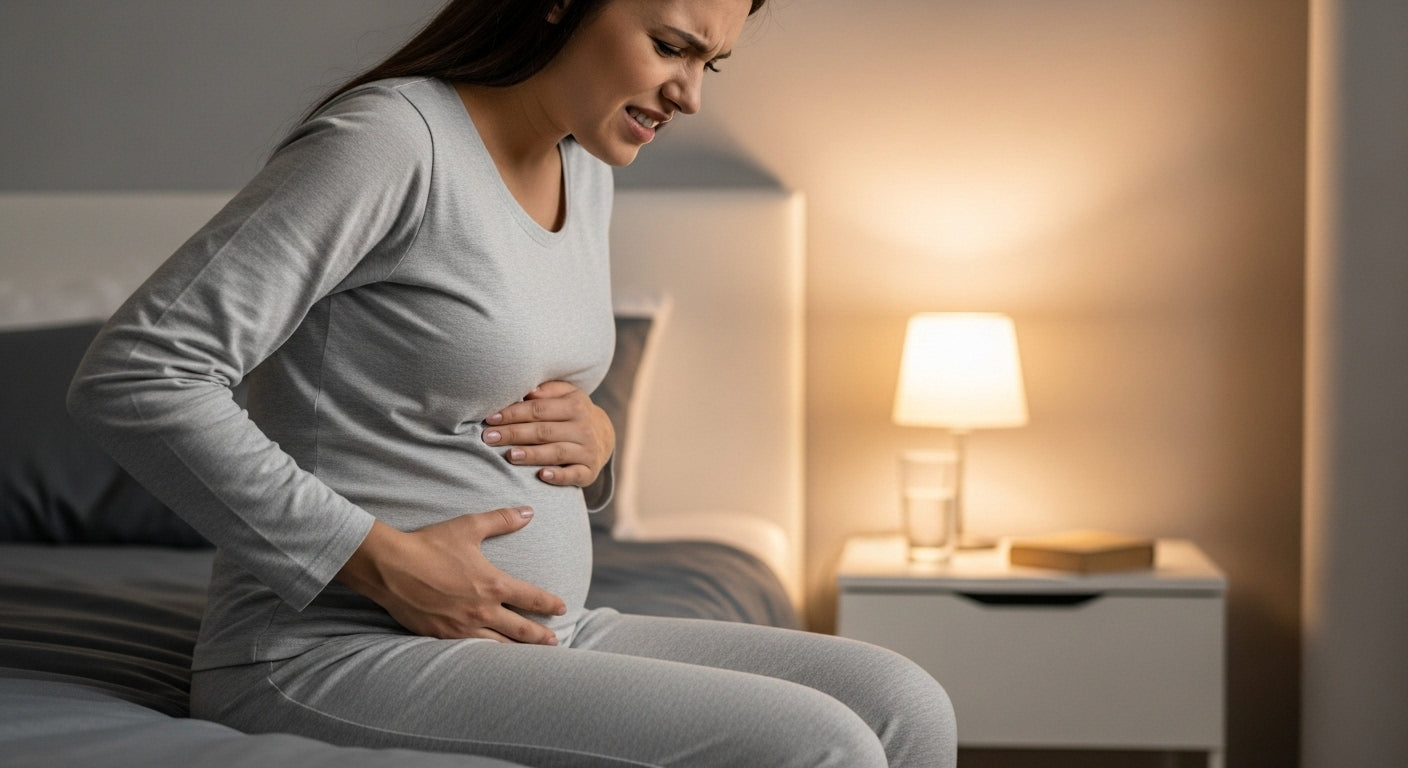
Early pregnancy stomach pain can be normal when it is mild, brief, and tied to common first-trimester changes like uterine stretching, gas, constipation, nausea, or indigestion. But severe, one-sided, worsening, or persistent pain is not something to brush off, especially if it comes with bleeding, dizziness, fever, shoulder pain, painful urination, or trouble keeping fluids down.
This guide is built for the exact questions many women search in a panic: Is stomach pain normal at 4 weeks pregnant? What about 5, 7, or 8 weeks? Why do I have an upset stomach in early pregnancy? Why does my stomach hurt after I eat? You'll find a clear week-by-week breakdown, a simple explanation of common causes, what usually helps, and when to call your provider.
Important: This article is educational and not a diagnosis. If your pain feels intense, unusual, or scary, contact your maternity team or healthcare provider for personalized advice.
Quick Answer: Is Stomach Pain Normal in Early Pregnancy?
Often, yes. According to the NHS, mild stomach pain or cramping in pregnancy is common and is often linked to things like stretching ligaments, constipation, or trapped wind. Early pregnancy can also bring nausea, bloating, reflux, and food aversions that make your stomach feel unsettled rather than sharply painful.
What matters most is the pattern. Mild pain that comes and goes is usually less concerning than pain that is severe, one-sided, getting worse, or paired with bleeding, faintness, fever, or dehydration. The NHS notes that abdominal pain with bleeding, unusual discharge, urinary pain, severe pain, or pain that does not settle after resting needs urgent assessment.

When Early Pregnancy Stomach Pain Needs Fast Medical Advice
Call your provider, maternity unit, or urgent care right away if stomach pain happens with any of the following:
- vaginal bleeding or spotting that feels more than light implantation-style spotting
- pain that is strong, sharply one-sided, or getting worse instead of easing
- shoulder-tip pain, faintness, dizziness, or a sense that something is very wrong
- fever, vomiting that prevents you from keeping fluids down, or signs of dehydration
- pain when you pee, a sudden urge to pee, or cloudy, pink, red, or brown urine
- regular cramping, back pain, or fluid leaking from the vagina
Those red flags matter because abdominal pain in pregnancy can sometimes point to conditions that need prompt treatment, including ectopic pregnancy, miscarriage, urinary tract infection, or severe dehydration. The NHS specifically lists these warning signs as reasons to seek urgent advice.
What Does Early Pregnancy Stomach Pain or an Upset Stomach Feel Like?
Most early pregnancy discomfort is described as mild cramping, pulling, pressure, fullness, bloating, queasiness, or a stitch-like ache in the lower abdomen. It may come and go through the day. Sometimes the discomfort feels more like an upset stomach than true pain, especially if nausea, reflux, constipation, or gas are part of the picture.
| What it feels like | Possible common cause | Typical clue |
|---|---|---|
| Mild lower-abdomen cramping or pulling | Uterine change, implantation timing, early stretching | Brief, mild, comes and goes |
| Full, gassy, tight, or pressure-like stomach discomfort | Gas or bloating | Often worse later in the day or after certain foods |
| Heavy, backed-up, lower-belly ache | Constipation | Less frequent bowel movements or harder stools |
| Burning, sour, or sick feeling after meals | Indigestion or reflux | Often worse after eating or lying down |
| Queasy, churned, unsettled stomach | Nausea and vomiting of pregnancy | May start before 9 weeks, according to ACOG |
| Sharp, severe, one-sided, or persistent pain | Not typical | Needs medical assessment |
If you are trying to tell the difference between uterine cramping and digestive pain, digestive discomfort usually changes with meals, bowel movements, gas, or position. Pregnancy-related cramping is more often low in the pelvis and may feel like stretching or pressure rather than a stomach bug.
Week-by-Week Early Pregnancy Stomach Pain Guide
The biggest search opportunity for this page is week-specific reassurance, so this section answers the exact questions women type into Google.
1 Week Pregnant Stomach Pain
If you are searching 1 week pregnant stomach pain, the most important thing to know is that pregnancy dating starts before conception. At 1 week pregnant, you are usually counted from the first day of your last period, so true pregnancy-related stomach pain is generally unlikely at this stage. If you feel cramps then, they are more often related to your cycle, digestion, or another non-pregnancy cause.
If you meant about one week after ovulation or very early implantation timing, some women notice mild twinges or cramping, but many feel nothing at all. Pain that is strong, escalating, or paired with bleeding should not be assumed to be normal implantation.
4 Weeks Pregnant Stomach Pain
4 weeks pregnant stomach pain is one of the most common early searches because this is when many people are just finding out they are pregnant. Mild cramping, pulling, or a faint period-like ache can happen around this point as hormone levels rise and the uterus begins adapting to pregnancy.
At 4 weeks, an upset stomach may also start to show up as bloating, food aversions, reflux, or queasiness. If the pain is mild and comes and goes, that can fit a normal early-pregnancy pattern. If it is severe, one-sided, or paired with bleeding, it needs urgent review because serious causes such as ectopic pregnancy can also appear in the 4- to 12-week window.
5 Weeks Pregnant Stomach Pain or Stomach Ache
By 5 weeks pregnant, many women notice that a mild stomach ache becomes more obvious. This is also when nausea often starts building. ACOG says nausea and vomiting of pregnancy usually begins before 9 weeks, which is why a 5 weeks pregnant stomach ache may feel more like a churned, unsettled, or sour stomach than classic cramps.
At this stage, common explanations include:
- mild lower-pelvic cramping or stretching sensations
- gas and bloating from slower digestion
- constipation
- nausea that is made worse by an empty stomach
- new food sensitivities
Call your provider sooner if your 5-week pain is localized to one side, is severe, or comes with bleeding, faintness, or shoulder pain.
6 Weeks Pregnant Stomach Pain
6 weeks pregnant stomach pain often sits at the overlap of cramping and digestive symptoms. This is a common week for morning-sickness symptoms to become more noticeable, so you may feel lower-abdomen pulling plus upper-stomach nausea, reflux, or a generally upset stomach.
If symptoms are mild, many women get relief from smaller meals, drinking in small frequent sips, avoiding strong odor triggers, and not letting the stomach get completely empty. ACOG also notes that bland foods, mini meals, protein-containing snacks, and ginger can help some people manage nausea.
7 Weeks Pregnant Stomach Pain or Upset Stomach
7 weeks pregnant stomach pain and upset stomach 7 weeks pregnant often happen together. By now, hormones can slow digestion enough that gas, constipation, nausea, burping, and reflux all pile onto the normal strain of early pregnancy.
At 7 weeks, it can help to ask yourself which pattern sounds more like you:
- Lower-pelvic pulling or mild cramping: more likely pregnancy-related stretching or uterine change
- Full, gassy, or post-meal discomfort: more likely digestive slowdown
- Queasy, sour, or can-not-think-about-food feeling: more likely nausea and vomiting of pregnancy
Because upset stomach early pregnancy is a meaningful search intent on its own, it is worth saying clearly: yes, a churned, off, or unsettled stomach can be part of the first trimester, even when the discomfort is not true abdominal pain.
8 Weeks Pregnant Stomach Pain
Stomach pain 8 weeks pregnant is often still normal when it is mild and explained by constipation, trapped wind, nausea, or gentle cramping. But this is also a week when women become less tolerant of dehydration, skipped meals, and reflux triggers, so pain after eating or a generally upset stomach can feel more intense.
By 8 weeks, do not self-reassure if the pain is sharp, one-sided, severe, associated with bleeding, or not easing with rest. The NHS warns that stomach pain that does not improve after rest or comes with bleeding, urinary symptoms, or unusual discharge needs prompt advice.
Upset Stomach in Early Pregnancy: Why It Happens
The phrase upset stomach early pregnancy often describes symptoms that are real but not always captured by the word "pain." In the first trimester, hormones can slow digestion, heighten your sense of smell, change taste, and make the stomach emptier or fuller at the wrong times. The result can be:
- nausea or gaggy feelings
- bloating and trapped wind
- heartburn or acid reflux
- food aversions
- a churning or sour stomach after meals
ACOG notes that pregnancy nausea can happen any time of day, not just in the morning. The NHS also notes that indigestion and heartburn are common in pregnancy and can show up as fullness, bloating, burping, feeling sick, or symptoms that come on after eating or drinking.
If nausea is your biggest issue, you may also find support in Mamazing's guide to foods that can help calm pregnancy nausea.
Why Does My Stomach Hurt After Eating in Early Pregnancy?
Early pregnancy stomach ache after eating and stomach ache after eating first trimester usually point more toward digestion than the uterus itself. Common reasons include:
- slower digestion: food sits longer and causes pressure or bloating
- heartburn or reflux: symptoms may feel burning, sour, or heavy after a meal
- gas-producing foods: beans, fried foods, carbonated drinks, or suddenly unappealing foods can hit harder than usual
- constipation: a backed-up gut can make meals feel uncomfortable
- nausea with an overly full stomach: some women feel worse when they eat a large meal rather than small frequent snacks
The NHS notes that indigestion symptoms often start after eating or drinking and can include bloating, nausea, burping, and fullness. If your pain after eating is severe, comes with vomiting you cannot control, or feels very different from ordinary indigestion, it deserves medical advice.
If appetite swings are part of the problem, Mamazing's article on pregnancy hunger and managing changing appetite may also help.
Common Causes of First-Trimester Stomach Pain
1. Mild uterine cramping and early stretching
As pregnancy establishes, it is common to notice mild cramps or pulling in the lower abdomen. Many women describe this as lighter and more on-and-off than a period cramp.
2. Gas and bloating
Trapped wind can cause sharp or shifting discomfort that is often mistaken for uterine pain. If moving, passing gas, or having a bowel movement helps, digestion is a more likely cause.
3. Constipation
The NHS specifically lists constipation as a common cause of harmless stomach pain in pregnancy. Less frequent bowel movements, harder stools, and a heavy lower-belly ache often go together.
4. Nausea and vomiting of pregnancy
An upset stomach, queasiness, food aversions, and retching can all create belly discomfort even when the core issue is nausea rather than true abdominal pain.
5. Indigestion or reflux
If your discomfort sits higher, feels burning, or reliably flares after meals, reflux or indigestion is more likely than pelvic cramping.
6. Ligament and musculoskeletal strain
Stretching sensations can happen early, though true round ligament pain is more commonly described in the second trimester as the uterus grows. If you feel a brief pulling ache when moving quickly, coughing, or changing position, that can still fit a normal stretching pattern, but it should settle rather than intensify.
How to Relieve Mild Stomach Pain or an Upset Stomach in Early Pregnancy
For mild symptoms that do not come with warning signs, these strategies are often helpful:
- rest and change positions if cramping feels movement-related
- eat smaller, more frequent meals instead of large ones
- sip fluids through the day so nausea does not tip into dehydration
- choose bland foods when your stomach feels sour or unsettled
- walk gently if bloating or constipation seems to be the trigger
- avoid lying down right after meals if reflux is part of the problem
- talk to your provider before using any medication, even over-the-counter remedies
If nausea is affecting sleep or other first-trimester symptoms are piling up, you may also find it helpful to read Mamazing's guide to first-trimester insomnia and its guide to breast pain in early pregnancy for a fuller picture of what early hormonal changes can feel like.
How to Tell Normal First-Trimester Pain From Warning Signs
| Usually more reassuring | Needs medical advice sooner |
|---|---|
| Mild cramps or pulling that come and go | Severe pain or pain that keeps worsening |
| Bloating or pressure that improves after gas or a bowel movement | One-sided pain, shoulder pain, faintness, or collapse feeling |
| Queasiness that improves with rest, mini meals, or fluids | Vomiting with dehydration or inability to keep liquids down |
| Symptoms linked to eating, constipation, or changing position | Pain with bleeding, fever, painful urination, or unusual discharge |
When in doubt, do not force yourself to decide alone whether it is normal. Pregnancy symptom advice is most useful when it helps you know when to reach out, not when it talks you out of getting checked.
Frequently Asked Questions
Is an upset stomach normal in early pregnancy?
Yes, it can be. Hormonal changes can slow digestion and make nausea, bloating, reflux, burping, and food aversions more noticeable in the first trimester. An upset stomach is common, but severe pain, dehydration, or vomiting that prevents fluids from staying down needs medical advice.
Is stomach pain at 4 weeks pregnant normal?
Mild cramping or pulling can be normal at 4 weeks pregnant, especially if it comes and goes and is not severe. Pain that is one-sided, worsening, or paired with bleeding should be checked promptly.
Why do I have stomach pain at 5 weeks pregnant?
At 5 weeks, stomach pain is often linked to early uterine changes, gas, constipation, nausea, or food sensitivities. A churned or unsettled stomach is also common as morning sickness begins to build.
Can 7 weeks pregnant cause an upset stomach?
Yes. By 7 weeks, nausea, slower digestion, reflux, bloating, and constipation can all create an upset stomach, even when the uterus itself is not the direct cause of the discomfort.
What causes stomach pain after eating in the first trimester?
The most common reasons are indigestion, reflux, gas, constipation, and nausea that worsens with large meals. Pain after eating is often digestive, but severe pain or vomiting needs medical review.
When should I worry about stomach pain in early pregnancy?
Worry more when pain is severe, one-sided, persistent, or comes with bleeding, dizziness, shoulder pain, fever, urinary symptoms, or dehydration. Those patterns deserve prompt assessment rather than home reassurance.
Final Takeaway
Stomach ache early pregnancy is common, and in many cases it is tied to normal first-trimester changes like mild cramping, gas, constipation, indigestion, or nausea. The most useful question is not just "Is this normal?" but "Does this fit a mild, improving pattern, or does it feel severe, one-sided, persistent, or accompanied by other warning signs?"
If your symptoms are mild, the week-by-week guide above can help you interpret what may be happening at weeks 1, 4, 5, 6, 7, and 8. If your symptoms feel intense, unusual, or simply worrying, trust that instinct and contact your provider.
Is Insomnia an Early Pregnancy Symptom? What to Expect in the First Weeks
How Long Does Postpartum Rage Last? Timeline, Symptoms, and When to Get Help