
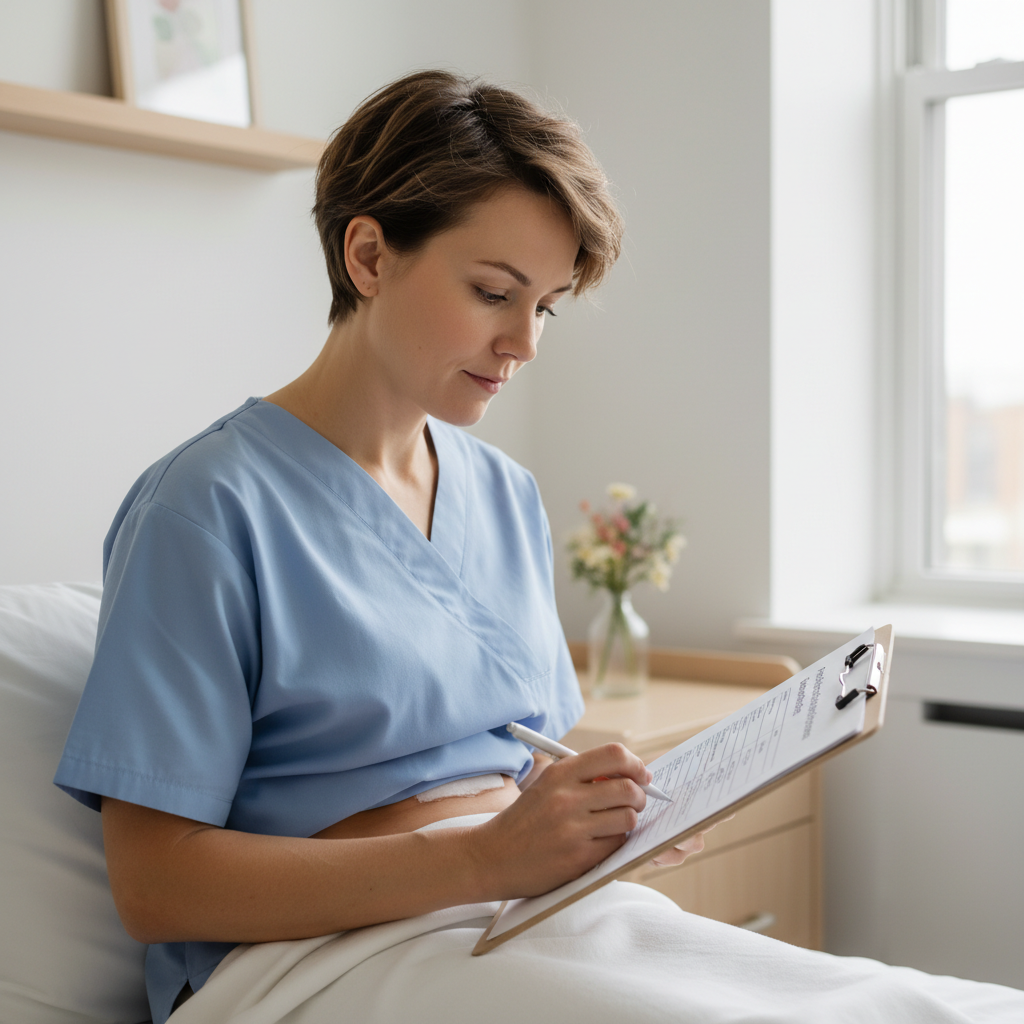
If it hurts to pee 1-2 weeks after a C-section, you are not alone. Mild burning can happen during early healing, especially after a urinary catheter. But painful urination can also be a sign of a UTI, bladder irritation, or trouble emptying your bladder fully. This guide helps you quickly tell what is common, what needs same-day care, and what is an emergency.
Quick Answer: Is Painful Urination 1-2 Weeks After C-Section Normal?
Sometimes, yes. Mild stinging that improves day by day in the first week can be part of recovery. Not normal is pain that worsens, lasts beyond 2-3 weeks, or comes with red-flag symptoms such as fever, blood in urine, flank pain, or being unable to pee.

- Watch at home (usually okay): mild burning, no fever, no blood, still able to urinate, symptoms gradually improving.
- Call your OB-GYN today: burning that persists at 2 weeks, urgency/frequency, foul-smelling urine, pelvic pain, or pain when emptying bladder.
- Urgent care or ER now: fever (100.4 F / 38 C or higher), chills, back/flank pain, visible blood clots in urine, severe lower abdominal pain, or you cannot pee.
Why It Hurts to Pee After a C-Section
1) Catheter or urethral irritation
Many C-section patients have a catheter during surgery. Temporary irritation of the urethra can cause stinging for several days after removal.
2) UTI after C-section
UTIs are common postpartum and can cause burning urination, urgency, frequency, lower abdominal pressure, cloudy urine, and a strong odor. If untreated, infection can move upward and cause kidney symptoms.
3) Pelvic floor tension or bladder-emptying pain
After surgery and pain, the pelvic floor may guard tightly. That can make it painful to start urine flow or to fully empty your bladder.
4) Dehydration and concentrated urine
If you are sleep-deprived, breastfeeding, or not drinking enough fluids, concentrated urine can sting the bladder and urethra.
Week-by-Week Timeline: 1 Week vs 2 Weeks vs 3+ Weeks
Week 1 after C-section
Light burning or discomfort can still be within expected healing if symptoms are mild and improving. Focus on hydration, regular bathroom breaks, and monitoring for red flags.

Week 2 after C-section
Most irritation should be trending better. If painful urination is unchanged or worse at 2 weeks, ask for urine testing rather than waiting longer.
Week 3 and beyond
Persistent pain when peeing after 3 weeks is not something to ignore. You may need evaluation for UTI, incomplete bladder emptying, pelvic floor dysfunction, or other postpartum urinary complications.
UTI After C-Section: Symptoms, Tests, and Treatment
If your query is “uti after c section,” look for this pattern:
- Burning or stinging while peeing
- Frequent urge to pee but only small amounts
- Cloudy, strong-smelling, or darker urine
- Lower belly pressure or pain
- Fever, flank pain, nausea, or chills (possible upper UTI, needs urgent care)
What to ask your clinician: “Can I do a urinalysis and urine culture today?” A culture helps confirm bacteria and guides antibiotic choice. If you are breastfeeding, ask specifically for lactation-compatible options.
Can’t Pee After C-Section or Pain When Emptying Bladder
Searches like “cant pee after c section” and “pain emptying bladder after c section” may signal postpartum urinary retention. Seek same-day care if:
- You have strong urge but cannot pass urine
- You pass only tiny amounts with increasing lower abdominal pressure
- You feel worse after each attempt to urinate
Do not keep waiting through severe retention symptoms. Delayed treatment can worsen bladder overdistension and pain.
Bladder Pain or Bladder Spasms After C-Section
“Bladder pain after c section” or “bladder spasms after c section” can happen due to irritation, infection, or muscle overactivity. Mild intermittent cramping may improve with hydration and scheduled voiding, but persistent spasm-like pain plus urinary symptoms should be medically reviewed.
What Helps Today: Safe Home Relief Plan
- Hydrate steadily: sip water across the day; avoid becoming very thirsty.
- Pee on schedule: every 2-4 hours to prevent overfilling.
- Reduce irritants: limit caffeine, very acidic drinks, and highly concentrated beverages when symptoms flare.
- Use pain medicine only as advised: follow postpartum instructions from your clinician.
- Track symptoms for 24 hours: pain score, urine color/odor, fever, and whether symptoms are improving.
Home care is supportive, not a replacement for testing when symptoms persist or worsen.
When to Call Your OB-GYN vs Go to Urgent Care or ER
Call your OB-GYN the same day
- Painful urination is still present at 2 weeks
- New urgency, frequency, or foul-smelling urine
- Pain when emptying bladder or recurrent bladder spasms
Go to urgent care or ER now
- Fever 100.4 F / 38 C or higher
- Back/flank pain, shaking chills, or vomiting
- Blood in urine with clots or severe pain
- Unable to urinate
Related Postpartum Recovery Guides
If you are managing more than one symptom, these guides may help:
- Numbness After C-Section: timeline and treatment guide
- When can I start bending after a C-section?
- Postpartum gas pain relief and recovery
- Postpartum dizziness: causes and timeline
Frequently Asked Questions
Is it normal if peeing hurts 1 week after a C-section?
Mild discomfort can be normal in week 1, especially if it is improving daily and you have no fever, no blood in urine, and no trouble passing urine.
Is painful urination at 2 weeks after C-section still normal?
It is less likely to be simple irritation if symptoms are not improving by 2 weeks. Ask your clinician for urine testing to check for UTI or other causes.
Does painful urination after C-section always mean UTI?
No. Catheter irritation, dehydration, and pelvic floor tension can also cause pain. But UTI is common enough that persistent symptoms should be tested, not guessed.
What should I do if I can’t pee after a C-section?
Get same-day urgent medical care. Inability to urinate can signal urinary retention and should not be managed at home.
Is bladder spasm after C-section dangerous?
Occasional mild spasms may settle as healing progresses, but frequent spasms with burning, urgency, fever, or blood in urine need prompt evaluation.
When is blood in urine after C-section an emergency?
Blood in urine with fever, flank pain, clots, severe pain, dizziness, or reduced urine output is an emergency-level pattern. Seek urgent care immediately.
Final Takeaway
Painful urination after C-section is common in early recovery, but it should trend better. If pain persists into week 2, worsens, or appears with fever, blood in urine, flank pain, or inability to pee, seek medical care quickly. Early testing and treatment can prevent more serious complications.
This article is educational and does not replace diagnosis or treatment from your own clinician.
1 Month No Alcohol Before and After: A Mom's Guide to Transformation and Postpartum Wellness
Witch Hazel Postpartum: How Long to Use It, Alcohol-Free Picks, and Safe Relief After Birth