If you are comparing a glider vs recliner for your nursery, you probably do not want a long furniture lecture. You want to know which chair will feel better at 2 a.m., which one works better for nursing and soothing, and which one will fit your room without becoming an obstacle. That is the real decision.
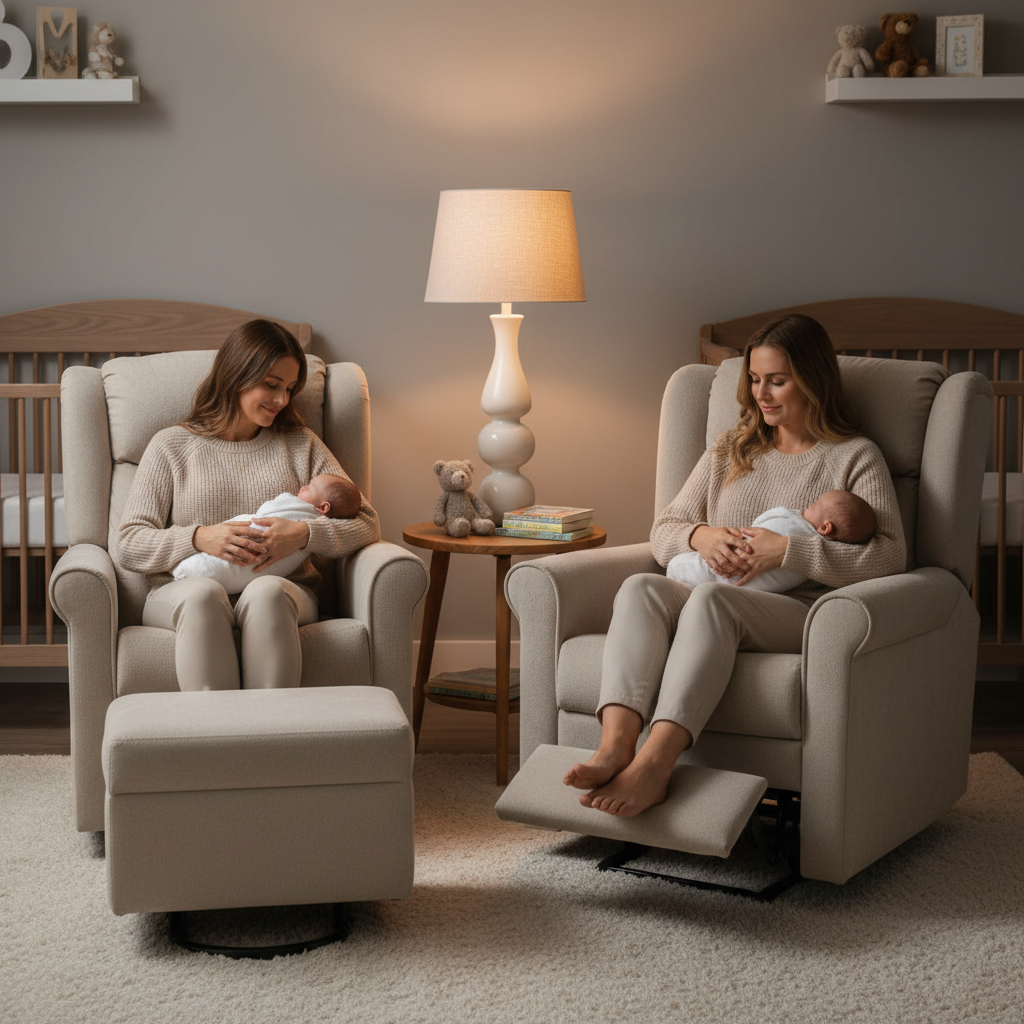
Here is the short answer: choose a glider if you want smoother motion, a more upright feeding posture, and an easier fit in many nursery layouts. Choose a recliner if you care most about sink-in comfort and longer sitting stretches, and you have enough clearance for the chair to work properly. Choose a gliding recliner if you want both motion and recline and you are comfortable with a bigger footprint, more mechanism, and usually a higher price.
This guide helps you decide based on your body, your room, and your night routine, not on showroom language. If you want to browse options after you decide, Mamazing also has a dedicated nursing chair collection to explore.
Quick Answer: Glider, Recliner, or Gliding Recliner?
-
Choose a glider if you want gentle motion, a more upright feeding posture, and a chair that usually fits more easily in nursery layouts.
-
Choose a recliner if your top priority is deeper lounge comfort, longer sitting stretches, and you have enough clearance for a bulkier chair.
-
Choose a gliding recliner if you want both soothing motion and recline, and you are willing to trade simplicity and budget for the hybrid feel.
If you only need one mental shortcut, use this one: a glider is usually easier to live with in a nursery, while a recliner can feel more restorative if room size and stand-up ease are not deal-breakers.
Glider vs Recliner: The Key Differences That Actually Matter
If you only remember one thing, make it this: you are not choosing the objectively better chair. You are choosing the chair that makes your most repeated moments easier. That usually comes down to motion, feeding posture, clearance, and how easy it feels to stand up while holding a baby.
| Decision point |
Glider |
Recliner |
| How it feels |
Upright, steady, soothing motion |
Deeper, lounge-style comfort |
| Best for |
Frequent soothing and feeding rhythms |
Longer sitting stretches and rest |
| Room layout |
Usually easier to fit |
Often needs more clearance |
| Getting up with a baby |
Often easier due to seat depth |
Varies; deep seats can make standing harder |
| Noise and maintenance |
Moving parts can squeak over time |
Mechanisms can squeak; powered options add complexity |
| After-nursery use |
Often becomes a reading chair |
Often becomes a living-room comfort chair |
Motion and Feel (Glide vs Rock vs Stillness)
A glider is built around controlled, smooth motion. If you know that repetitive movement helps you calm down or soothe a baby, a glider tends to feel instantly nursery-right. It is also a common preference when you want a chair that encourages a more upright posture during feeds.
A standard recliner is built around resting. Some models rock, some do not, and some are power recliners. The comfort can be wonderful, but the feel is usually more lounge-first than motion-first. That can be exactly what you want, or exactly what makes a nursery feel bulkier than it needs to.
If you are trying to decide between a rocking chair vs recliner vs glider, start here: rocking is a bigger arc, gliding is smoother and more controlled, and reclining is mainly about changing your back angle and leg support.
Recline, Footrest, and One-Hand Comfort
In real life, your hands are often not free. You might be holding a baby, a burp cloth, or a bottle. That is why the recline experience matters more than it sounds.
- Some recliners are easy to adjust without shifting your whole body. Others require more leverage or a bigger movement.
- Some gliders have an ottoman that gives you leg support without changing your back angle.
- A gliding recliner tries to offer both: motion plus the option to recline.
Getting Up While Holding a Baby
This is one of the most underrated differences between a glider and a recliner. A chair can feel great while you are sitting, but if it traps you in a deep seat, every transfer becomes harder.
When you test a chair, ask yourself one practical question: can you sit down and stand up smoothly without pushing hard with your arms? If the answer is no, that chair may feel too comfy in the exact moments when you need to move quietly and quickly.
Which Is Better for Nursing and Feeding?
The best chair for feeding is the chair that makes your posture easy to repeat. Many parents prefer a glider because it tends to keep them more upright, which can make pillow placement, latch support, and shoulder relaxation easier. Many parents prefer a recliner because it feels more restorative during long sits, especially when exhaustion is the bigger problem than motion.
If you want a simple starting point, prioritize arm support, back support, and the ability to keep your shoulders relaxed. Guidance on feeding positions can help you picture what support you will want from your chair. See HealthyChildren's overview of positioning your baby for breastfeeding for a useful baseline.
Nursing Chair vs Recliner: What Parents Mean (and What to Buy)
When people search for a nursing chair vs recliner, they usually mean: should I buy a purpose-built nursery chair, or can I just buy a very comfortable recliner and call it done?
Here is the practical answer:
-
A nursing chair is any chair that supports your feeding posture with stable arms, a supportive back, easy entry and exit, and a setup that works with pillows.
-
A recliner can be a great nursing chair if it supports your posture and does not make you fight the chair every time you stand up.
-
A glider can be a great nursing chair if you like movement and you prefer to stay upright while you feed.
If you want a deeper checklist for arm height, seat depth, and posture support, Mamazing's guide to choosing the best nursing chair goes into more detail.
Feeding Setups That Make Either Chair Work
Even if you choose the right chair type, your setup is what makes it feel good night after night. A few high-impact tweaks make a bigger difference than parents expect:
-
Use a pillow strategy: a firm lumbar cushion plus a feeding pillow can help keep shoulders down and elbows supported.
-
Keep essentials within one arm's reach: water, burp cloths, a pacifier, your phone, and a dim light source.
-
Choose fabric you can live with: because spit-up, milk, and snacks will happen.
Postpartum recovery is not one-size-fits-all, and comfort needs can shift week to week. If you want general context on postpartum care, this ACOG postpartum care checklist and MedlinePlus postpartum care overview are useful starting points.
Nursery Fit and Room Size: Footprint, Clearance, and Layout Tips
Gliders generally win on easy fit. Recliners can absolutely work, but layout planning matters more. The biggest surprise for many parents is not the width of the chair. It is the clearance needed for reclining and the way a bulkier chair changes your walking path and crib access.
Use these layout questions before you commit:
- Can you recline, or partially recline, without blocking a closet door or the crib path?
- Is there a comfortable place for your feet without turning the chair zone into an obstacle course?
- If you pace or bounce while soothing, do you still have a clear path to walk?
Do Recliners Need Space Behind Them? (Wall-Hugger vs Standard)
Many recliners need some rear clearance to recline comfortably. A wall-hugger style recliner is designed to reduce how far back it needs to travel, which can be a better fit in tighter nurseries. The real takeaway is simple: look at the recline mechanism, not just the chair width.
If your nursery is small, a glider is often the safer default. If you still want a recliner, look for one that feels easy to operate and does not force a huge chair-plus-clearance footprint.
What Is a Gliding Recliner Chair? (The Hybrid Option)
A gliding recliner is essentially a recliner that can also glide, giving you the soothing movement of a glider with the option to recline. If you are torn because you want motion but you also want that legs-up comfort, this hybrid can feel like the best of both worlds.
The tradeoffs are real, though:
- You usually pay more for the added mechanism and features.
- You may need more space than a simple glider, depending on the recline style.
- More moving parts can mean more maintenance over time.
If you want to compare glider styles in more detail, Mamazing's glider rocker guide is a useful next step.
Rocking Chair vs Glider vs Recliner: A Quick Decision Guide
If you are overwhelmed, match the chair type to your most common use case instead of trying to solve every possible future scenario.
-
If you soothe more than you lounge: choose a glider.
-
If you lounge more than you soothe: choose a recliner.
-
If you want movement but prefer a classic feel: consider a rocking chair and test the rocking arc in your space.
-
If you want movement and recline: consider a gliding recliner.
When people search rocking chair vs glider vs recliner, they are usually deciding between movement, rest, and room control. A glider often wins because it gives motion without demanding as much clearance as a rocker or recliner setup can.
Budget, Features, and Long-Term Use (After the Nursery)
It is tempting to buy for the first few weeks only. But a nursery chair is one of the few nursery purchases that can stay useful for years if you choose with the after-nursery phase in mind.
Try this test: if you picture the chair outside the nursery in a year, does it still make sense as a reading chair or a living-room comfort chair? If yes, paying a bit more for comfort and durability may be worth it. If no, prioritize daily nursery performance over premium features.
Feature tradeoffs to think through before you buy:
-
Manual vs power recline: power can feel smoother and easier, but it adds cords and another thing to maintain.
-
Ottoman vs built-in footrest: an ottoman can keep a glider setup simpler, while a footrest is more convenient if you recline often.
-
Swivel: useful for reaching essentials, but only if it still feels stable and controlled when you stand up.
Questions to Ask Before Buying
Whether you are choosing a nursery glider vs recliner, these are the questions that help prevent the most common this-looked-great-online regrets.
| Question |
Why it matters |
| Can I stand up smoothly without pushing hard with my arms? |
Transfers are easier when you are holding a baby and moving quietly. |
| Do the armrests support my elbows at a relaxed shoulder height? |
Good arm support makes feeding posture easier to repeat. |
| Does the chair feel comfortable in an upright position? |
You may feed upright more often than you recline. |
| Does the mechanism feel quiet and easy to operate? |
Night use is where awkward levers and squeaks get annoying fast. |
| Is the fabric realistic for daily life? |
Spills are normal, so choose something you can live with. |
Durability, Noise, and Cleaning (What You'll Notice After Month One)
Once the novelty wears off, daily annoyances matter more than the showroom feel. A chair that is good enough but easy to clean and quiet to use can outperform a chair that is technically more luxurious but harder to live with.
Comfort is not just softness. Pay attention to seat depth, seat height, and head or neck support. A chair that is too deep can pull you into a rounded posture, while a chair that is too low can make every stand-up harder than it needs to be. If you are shopping online, look for reviews that mention posture and ease of standing, not just comfy.
-
Noise: gliders and recliners both can squeak over time, so pay attention to how the chair sounds when you shift your weight.
-
Fabric: pick something you can spot-clean without stress.
-
Arm shape and seams: these are the places that often take the most wear from feeding positions.
Safety Checklist for Nursery Seating
Nursery chairs are for feeding and soothing, not unattended infant sleep. If you want a safe-sleep refresher, see HealthyChildren's safe sleep guide.
Beyond that high-level reminder, here are practical chair-focused checks:
-
Stability: the chair should feel stable when you sit, stand, and shift with a baby in your arms.
-
Pinch points: check moving parts and gaps, especially if you have a rocker or recliner mechanism.
-
Easy exit: you should be able to stand up smoothly without an aggressive push or awkward momentum.
-
Placement: keep the chair positioned so you still have a clear path to the crib and the door in low light.
-
Power features: if it is a power recliner, route the cord so it does not become a trip hazard.
FAQ
What is the difference between a glider and a recliner?
A glider is defined by smooth, controlled motion and usually keeps you more upright. A recliner is defined by deeper lounge comfort and the ability to change your back angle and leg support. The better choice depends on whether motion or rest is the bigger part of your routine.
Is a glider or recliner better for nursing?
Many parents prefer a glider for nursing because it often supports an upright feeding posture and soothing movement. Many parents prefer a recliner because it can feel more restorative for long sits. In either case, prioritize arm support, back support, and a setup that lets you relax your shoulders.
Is a gliding recliner worth it for a nursery?
A gliding recliner can be worth it if you want motion and you also want to recline. It is a hybrid solution that can feel ideal for long feeding sessions, but it can require more space and may be more complex than a simple glider.
How much space do you need behind a nursery recliner?
It depends on the mechanism. Some recliners need more rear clearance, while wall-hugger styles are designed to reduce that requirement. The best approach is to check the recline style and plan your walking path, crib access, and door swing before you buy.
Rocking chair vs glider vs recliner: which is best for a small nursery?
In smaller nurseries, a glider is often the easiest fit because it provides motion without demanding as much clearance. A rocking chair can work if you have room for the rocking arc. A recliner can still work, but layout planning and mechanism choice matter more.
What should I look for in a nursery chair if I'm recovering postpartum?
Look for a chair that supports your back and arms, feels easy to get in and out of, and does not force a deep stuck posture. Comfort needs can shift during postpartum recovery, so prioritize daily ease and adjustability over a single perfect sitting position.
Final Takeaway
If you want the safest default choice for most nurseries, start with a glider. If your top priority is deeper rest and you have the space for it, a recliner can be the better fit. If you are torn and your layout allows it, a gliding recliner can give you the hybrid experience.
When you are ready to browse, start with Mamazing's nursery nursing chair collection. If you want more decision support first, go deeper with our guides on how to choose the best nursing chair and best glider rockers for your nursery, or compare product styles directly with the electric nursery rocking glider chair and the Lullapod nursery recliner.



Screen-Free Activities for Toddlers on a Plane That Actually Work
Minimalist Baby Registry for Small Apartments: What You Actually Need and What Can Wait