
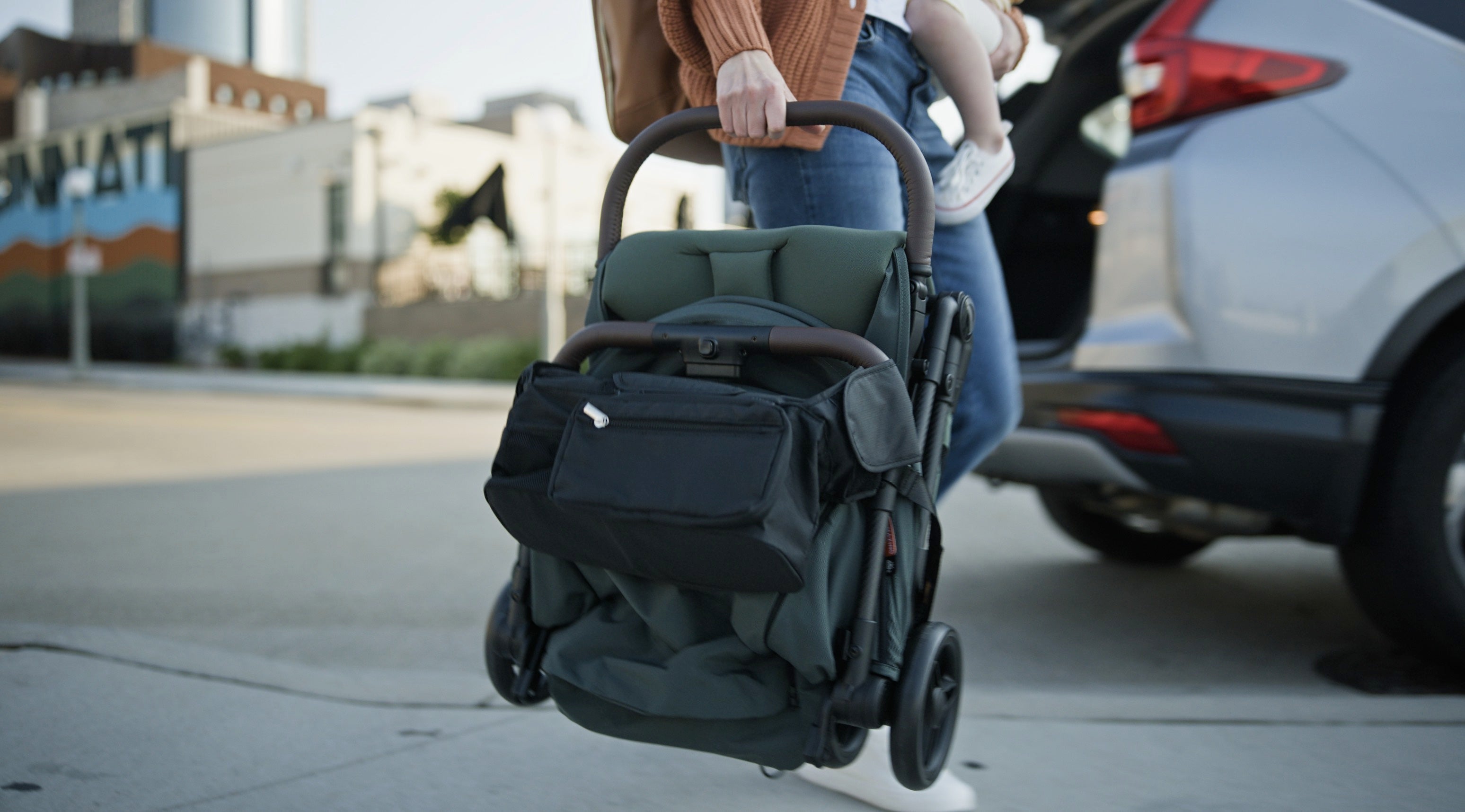
If you are comparing a full size stroller vs travel stroller, you are probably not trying to win a stroller trivia contest. You are trying to make everyday life easier. The right choice depends less on marketing labels and more on how you actually move through the week: flights, sidewalks, stairs, trunk space, newborn needs, daily errands, and whether you want one stroller to do almost everything or two strollers that split the job.
The short version is this: lightweight travel strollers win on portability, compact fold, and convenience for frequent outings or flights. Full-size or full-feature strollers usually win on comfort, storage, smoother handling, and all-day practicality. This guide helps you compare the tradeoffs fast, then decide whether your family needs a lightweight stroller, a full-feature stroller, or both.
Quick answer: should you choose a lightweight travel stroller or a full-size stroller?
Choose a lightweight travel stroller if your biggest pain points are carrying, lifting, folding, storing, and moving through airports, tight trunks, apartments, or city errands. Choose a full-size stroller if your biggest priorities are a roomier seat, larger basket, better canopy, smoother suspension, longer walks, and a stroller that feels more capable from newborn stage through everyday life.

If you want the fastest decision framework, use this table:
| Factor | Lightweight / Travel stroller | Full-size / Full-feature stroller |
|---|---|---|
| Weight | Easier to lift, carry, and stash | Heavier but often sturdier |
| Fold | Usually smaller and faster for travel | Bulkier fold, more trunk space needed |
| Storage basket | Usually smaller | Usually larger and more useful |
| Comfort for long outings | Good enough for shorter trips | Better seat, canopy, and ride quality |
| Newborn use | Varies more by model | More likely to feel newborn-ready |
| Best for | Flights, compact cars, stairs, quick errands | Daily walks, rougher routes, all-day outings, one-stroller households |
Full size stroller vs travel stroller: what is the real difference?
The biggest mistake parents make in this comparison is assuming the difference is only about size. It is really about what the stroller is optimized for. Travel strollers are optimized for carrying and compactness. Full-size strollers are optimized for comfort, convenience during longer outings, and broader everyday functionality.
That means a travel stroller may look like the obvious winner in the store because it is light and easy to fold. But that same stroller can feel less pleasant when you are hauling groceries, walking over rough sidewalks, or trying to keep a younger baby comfortable for hours. On the other hand, a full-size stroller can feel fantastic outside and deeply annoying when you are lifting it into a small trunk or carrying it up apartment stairs.
Another useful distinction: not every lightweight stroller is truly a travel stroller, and not every full-feature stroller is automatically huge. Some models blur the categories. But the tradeoff pattern usually stays the same. The more a stroller chases low weight and compact fold, the more likely it is to compromise on basket size, canopy coverage, suspension, or long-outing comfort.
Lightweight stroller pros and tradeoffs
A lightweight stroller can be the best stroller you ever buy if your real problem is not neighborhood terrain or storage space. It is the daily friction of getting out the door.
Where lightweight strollers shine
Lightweight strollers are ideal for families who lift the stroller often, travel frequently, live in apartments, use public transit, or want something easier for grandparents and caregivers to handle. They also make sense if your trunk is small or if your stroller is constantly going in and out of the car. This is why so many parents search for the benefits of a lightweight stroller or ask how much strollers weigh. They are really asking how much hassle they can remove from the day.
They also tend to feel more realistic for quick errands. If your usual outing is a grocery run, airport connection, school pickup, or short city walk, the easiest stroller to carry and fold often becomes the stroller you actually use.
What you usually give up
The weight savings come from somewhere. Lightweight strollers often have smaller baskets, less suspension, a smaller canopy, and a simpler seat. That does not make them bad. It just changes what they are best at. A stroller that feels amazing in an airport may feel less impressive on cracked sidewalks, longer walks, or all-day family outings.
Newborn readiness is another place where parents should slow down and check the details. Some lightweight strollers work beautifully for older babies and toddlers but feel less complete for very early infancy unless they recline deeply enough or support the setup you want. So if you are shopping for a stroller you want to rely on from day one, low weight alone should not be the deciding factor.
Full-feature stroller pros and tradeoffs
Full-size or full-feature strollers usually make more sense when you want a stroller that feels capable, comfortable, and adaptable for long stretches of everyday life.

Where full-feature strollers shine
These strollers often win on storage, seat support, canopy coverage, ride smoothness, and everyday flexibility. If you take long walks, navigate imperfect sidewalks, need a big basket, or want one stroller to handle most of family life, a full-feature model often feels easier in the long run even if it is heavier. The benefit is not only comfort for the baby. It is also reduced parent friction once you start carrying diaper bags, jackets, snacks, and everything else that ends up under the seat.
They also tend to feel more reassuring for parents with newborn priorities. Even when a lightweight stroller technically works, a full-feature stroller often feels more settled, more planted, and more useful on longer days.
What you usually give up
The downside is obvious but important: weight, bulk, and fold size. A full-size stroller can be the right choice for the sidewalk and still be the wrong choice for a fifth-floor walk-up or an every-weekend flight schedule. If every outing starts with a heavy lift into the trunk, the features can start to feel expensive in a different way.
Do you need a travel stroller and a regular stroller?
This is one of the strongest real-life questions behind the search behavior, and the honest answer is: sometimes yes, but not always.
One stroller is enough if your life is simple in one direction
If your family mostly drives, shops locally, takes neighborhood walks, and rarely flies, a good full-feature stroller may be enough. If your family mostly travels light, uses public transit, lives in a smaller space, and does shorter outings, a strong lightweight stroller may be enough. In both cases, the “right one stroller” is the stroller that matches the hardest part of your weekly routine, not the stroller that looks best in a comparison chart.
Two strollers make sense when your life has two very different modes
Owning both a regular stroller and a travel stroller makes the most sense when your family has one set of needs at home and a very different set on the go. A common example is a family that wants a more capable everyday stroller for long walks and newborn comfort but also wants a compact stroller for flights, road trips, restaurants, or secondary caregivers. Another common example is apartment living where one heavier stroller stays mostly in the car while a smaller stroller handles daily in-and-out movement.
If you keep asking yourself `do I need a travel stroller and regular stroller?`, the more useful question is this: does your current or planned stroller feel annoying in one of your top three weekly use cases? If the answer is yes, a second stroller may actually reduce stress instead of adding clutter.
How to choose based on your family's real life
Instead of choosing by category label alone, choose by friction points.

Choose lightweight first if your biggest friction is lifting, carrying, and folding
If stairs, trunk space, airports, car transfers, and compact storage are your biggest pain points, start with the lightest stroller that still covers your baby’s stage and your comfort requirements. Weight matters most when you touch that weight all the time.
Choose full-feature first if your biggest friction is comfort and all-day use
If you go on longer walks, need a real basket, want better ride quality, or expect the stroller to handle a bigger share of daily life, a full-feature stroller usually earns its bulk. This is especially true when you do not want to feel like you are constantly compromising just to save a few pounds.
Think about baby age honestly
Parents often shop as if today’s easiest stroller will automatically be the best stroller six months from now. But newborn comfort, toddler independence, and parent routines change quickly. A stroller that feels worth the space in the first year may not be the one you want to keep hauling when your child is older and your outings are shorter.
Think about terrain and outing length
If your real life includes rough sidewalks, uneven curbs, parks, long outings, or lots of carrying under the basket, the full-feature side of the equation grows more valuable. If your outings are short, paved, and logistically annoying rather than physically demanding, lightweight gains value quickly.
It also helps to think in terms of “first frustration.” What is the first thing that usually annoys you with gear? If it is lifting, folding, stairs, and trunk space, you should bias toward lightweight. If it is basket access, comfort on longer walks, sun coverage, and the feeling that the stroller is always a little under-equipped, you should bias toward full-feature. Most parents do not regret buying the stroller that solves their most frequent annoyance. They regret buying the stroller that looked good on paper but was built for a different routine.
Choose by family scenario, not by idealized outings
Parents often imagine the stroller for their best day, not their average day. That leads to bad purchases. A travel stroller can feel exciting if you imagine airports and vacations, but if 90% of your week is neighborhood walks and errands with a diaper bag, the everyday stroller may matter more. The reverse is also true. A plush full-size stroller can feel like the “proper” choice, but if you are constantly carrying it up stairs or forcing it into a compact trunk, the weight penalty will eventually feel bigger than the comfort upgrade.
Here is a simple way to think about it:
- If you live in a walkable neighborhood and do long outdoor outings, lean full-feature.
- If you fly often or use public transit often, lean lightweight travel stroller.
- If you drive everywhere but have a tiny trunk, lean lightweight unless you truly need bigger-basket everyday comfort.
- If you have a newborn and want one stroller to handle a bigger share of the first year, lean full-feature first.
- If your baby is older and your life is becoming more errand- and travel-driven, lean lightweight first.
Budget matters, but only after you know the role
Budget comparisons can get noisy because a stroller that is “cheaper” at checkout can still become the more expensive choice if it frustrates you enough that you replace it early. The better question is whether you are paying for features you will actually use. A larger basket, better suspension, or smoother ride is worth the money if those features solve real weekly problems. A tiny fold is worth the money if you are constantly dealing with stairs, overhead-bin anxiety, or tight car storage. Price matters, but role-fit matters first.
This is also where a second stroller can make financial sense instead of feeling excessive. If a more capable stroller covers daily life for years and a lightweight stroller protects your sanity on trips, the pair can actually be more rational than expecting one stroller to perform perfectly in two opposite roles.
Common stroller comparison mistakes that lead to regret
Many stroller purchases go wrong for predictable reasons, and seeing those patterns early can save you money and frustration.
Mistake 1: comparing only stroller weight
Parents often search things like `average stroller weight` or `how much does a stroller weigh` because weight feels objective. But weight alone does not tell you how annoying the stroller will be. Handle shape, fold size, balance when carried, basket access, and whether the folded stroller actually fits your car or closet can matter just as much as the raw number on the spec sheet.
Mistake 2: assuming travel-friendly means everyday-friendly
Some travel strollers are good enough for everyday use, but travel-friendly and everyday-friendly are not the same thing. A stroller built around quick folding and compact size may be exactly right for flights and restaurants, yet still feel underpowered for rough sidewalks, bigger shopping runs, or long walks with a heavier toddler. If you want one stroller to do everything, you need to judge it on your toughest routine, not your easiest one.
Mistake 3: buying for the baby stage you are about to leave
It is easy to overbuy for the current phase. A family with a nearly-toddler baby may still shop as if they need a deeply supportive newborn setup, while a newborn family may underbuy portability because they are only thinking about the first few weeks. Try to picture the next six to twelve months, not just the next six days. That gives you a better sense of whether comfort, storage, and ride quality will matter more than compactness, or vice versa.
Mistake 4: ignoring caregiver differences
A stroller that feels easy for one adult may feel frustrating for another. If grandparents, childcare providers, or a second parent will use it often, folding style and lifting effort matter more than parents sometimes expect. The “best” stroller for a household is often the one that the least gear-tolerant person can still use without resentment.
FAQ
What is the difference between a full size stroller and a travel stroller?
A full-size stroller usually focuses more on comfort, storage, suspension, and everyday versatility, while a travel stroller focuses more on low weight, compact fold, and portability for flights, cars, and quick outings.
Do I need a travel stroller and a regular stroller?
You may need both if your family has two very different use cases, such as long everyday walks at home and frequent flights or compact-trunk travel. If your routines are simpler, one well-chosen stroller is often enough.
Is a lightweight stroller good enough for everyday use?
It can be, especially for families who value portability, shorter outings, and smaller storage needs. But lightweight models usually give up some basket size, ride quality, and all-day comfort compared with fuller-featured strollers.
When is a full-feature stroller worth the extra weight?
A full-feature stroller is often worth it when you take long walks, need a larger basket, want a roomier seat, or expect one stroller to carry most of your daily family workload.
What stroller works best for airport travel?
For most families, a lightweight travel stroller works better in airports because it is easier to fold, carry, store, and maneuver quickly. The tradeoff is that it may not feel as comfortable or capable for longer everyday use.
Can one stroller do everything?
Sometimes, yes. But the more your family needs both all-day comfort and maximum portability, the more likely it is that one stroller will feel like a compromise in one of those roles.
The bottom line
The real question is not whether a lightweight stroller is better than a full-feature stroller. It is which compromises will bother you less. If lifting, folding, carrying, and storing are the hardest part of your week, a lightweight stroller may feel like a daily upgrade. If comfort, storage, smoother handling, and all-day use matter more, a full-feature stroller may be the better long-term choice.
And if your life truly has two modes, one at home and one on the move, owning both can make more sense than forcing one stroller to do a job it was not designed to do.
Futuristic Stroller Design: What Next-Generation Foldable Strollers Actually Get Right
Traveling Abroad with a Stroller: How to Choose a Cabin-Approved Travel Stroller