
- by xiaoyuyang
Is White Noise Safe for Babies? AAP Sleep Machine Safety Guide
- by xiaoyuyang
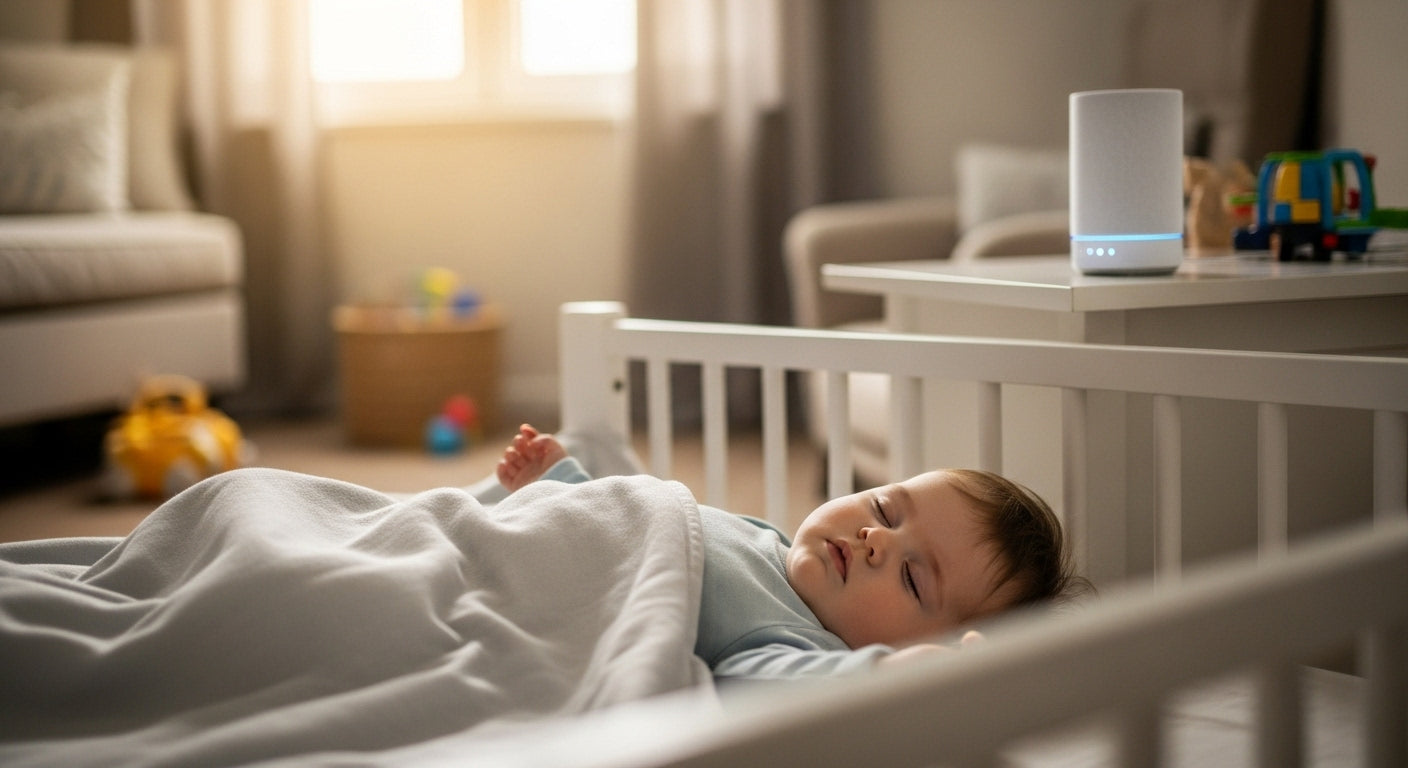
Yes, white noise can be safe for babies when you use it carefully. The clearest evidence-based approach is to keep the sound around 50 dB or lower at crib level, place the machine as far from your baby's head as possible, and use it mainly for naps and nighttime sleep instead of nonstop background noise. If you want the short version: low volume, far from the crib, and not all day.
That balanced answer matches what worried parents are really asking: can white noise help sleep without hurting hearing or development? The answer is usually yes, but only when you respect the safety details. In this guide, we'll break down what the American Academy of Pediatrics, HealthyChildren, and hearing-safety research actually support, plus what to do for newborns, overnight use, and sound machine setup.
If your baby was born early, has hearing concerns, or has any medical condition that affects sleep or development, ask your pediatrician how they want you to use a sound machine in your specific situation.
The most useful official parent guidance comes from HealthyChildren.org, the American Academy of Pediatrics' parent site. Its advice is simple: some infant sleep machines can produce hazardous noise levels, so if you use one, place it as far away from your baby's head as possible and use it for a short time only.
The safety concern is not that every sound machine is dangerous by default. The concern is that some machines can get too loud when they sit right next to the crib or run at high volume for long stretches. The 2014 Pediatrics study on infant sleep machines measured 14 devices and found that all of them exceeded 50 dBA at 30 cm, and some reached levels that could raise hearing-risk concerns with long exposure. You can read the study here: Infant Sleep Machines and Hazardous Sound Pressure Levels.
Parents often search for the exact phrase "50 decibels and 7 feet away". Here is the most accurate way to understand that advice:
So if you want one sentence to remember, use this one: keep white noise low, keep it far away, and use it for sleep instead of constant all-day sound.
White noise helps because it creates a steady, predictable sound environment. For some babies, especially in the newborn months, that makes the room feel less startling and less "too quiet." It can also mask sudden sounds like barking dogs, older siblings, doorbells, or clattering dishes that would otherwise break a light sleep cycle.
That does not mean louder is better. In fact, the same reason white noise can be soothing is why it should be used carefully. A gentle, steady sleep cue can help. A loud machine close to the crib can create unnecessary sound exposure. The goal is not to overwhelm your baby's hearing. The goal is to make sleep easier without adding new risk.
If you want a broader look at other parent-friendly sleep supports, Mamazing also has a guide to modern tools for better baby sleep.
It can if it is too loud, too close, or used carelessly for too long. That is the real reason this topic worries so many parents.
The 2014 Pediatrics study did not say every sound machine causes hearing loss. It showed that some machines are capable of producing sound levels that could be risky under the wrong conditions. That matters because parents often assume a product designed for babies must be safe at any setting. The research suggests you should not make that assumption.
The National Institute on Deafness and Other Communication Disorders explains the bigger hearing-safety principle clearly: the louder the sound and the longer the exposure, the greater the risk. You can review that guidance here: How Loud Is Too Loud?.
| Situation | Why it matters | Safer move |
|---|---|---|
| Machine on high volume next to the crib | Sound at the mattress may be much louder than you think | Move it across the room and lower the setting |
| Machine runs all day | Constant background noise may add unnecessary exposure and reduce normal sound variety | Use it mainly for naps, bedtime, or brief calming periods |
| Parents judge loudness from across the room | Crib-level sound may still be too strong | Check volume where your baby actually sleeps |
| Baby needs louder and louder sound to settle | May signal creeping dependency or an ineffective routine | Improve the sleep routine instead of chasing more volume |
So the short answer is this: white noise is not automatically bad for babies, but careless white-noise use can be.
Usually yes, if you follow the same low-volume, far-away rules even more carefully. Newborns are the group most likely to benefit from gentle sound because their sleep is light, fragmented, and easily disrupted. They are also the group most likely to be placed in a sleep environment that parents are still learning to manage. That combination is why setup matters so much.
For newborns, keep these extra points in mind:
If your newborn falls asleep in a swing, carrier, or car seat while white noise is playing, follow normal safe-sleep rules first. Sound machines do not override safe-sleep guidance.
You can, but you do not always need to. This is where many parents get stuck. Some babies sleep best with steady noise all night, especially if they wake easily when the house creaks or an older child stirs. Others do just fine with a timer that shuts off after they fall asleep.
The safest practical answer is:
This is partly an evidence question and partly a habit question. HealthyChildren's wording leans cautious by recommending short-time use, so it makes sense to avoid nonstop use when your baby does not actually need it. Inference from the available guidance: overnight use is best treated as an optional tool, not a requirement.

Aim for about 50 dB or less where your baby sleeps. That is the most useful real-world target for parents because it is specific enough to guide setup without pretending there is one magical perfect number.
Two practical points matter here:
If you use a phone decibel app, treat it as a rough screening tool rather than a clinical device. The goal is not lab precision. The goal is to avoid obviously loud setups.
The official AAP / HealthyChildren wording is to keep it as far away from your baby's head as possible. In a normal nursery, many parents use about 7 feet away as a practical minimum target when feasible, because that roughly matches the farthest distance tested in the 2014 study.
If your room is small, do not panic if you cannot hit an exact number. The main point is to avoid close placement. Better choices include:
Unsafe habits include clipping the machine to the crib, resting it on the mattress edge, or hanging it right above the sleep space.
If you are buying a sound machine for baby sleep, do not shop by marketing language alone. Shop by control. The safest machine is usually the one that lets you keep sound low, steady, and easy to position away from the crib.
For many families, the sound source does not have to be fancy. A well-placed fan, used safely and at low volume, may do the job. What matters most is placement, volume, and consistency.

You do not need to stop on one exact birthday. Many families keep using white noise into toddlerhood because it masks household noise and supports a bedtime routine. The better question is whether it is still helping more than it is costing.
It may be time to reduce or phase it out when:
If you want to wean, try lowering the volume gradually first, then using a timer, then skipping it for one nap at a time.
HealthyChildren, the AAP's parent site, says that some infant sleep machines can reach hazardous noise levels. If you use one, place it as far from your baby's head as possible and use it for a short time only.
A practical target is about 50 dB or less at crib level. Use the lowest setting that still masks sudden noise and check loudness where your baby actually sleeps.
As far from your baby's head as possible. Many parents use about 7 feet away as a simple setup rule when the room allows, but the bigger principle is avoiding close placement.
It can if it is too loud, too close, or used for long periods at unsafe settings. That is why low volume and distance matter so much.
It can be okay if the volume stays low and the machine stays far from the crib, but it is not required for every baby. If a timer works just as well, that is a reasonable option.
Stop or reduce it when it stops being helpful, when your child sleeps well without it, or when you notice growing dependency or volume creep.
Is white noise safe for babies? Usually yes, when you treat it like a careful sleep tool instead of harmless background noise. Keep it low, keep it far from the crib, and use it mainly for sleep.
If you remember only one setup rule, make it this: around 50 dB at crib level, about 7 feet away when feasible, and no need to run it louder or longer than your baby truly needs.


3-Day Potty Training Method: Day-by-Day Schedule, What to Expect & Troubleshooting
Why Does My Baby Have Hiccups? Common Causes, After Feeding & When to Worry