
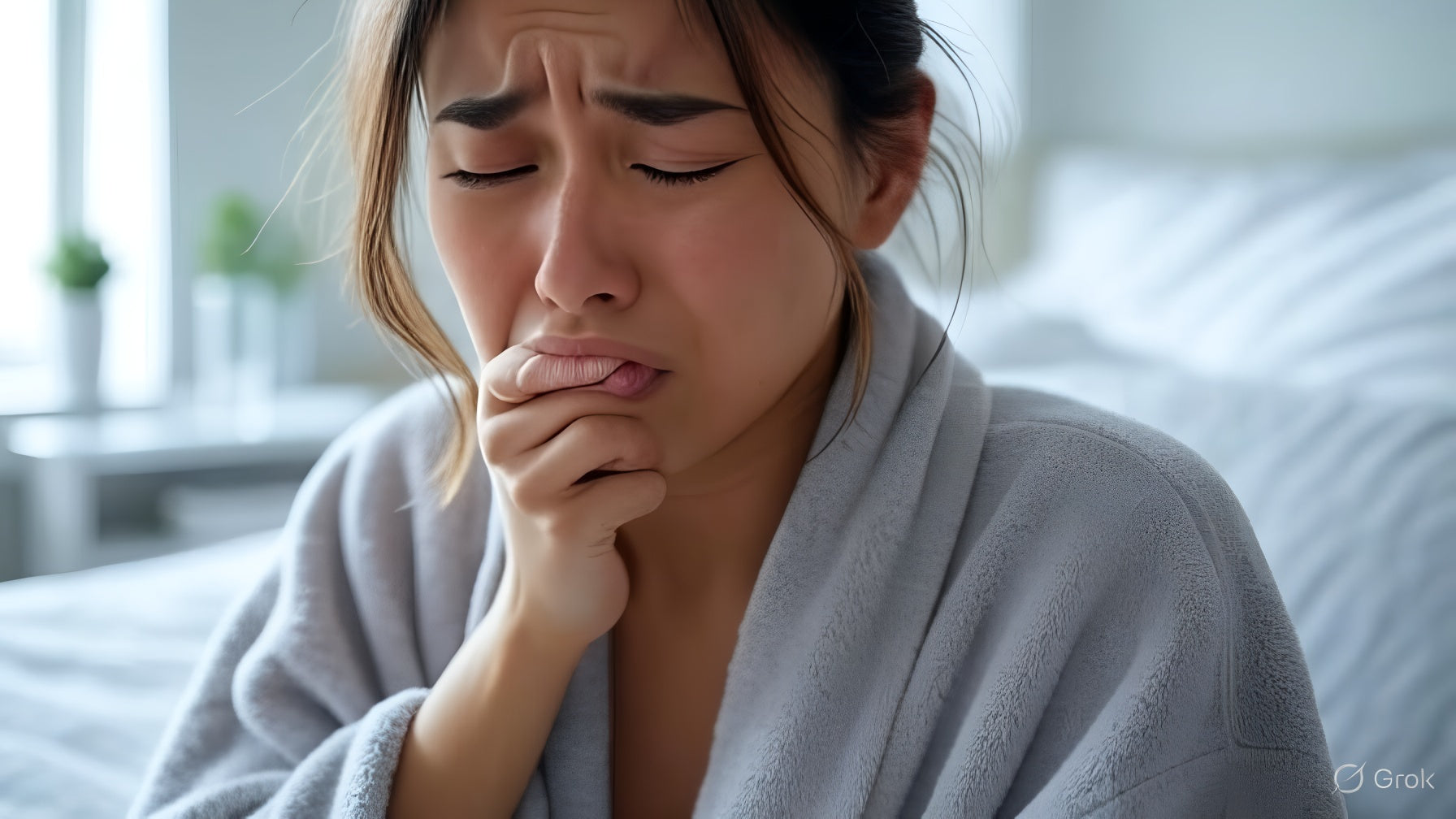
If you feel nauseous after having a baby, you are probably not wondering whether it is technically possible. You are wondering whether it is normal, how long it should last, and whether this is something you can manage at home or something that means you should call your doctor.
Here is the short answer: postpartum nausea can happen for several reasons, and some causes are mild and short-lived. But nausea after birth is not something to dismiss automatically, especially if it comes with vomiting, headache, upper-belly pain, fever, dehydration, or if it keeps happening weeks later. ACOG's guide to conditions to watch for after childbirth says postpartum preeclampsia can cause nausea or vomiting, and postpartum endometritis can cause fever, chills, and abdominal pain or tenderness. That is why timing and accompanying symptoms matter more than the word nausea by itself.
This guide is built around the real search intent behind postpartum nausea, postpartum vomiting, throwing up postpartum, how long does postpartum nausea last, nausea after c section, and 3 months postpartum nausea. You will get a quick answer first, then a practical breakdown of common causes, what helps, what late postpartum nausea can mean, and which warning signs should move this out of the "watch and wait" category.
Key Takeaways
- Postpartum nausea can be brief and mild, but it can also be a clue to dehydration, medicines, infection, postpartum preeclampsia, thyroid changes, or another medical issue.
- The most useful questions are when it started, whether you are vomiting, whether you had a C-section or anesthesia, and what other symptoms are happening with it.
- Vomiting, severe headache, vision changes, fever, upper-belly pain, and trouble keeping fluids down deserve more urgent attention.
- Nausea that shows up weeks or months postpartum should not automatically be blamed on hormones alone.
- Home care starts with fluids, simple food, rest, and watching whether the trend is improving rather than getting worse.
Quick Answer: Is Postpartum Nausea Normal?
Sometimes, yes. But "normal" depends on the timing and the whole symptom picture. Nausea in the first day or two after delivery can happen because of exhaustion, dehydration, pain medicines, anesthesia, stress, or not eating regularly. Nausea weeks later is a different question.
If you want the fastest practical rule, use this one: brief and improving is different from persistent and worsening. A little nausea that fades as you recover, rehydrate, and eat again is not the same as nausea that keeps returning, turns into vomiting, or appears alongside postpartum warning signs.
| Situation | How concerning is it? | What matters most |
|---|---|---|
| Mild nausea in the first days postpartum | Often mild | Whether you can drink, eat a little, and feel steadily better |
| Nausea after a C-section or anesthesia | Common enough, but still worth watching | Medicine timing, vomiting, hydration, and pain level |
| Nausea with headache, vision changes, or upper-belly pain | More urgent | Think postpartum preeclampsia and call promptly |
| Nausea weeks or months postpartum | Needs a broader look | Pregnancy again, thyroid issues, GI illness, gallbladder, reflux, medicines |
| Repeated vomiting or trouble keeping fluids down | Call sooner | Hydration and red-flag symptoms |

If your body is telling you something feels off, you do not have to prove it is dramatic before asking about it. Postpartum recovery already asks a lot of you physically. Nausea can tip that balance quickly if it interferes with fluids, food, rest, or feeding your baby.
How Long Does Postpartum Nausea Last?
This is one of the strongest intent clusters in GSC, and the most honest answer is: it depends on the cause. Short-term nausea from medicines, anesthesia, dehydration, or a stomach bug may settle within a few days. NHS guidance on diarrhoea and vomiting says vomiting in adults usually stops in 1 or 2 days and diarrhea usually stops within 5 to 7 days. MedlinePlus says adults should seek medical care promptly if vomiting lasts longer than 24 hours, they cannot keep fluids down for 12 hours or more, or they show signs of dehydration.
That does not mean every case of postpartum nausea should be treated like a stomach bug. It means the same general red flags still matter after delivery. If the pattern is not improving, the question changes from "is postpartum nausea a thing?" to "why is this still happening to me now?"
| Timing | What it may fit | What to do |
|---|---|---|
| First day or two | Recovery, medicines, anesthesia, dehydration, irregular eating | Rest, fluids, simple food, watch the trend |
| Several days | Could still be short-term, but should be improving | Check meds, hydration, fever, and vomiting |
| 2 to 6 weeks postpartum | Needs more explanation than "just hormones" | Think blood pressure, infection, GI illness, reflux, pregnancy again |
| Months postpartum | Now consider a wider differential | Talk to your doctor about testing or evaluation |
If your nausea comes with lightheadedness or weakness, Mamazing's postpartum dizziness guide may also help you connect dehydration-type symptoms with when to get checked sooner.
Common Causes of Postpartum Nausea
Postpartum nausea is a symptom, not one diagnosis. The right explanation often depends on when it started and what else is happening.
1. Medicines, anesthesia, and C-section recovery
Nausea after a C-section or after strong pain medicine is one of the simplest explanations. Surgery, anesthesia, opioid pain medicines, and not eating normally can all upset the stomach. MedlinePlus lists medicines and medical treatments among common causes of nausea and vomiting in adults. That is one reason nausea after c section is such a persistent search pattern.
2. Dehydration, poor intake, and exhaustion
Labor, bleeding, sweating, skipped meals, breastfeeding, and too little sleep can all make nausea worse. Sometimes the stomach feels "mysteriously" off when the bigger problem is that you are running on fumes and fluids.
3. A stomach bug, reflux, or another GI cause
Postpartum does not protect you from ordinary causes of nausea. Viral illness, food poisoning, reflux, gastritis, constipation, and diarrhea can all make you feel sick to your stomach. If nausea comes with diarrhea or cramping, Mamazing's postpartum diarrhea guide may help you think through overlap symptoms.
4. Postpartum preeclampsia or infection
This is where nausea becomes more clinically important. ACOG says postpartum preeclampsia can cause nausea or vomiting, and postpartum endometritis can cause fever, chills, and abdominal pain or tenderness. Those are not symptoms to brush off as everyday recovery discomfort.
5. Thyroid changes or other later postpartum causes
If nausea shows up months later, you need a wider lens. NIDDK's page on thyroid disease and pregnancy explains that postpartum thyroiditis can happen in the first year after birth. The hyperthyroid phase can bring symptoms such as trouble dealing with heat, tiredness, trouble sleeping, and fast heartbeat. Nausea is not the defining symptom, but late postpartum nausea paired with other systemic changes deserves medical review rather than automatic reassurance.
Can Postpartum Hormones Cause Nausea?
They can contribute, but they are not a complete answer. Hormones shift sharply after birth, and those shifts can affect sleep, mood, digestion, appetite, and how "off" your body feels. That said, blaming ongoing nausea entirely on hormones can delay catching other problems.
If your real search is can postpartum hormones cause nausea, the most balanced answer is: yes, hormones may be part of the picture, but they should not become a catch-all explanation when nausea is intense, persistent, or paired with other warning signs.

In practice, it is more useful to ask: what else changed at the same time? Blood pressure? Medication? Eating? Hydration? Thyroid symptoms? Stress? Sleep? Those questions usually move you closer to the real answer than hormones alone.
What Helps at Home?
If you do not have urgent red flags, home care usually starts with basic stomach-settling and hydration support. NHS and MedlinePlus both recommend small sips of fluid, bland foods when tolerated, and avoiding heavy, greasy, or strongly triggering foods.
- Take small sips often: water, ice chips, oral rehydration fluids, or broth can be easier than large drinks.
- Try simple foods: toast, crackers, rice, applesauce, or other bland foods can be easier to tolerate.
- Keep portions small: smaller meals more often are usually easier than forcing full meals.
- Rest and lower sensory triggers: strong smells, heat, and exhaustion can worsen nausea.
- Review your medicine list: if nausea got worse after pain medicine, iron, antibiotics, or another new medication, tell your clinician.

If poor intake is turning into stomach upset, dizziness, or weakness, do not wait until you feel dramatically ill to take hydration seriously. A symptom becomes more important when it starts disrupting your ability to recover.
When to Call Your Doctor Sooner
This is the section most worried readers actually need. Call sooner if you have:
- repeated vomiting or inability to keep fluids down
- signs of dehydration, such as dark urine, dizziness, weakness, or very dry mouth
- a headache that will not go away
- vision changes, light sensitivity, or swelling with nausea
- upper right abdominal pain or severe belly pain
- fever, chills, or feeling suddenly much more unwell
- heavy bleeding or foul-smelling discharge
- nausea that keeps going beyond a day or two without clear improvement
Those points matter because some postpartum emergencies do not look like classic emergency scenes at first. They can start as "I just feel really sick" before the picture becomes more obvious.
What If You Have Nausea Weeks or Months Postpartum?
This is where a lot of search traffic is heading now. Nausea 2 weeks postpartum, 5 weeks postpartum, or 3 months postpartum is harder to explain as routine immediate recovery. Depending on the timing, your clinician may want to think about pregnancy again, thyroid issues, reflux, medication effects, gallbladder disease, a lingering stomach illness, or another GI cause.
That does not mean late postpartum nausea is automatically serious. It means it deserves a broader differential and less shrugging. The farther you get from delivery, the less useful "postpartum" becomes as a complete explanation by itself.
If nausea is mixing with mood changes, panic, or feeling unable to cope, it may help to read Mamazing's postpartum depression guide as well. Physical and emotional symptoms often overlap more than new parents expect.
FAQ
Is postpartum nausea normal?
It can happen, especially in the first days after birth, but the context matters. Mild short-term nausea is different from repeated vomiting, severe stomach pain, rising blood pressure symptoms, or nausea that keeps going for weeks or months.
How long does postpartum nausea last?
Short-term nausea from medicines, a stomach bug, or early postpartum recovery may improve within a few days. If nausea lasts beyond a couple of days without getting better, or keeps returning weeks postpartum, it is worth checking with your clinician.
Can postpartum hormones cause nausea?
Hormonal shifts may play a role, but they are not the only explanation. Postpartum nausea can also be linked to medicines, dehydration, infection, gallbladder issues, postpartum preeclampsia, thyroid changes, or a new pregnancy.
Is vomiting postpartum a warning sign?
Sometimes yes. Vomiting is more concerning if you cannot keep fluids down, have severe headache, vision changes, upper belly pain, fever, heavy bleeding, or feel progressively worse instead of better.
Can postpartum nausea happen months later?
Yes, but later nausea deserves a broader workup than simple early recovery symptoms. Depending on the timing, your clinician may think about thyroid problems, stomach illness, medicines, gallbladder issues, reflux, or pregnancy again.
When should I call my doctor about postpartum nausea?
Call sooner if you have repeated vomiting, dehydration, fever, severe abdominal pain, headache that will not go away, vision changes, high blood pressure, heavy bleeding, foul-smelling discharge, or nausea lasting more than 1 to 2 days without improvement.
Final Takeaway
Postpartum nausea can be mild and short-lived, but it is not a symptom to wave away automatically. The most important clues are when it started, whether it is improving, whether you are vomiting, and what other symptoms are happening at the same time.
If you are recovering, rehydrating, and getting steadily better, home care may be enough. If nausea is persistent, severe, or paired with warning signs like headache, vision changes, fever, upper-belly pain, or dehydration, call your doctor. In postpartum recovery, the trend matters as much as the symptom.
Mamazing Ultra Air vs Babyzen YOYO2: Which Is Better for Travel?
Can I Eat Shrimp While Breastfeeding? Cooked vs Raw, Prawns, and Safe Weekly Amounts