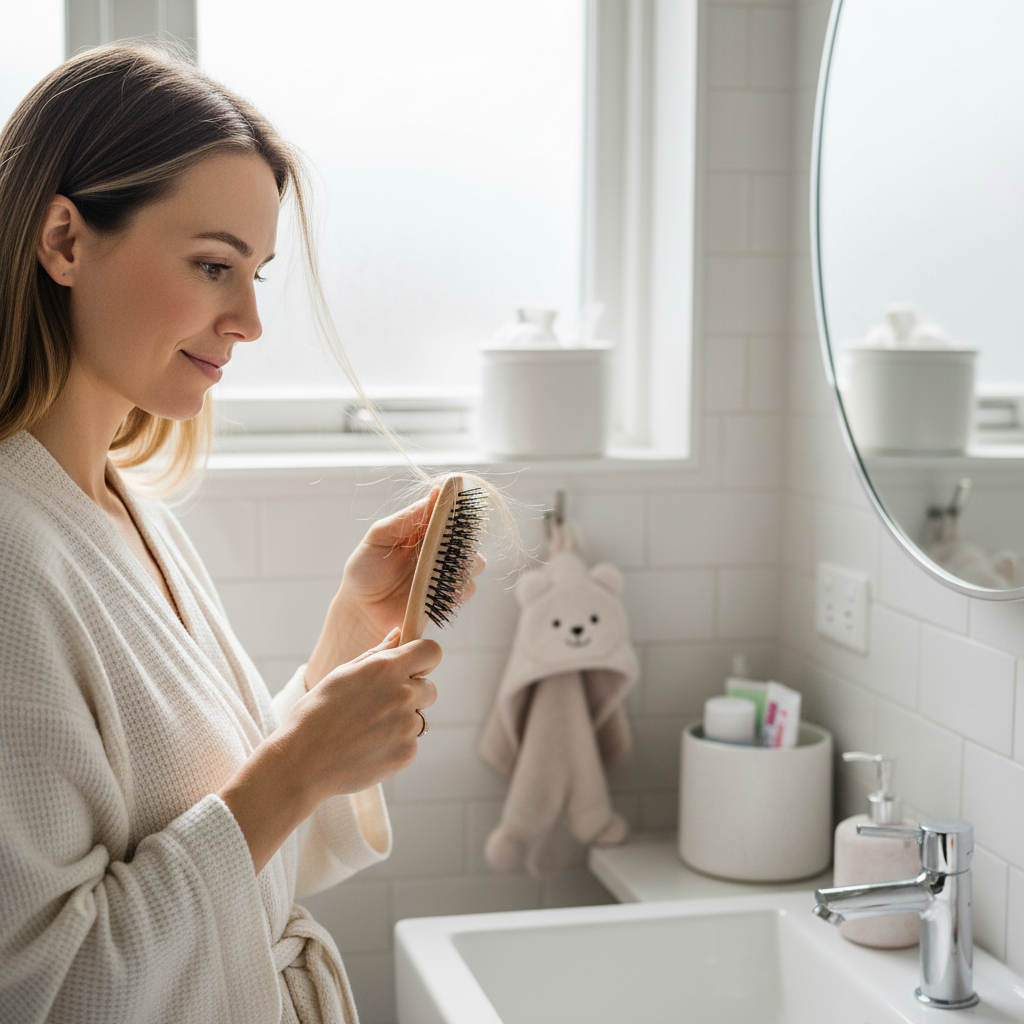
If your ponytail feels thinner, your shower drain looks alarming, and your temples suddenly seem sparse, take a breath: postpartum hair loss is common, usually temporary, and often more about timing than damage. The best postpartum hair loss treatment is rarely one miracle serum. It is a practical plan that combines patience, scalp-friendly habits, enough protein and iron, and a medical check-in when the shedding pattern does not look typical.
According to the Cleveland Clinic's postpartum hair loss guide, roughly 40% to 50% of women experience noticeable shedding after birth. The American Academy of Dermatology makes a similar point: for most new moms, the goal is to protect fragile hair while regrowth catches up, not to panic-buy a shelf full of products.
This guide focuses on what actually helps, what natural remedies for postpartum hair loss are worth trying, what to do if you are breastfeeding, and when symptoms point to something more than routine postpartum shedding. If you want the short version, start here: be gentle with your hair, eat and hydrate like recovery matters, rule out iron or thyroid issues when symptoms suggest them, and treat any stronger intervention as a conversation with your clinician rather than a random late-night checkout decision.
Quick answer: what actually works for postpartum hair loss treatment
If you only have two minutes, focus on the handful of actions that make the biggest difference:
-
Protect what you have. Avoid tight styles, aggressive brushing, harsh heat, and heavy extensions while shedding is active.
-
Support regrowth from the inside. Prioritize enough protein, iron-rich foods, and an overall eating pattern you can actually sustain during postpartum recovery.
-
Check the pattern. Diffuse shedding that starts a few months after delivery is common; patchy loss, scalp inflammation, or shedding that drags on deserves medical input.
-
Use products strategically. Volumizing styling, scalp-friendly wash routines, and lightweight leave-ins help hair look fuller even while you wait for regrowth.
-
Escalate only when needed. If your timeline, symptoms, or health history suggest iron deficiency, thyroid disease, or another trigger, treat that root issue instead of assuming every supplement marketed for hair is useful.
That is why the best postpartum hair loss treatment is usually a system, not a single bottle. You need less friction, less breakage, and fewer reversible health issues standing in the way of regrowth.
Why postpartum hair loss happens in the first place
During pregnancy, rising estrogen can keep more hairs in the growth phase for longer than usual. After birth, hormone levels shift and many of those hairs move into a resting phase together. A few months later, they shed. This pattern is often called telogen effluvium, and it explains why postpartum hair loss can feel dramatic even when your follicles are still capable of growing healthy hair again.
The emotional part is real. You are not just noticing a few strands on a brush. You may see widening around your part, more hair at the hairline, and a texture change that makes styling harder. That can feel especially discouraging when you are already managing sleep deprivation, feeding schedules, healing, and body changes that are still settling down.
Routine postpartum shedding is usually diffuse, which means it happens across the scalp instead of creating sharply defined bald spots. If your loss looks patchy, painful, scaly, or suddenly more severe than the usual postpartum pattern, that is when the conversation shifts from reassurance to diagnosis.
When does postpartum hair loss stop? A realistic timeline
One of the most common search questions is when does postpartum hair loss stop, and the most honest answer is that the timeline is normal-but-annoying rather than instant. The Cleveland Clinic notes that shedding often becomes noticeable around three months after delivery, with improvement over the months that follow as the hair cycle resets.
In real life, many parents notice something like this:
-
Months 0-2 postpartum: you may not notice much yet, especially if pregnancy hair still feels thick.
-
Months 2-4: shedding becomes obvious on wash days, around the hairline, and when you pull hair into a ponytail.
-
Months 4-6: the loss may feel like it peaks.
-
Months 6-12: shedding often slows and regrowth becomes easier to spot, even if fullness still lags behind.
What trips many people up is that regrowth can look awkward before it looks reassuring. Short new hairs at the temples or crown are a good sign, but they can also create frizz, flyaways, and a shape that feels harder to style. That does not mean treatment failed. It often means recovery has started.
If shedding stays intense well past the usual window, or if it comes with fatigue, dizziness, cold intolerance, constipation, or unusually heavy bleeding, it is smart to talk with your clinician about whether postpartum hair loss is the whole story.
Best treatment for postpartum hair loss: what helps most
If you are searching for the best postpartum hair loss treatment, it helps to separate supportive care that improves the outcome from product promises that oversell what they can do. The most useful plan usually blends appearance support, breakage prevention, and root-cause screening.
| Option |
What it helps with |
Best use case |
Breastfeeding note |
| Gentle hair-care changes |
Reduces breakage and makes thinning less visible |
Almost everyone with active shedding |
Usually the easiest first step |
| Protein- and iron-aware nutrition |
Supports recovery when diet has slipped during the newborn phase |
Parents skipping meals, eating lightly, or recovering from blood loss |
Usually compatible, but supplements should match actual needs |
| Iron or thyroid evaluation |
Finds another reason hair is not bouncing back |
Persistent shedding, fatigue, dizziness, heavy bleeding, or other symptoms |
Especially useful because it targets the cause |
| Topical treatment discussed with a clinician |
May be considered if loss is prolonged or mixed with another hair issue |
When routine regrowth is not happening on schedule |
Get personalized guidance before use |
Start with low-friction hair-care changes
The AAD recommends habits that reduce stress on fragile strands, such as using a volumizing shampoo and conditioner, skipping heavy conditioning formulas that flatten hair, and avoiding tight hairstyles that pull on the roots. In practice, that means loose clips instead of severe buns, a wide-tooth comb instead of rough detangling, lower heat, and fewer all-day slick styles when your hairline is already taking a hit.
These changes do not stop the internal hair cycle shift, but they can absolutely reduce the extra breakage that makes your hair look thinner than it really is. That is a big deal. If you can shed less from mechanical damage while new growth comes in, your recovery period feels much less punishing.
Know when iron and thyroid checks matter
Postpartum shedding should not become a catch-all label for every kind of hair loss. If your recovery has been physically hard, if you lost a lot of blood, if eating has been inconsistent, or if you are also dealing with fatigue and dizziness, ask about iron status. The NIH Office of Dietary Supplements iron fact sheet explains why iron matters for oxygen transport and why low intake or deficiency can affect overall health. Likewise, the NHS list of hypothyroidism symptoms includes thinning hair among the possible signs of an underactive thyroid.
You do not need to self-diagnose. You do need to notice when the picture looks wider than routine shedding. When that happens, labs and a clinician's read on the pattern can save you months of guessing.
Use stronger topical treatments thoughtfully
Many new moms search for serums, foams, and clinically proven actives right away. Sometimes that is appropriate, but not always. If your shedding fits the classic postpartum timeline and you are seeing early regrowth, your best move may be to keep your routine simple. If the loss feels prolonged, unusually severe, or mixed with another hair-loss pattern, ask a dermatologist whether a clinician-guided topical treatment makes sense for you. That is especially important if you are breastfeeding, have a sensitive scalp, or are already overwhelmed by a complicated routine you will not actually maintain.
Do vitamins and supplements help?
This is where expectations usually outrun evidence. A postnatal vitamin, iron when you truly need it, or a clinician-recommended supplement can support recovery. But if you are already meeting your needs, more capsules do not automatically mean more regrowth. The better question is not "What is the strongest supplement for hair?" It is "What is missing from my recovery right now?"
If meals have become random, it may be more effective to rebuild a reliable food pattern than to stack three beauty supplements on top of skipped lunches. If that sounds familiar, a realistic eating framework such as our postpartum diet plan guide can help you think beyond hair alone and support overall recovery.
Natural remedies for postpartum hair loss: what is worth trying
Natural remedies for postpartum hair loss are most useful when they support your scalp, reduce extra breakage, and make recovery easier to stick with. The options most worth trying are gentle scalp massage, enough protein and iron-rich foods, loose low-tension hairstyles, a simple wash-day routine that avoids rough handling, and diluted rosemary oil as an optional add-on if your scalp tolerates it.
-
Gentle scalp massage: may help you stay consistent with scalp care, but keep the pressure light so you do not create more shedding from friction.
-
Protein- and iron-aware meals: support overall recovery and make more sense than chasing trendy beauty supplements when your diet has become inconsistent.
-
Loose hairstyles and less heat: will not change postpartum hormones, but they can reduce breakage that makes thinning look worse.
-
A simple wash-day routine: regular washing, gentle detangling, and lightweight products can help hair feel fuller and easier to manage.
-
Diluted rosemary oil: worth treating as a low-priority experiment, not a miracle treatment, especially if you have sensitive skin.
These methods can support comfort, manageability, and overall hair health, but they do not override hormone-related shedding overnight. Think of them as helpful supports while your hair cycle resets, not instant fixes.
Rosemary oil postpartum, including after a C-section
Rosemary oil gets attention because it feels like a gentler option, and many parents specifically ask whether they can use rosemary oil postpartum after a C-section. The practical answer: maybe, but keep your expectations realistic. Rosemary oil is not a proven postpartum cure, and essential oils can irritate sensitive skin if you overdo them. If you want to try it, dilute it properly in a carrier oil, patch test first, and do not apply it anywhere near a healing incision or irritated skin.
What rosemary oil may offer is a low-commitment scalp ritual that feels supportive while you wait for the hair cycle to normalize. What it should not do is replace medical review when the shedding pattern is off or convince you that more tingling equals more regrowth.
Scalp massage, protein, and wash-day habits
Natural support tends to work best when it is boring and repeatable: regular washing so buildup does not weigh hair down, a gentle scalp massage that does not turn into rough friction, enough protein, enough fluids, and less tension in your styling routine. Those habits improve the environment your hair is growing in, even though they do not fast-forward biology overnight.
If your current wash day leaves hair knotted, dry, and fragile, simplify. Use products that give slip without coating the hair so heavily that everything looks flatter. Dry hair gently. Detangle from the ends upward. The goal is to lose the hairs that were going to shed anyway, not to break the extra ones you could have kept.
What oils and DIY masks cannot do
Oils can soften hair and reduce the rough feeling that makes shedding more upsetting, but they cannot single-handedly fix a hormone-driven shed or correct low iron. DIY masks can be comforting, yet they are often more cosmetic than corrective. If a home remedy makes your hair easier to manage, fine. If it makes your scalp greasy, irritated, or harder to wash, it is not helping just because it came from a pantry or a social post.
Postpartum hair loss treatment while breastfeeding
When you are nursing, the standard for "worth trying" gets higher because convenience and safety matter even more. A good postpartum hair loss treatment while breastfeeding is usually one of these: a low-tension hairstyle, lightweight products that make hair look fuller, enough food and fluids, a conversation about labs if symptoms suggest deficiency, and patience with the regrowth timeline. That may sound less exciting than a miracle serum, but it is much more likely to fit real life.
If you are considering a more active topical treatment, use your OB-GYN, midwife, primary care clinician, or dermatologist as your filter. You want a decision based on your symptoms, your feeding plan, your scalp, and your health history, not a generic comment thread. The same logic applies to supplements marketed as breastfeeding-safe: safe is not the same thing as necessary.
If your shedding is making you feel unlike yourself, build a routine that helps immediately on the visual side too: a softer part, more lift at the roots, less oil at the scalp, and styles that disguise thinning around the temples. Emotional relief matters. Looking a little more like yourself can make the wait for regrowth much easier to live with.
When you should call your doctor
Postpartum shedding is common, but not every kind of hair loss in the postpartum period is benign. Contact a clinician if:
- you have patchy bald spots rather than diffuse shedding;
- your scalp is painful, itchy, very flaky, or inflamed;
- you feel wiped out, dizzy, cold, constipated, or otherwise unwell alongside the hair loss;
- you had heavy postpartum bleeding or suspect nutrition has been poor for weeks;
- the shedding stays intense well beyond the usual postpartum timeline or regrowth never seems to start.
That is the moment to stop treating the problem like a cosmetic annoyance and start treating it like a symptom worth evaluating. Getting the right explanation is often the fastest route to feeling calmer and making better choices.
Frequently asked questions about postpartum hair loss
Is postpartum hair loss permanent?
Usually, no. Postpartum shedding is most often a temporary shift in the hair growth cycle, and many people notice improvement once hormone levels stabilize and new growth catches up. If you are still shedding heavily after about a year, or you have patchy loss, scalp irritation, or other symptoms, book a medical evaluation.
When does postpartum hair loss stop?
Many parents notice shedding start around two to four months after birth, peak around four to six months, and improve gradually over the next several months. Regrowth is often visible before density feels normal again, so baby hairs at the hairline are usually a good sign that recovery is underway.
What is the best postpartum hair loss treatment?
The best first-line treatment is not one miracle product. It is a combination of time, gentle hair care, enough protein and iron, and checking for problems such as thyroid disease or iron deficiency when the pattern seems more severe than typical. Product-based treatment only makes sense after that foundation is in place.
Can you use rosemary oil postpartum or after a C-section?
You may be able to use diluted rosemary oil on the scalp if your skin is intact and you are not applying it near an incision, but it is not a proven postpartum treatment. Patch test first, avoid irritated skin, and skip it entirely if fragrance or essential oils make your scalp feel worse.
Do vitamins help postpartum hair regrowth?
Vitamins help when they correct a real gap in your diet or a lab-confirmed deficiency. They usually do not reverse postpartum shedding on their own if you are already nutritionally replete. That is why iron, thyroid, and overall nutrition matter more than chasing a long supplement list.
When should you see a doctor about postpartum hair loss?
See a doctor sooner if you have bald patches, scalp pain, redness, itching, fatigue, dizziness, heavy bleeding, or symptoms that suggest low iron or thyroid disease. You should also get checked if shedding is still intense well beyond the usual postpartum window or if regrowth never seems to start.
Your postpartum hair recovery plan
Here is the version we would hand to a tired friend: assume the first step is support, not panic. Make your routine easier on fragile hair. Eat like recovery still matters. Watch the timeline instead of judging each wash day in isolation. Escalate when the pattern, symptoms, or duration suggest there may be more going on.
If you want one simple benchmark, ask yourself this: am I seeing signs that recovery is moving, even slowly? If the answer is yes, stay steady. If the answer is no, or if the loss is coming with symptoms that do not fit routine postpartum shedding, bring in medical help and get a clearer picture.
At Mamazing, we believe postpartum care works best when it respects both evidence and real life. You do not need a perfect routine. You need a workable one that helps your hair, your confidence, and your recovery move in the right direction.



Finger Foods for Toddlers: Safe Ideas by Age From 6 Months and Up
Third Trimester Nausea: Causes, Relief, and When to Worry at 37-38 Weeks