
- by xiaoyuyang
Baby-Led Weaning Guide: How to Start Safely at 6 Months and Serve First Foods
- by xiaoyuyang
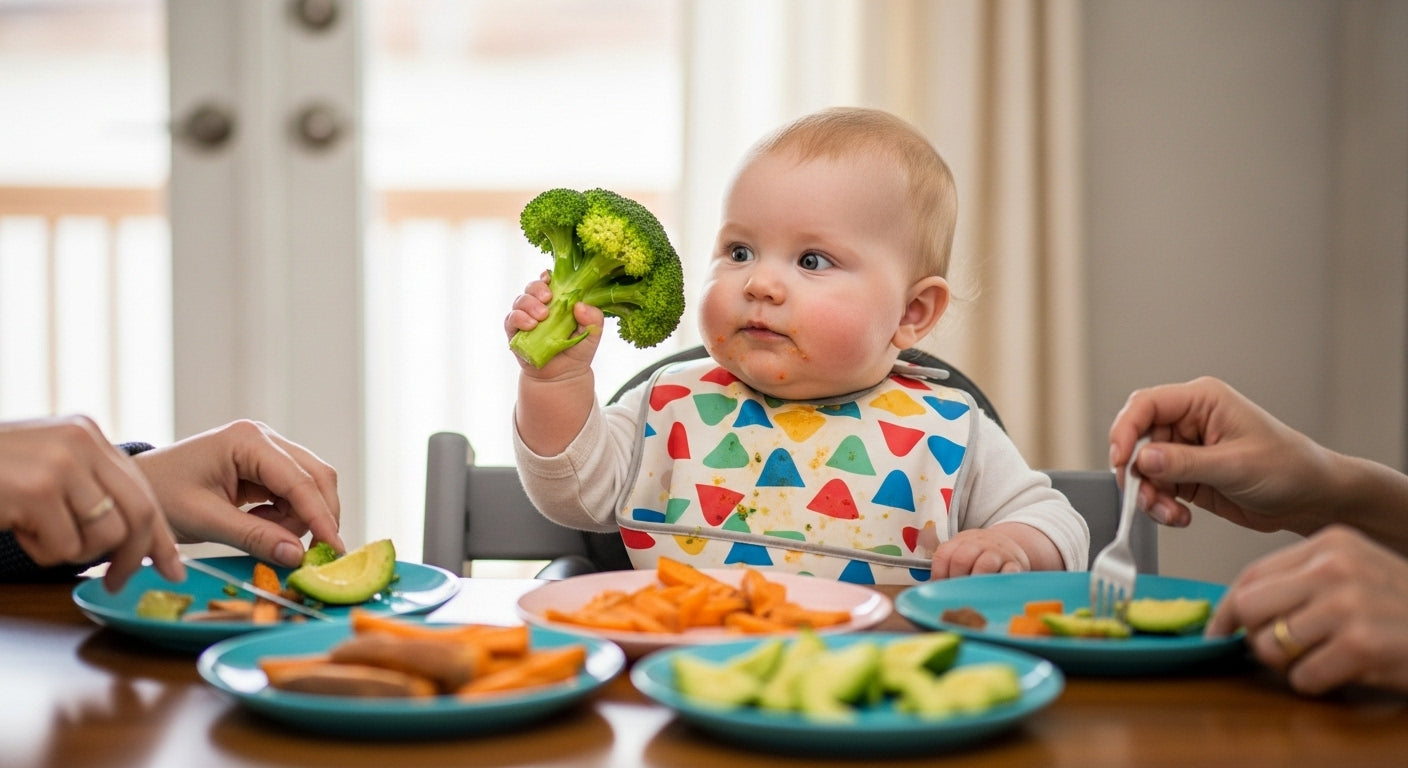
Baby-led weaning can feel simple once you strip away the noise. If your baby is around 6 months old, can sit well with support, shows interest in food, and is losing the tongue-thrust reflex, you can usually begin offering soft, easy-to-hold foods while continuing breast milk or formula. The safest way to start is to keep your baby upright, stay with them for every meal, serve foods in shapes they can grasp, and begin with naturally soft first foods such as avocado, steamed vegetables, banana, toast fingers, and shredded or tender iron-rich foods.
That is the short version. The longer version is what most parents actually need: how to know your baby is ready, what foods are safest, how to cut them, what to avoid, what gagging really looks like, and how to make BLW work in a real kitchen when you are busy, tired, and probably cleaning the floor more often than you expected.
This guide focuses on the questions parents really search for: how to start baby-led weaning at 6 months, the safest first foods, what the current safety rules mean in real life, and what equipment actually helps. It also keeps the tone practical. You do not have to be perfect, and you do not have to choose between all BLW and all spoon-feeding. What matters is building safe, low-pressure meals that help your baby learn to eat.
Baby-led weaning means your baby feeds themselves soft pieces of food instead of being fed only purees by spoon. In practice, most families use BLW as a starting approach to self-feeding, then adjust based on the baby, the meal, and the day. Some meals are pure BLW. Some include preloaded spoons. Some are a mix. That flexibility is normal.
The timing matters more than the label. The CDC guidance on introducing solid foods says most babies are ready for complementary foods at about 6 months. Starting too early can make feeding harder, while waiting for readiness signs gives your baby a better chance to handle textures, sit more securely, and join meals safely.
For BLW, these readiness signs matter most:
If your baby was born early, has feeding or swallowing concerns, or you have been told to watch weight gain closely, it is worth checking in with your pediatric clinician before you start. BLW can still work, but the starting plan may need a little more personalization.
The other important point is emotional: starting solids does not mean milk stops mattering. At 6 months, breast milk or formula is still the main source of nutrition. Solids are there to build skill, curiosity, and gradually broader nutrition.
The safest way to start baby-led weaning is to simplify the setup. Put your baby in an upright high chair, stay close enough to watch every bite, and offer one or two soft foods in manageable shapes. The goal of the first meals is not volume. It is practice.
Start with one meal a day when you are calm and not rushing. Mid-morning or lunch often works better than the end of a long day. Offer a few pieces of one or two foods, let your baby explore, and expect most of it to end up on the tray, the bib, or the floor. That is still a successful meal if your baby touched, squished, licked, or tried the food.
Safety matters most in the first few weeks because parents are learning alongside the baby. The CDC choking hazards page advises avoiding foods that can block the airway, especially hard, round, slippery, or sticky foods. That is why BLW is not about handing your baby any family food in its original shape. It is about preparing family food so it matches a beginner eater’s skills.
You also do not need to “earn” BLW by refusing all spoons. If a preloaded spoon of yogurt, oatmeal, or mashed beans helps you include iron-rich or allergen foods more easily, that still supports self-feeding. The spoon can be in your baby’s hand or offered for them to take. What you are building is participation, not purity.
A simple starting flow looks like this:
The early weeks go better when you judge progress by exposure, not by intake. If your baby is learning how food feels, smells, and moves in the mouth, the process is working.
The safest first foods are soft, easy to hold, and easy to mash with gums. They should also cover real nutritional needs, especially iron, because iron becomes more important after about 6 months.
A good first-foods shortlist includes:
The CDC foods to encourage guidance emphasizes fruits, vegetables, whole grains, beans, lentils, yogurt, and protein foods while keeping an eye on iron-rich choices. That works well for BLW because it encourages variety without turning every meal into a recipe project.
Iron deserves special attention. Babies’ iron stores start to drop around this stage, so it helps to include iron-rich foods often instead of treating them as an occasional extra. Meat, lentils, beans, tofu, egg, and iron-fortified foods can all fit into a BLW plan. If your baby mostly wants fruit and toast at first, you do not need to panic, but it is smart to keep bringing iron-rich options back to the tray.
One thing that makes BLW easier is thinking in categories instead of recipes. For each meal, try to build around:
That structure is often enough to keep meals balanced without overplanning. It also helps if you are trying to work through a broad variety of foods before age 1 rather than repeating the same five comfortable options forever.

How you serve food matters as much as which food you choose. A perfectly healthy food can become frustrating or risky if the texture or shape is wrong for a beginner eater.

For young starters, the easiest shapes are usually long, soft pieces that your baby can grab with the whole palm while some food still sticks out from the fist. That is why wedges, spears, sticks, florets, strips, and patties work better than tiny cubes at the beginning.
These are good rules to follow:
The AAP’s HealthyChildren guidance on starting solid foods encourages finger foods that dissolve easily and reminds parents to avoid choking-risk foods. That is a useful reminder not to confuse “firm enough to hold” with “safe enough to swallow.”
Foods to avoid or heavily modify at the start include whole grapes, whole nuts, chunky spoonfuls of nut butter, popcorn, hard raw apple pieces, large globs of bread, marshmallow-like sticky foods, and anything hard, round, or rubbery. The AAP choking prevention page and the CDC both keep bringing parents back to the same principle: shape and texture matter just as much as the ingredient itself.
It also helps to stay realistic about gagging. Gagging is common in BLW because babies are learning how to move food around in their mouths. It is loud, sputtery, and uncomfortable to watch, but it is different from choking. Choking is quiet, blocked, and urgent. Knowing that difference ahead of time helps you stay calmer when learning gets messy.
One of the biggest worries in BLW is whether a baby who self-feeds will get enough iron or enough overall nutrition. That worry is understandable, but it becomes much easier to manage when you plan meals around nutrition instead of random finger-food aesthetics.
Try to offer iron-rich foods regularly, not just once in a while. That can be tender shredded meat, fish, egg, tofu, beans, lentil patties, or iron-fortified grains. Pairing plant-based iron foods with vitamin C foods, such as berries, tomato, bell pepper, or orange, can also help with iron absorption.
Allergens are another place where parents often freeze. Current guidance no longer supports delaying common allergens without a reason. Instead, allergens are usually introduced one at a time in age-appropriate forms once solids begin. If you want a more detailed walkthrough for that part of the process, Mamazing’s guide on how to introduce allergens safely is a useful companion to this BLW guide.
BLW also does not require you to ignore purees forever. Yogurt, oatmeal, mashed beans, and smooth textures still have a place, especially when they make iron or allergen exposure easier. A mixed approach often works well for families who want the benefits of self-feeding without turning every meal into a rigid feeding philosophy.
What matters most is that your baby keeps seeing a wide range of foods over time. If breakfast is a familiar favorite, lunch can be the meal where you bring in something new. If dinner feels too chaotic, use weekend lunches for bigger texture experiments. Nutrition in BLW is built meal by meal, not proven in a single day.
You do not need a huge shopping list for BLW, but the setup matters. The right chair and a few simple tools can make meals safer and much less frustrating.
The most important “piece of equipment” is the high chair position. Your baby should be upright, well supported, and close enough to the tray that food does not feel out of reach. A footrest helps far more than many parents expect because stable feet make the whole body feel more secure during swallowing and reaching.
These are the essentials worth prioritizing:
Utensils matter, but not as much as search results might make you think. Query data shows clear interest in “best utensils for baby led weaning,” yet parents often get more benefit from a better chair setup than from buying five different spoon shapes. If you do want extras, a short-handled spoon, small open cup, and easy-grip bowl are the most practical starting pieces.
For a smoother setup, keep meals visually simple too. Too many foods on the tray can overwhelm a new eater. Two or three options are plenty at the beginning.

Once your baby has a few weeks or months of BLW experience, the biggest change is usually confidence. The hand-to-mouth motion looks more deliberate, gagging often becomes less dramatic, and your baby starts doing more chewing, biting, and dropping with purpose instead of pure confusion.
At 7 to 8 months, many babies can handle slightly more complex textures and mixed meals. This is often when parents start searching for ideas again because the earliest foods feel repetitive. That is where simple family-food adaptation becomes useful: soft-cooked vegetables from your dinner, tender pasta shapes, shredded chicken, salmon flakes, egg strips, bean patties, and thicker toast toppings can all keep BLW moving forward without requiring separate baby menus every night.
This stage is also when meal frequency usually increases. The CDC guidance on how much and how often to feed can help you judge progression without guessing, but in practical terms you are usually moving from tasting practice toward more regular meals while milk remains important.
If progress feels slower than you expected, that does not necessarily mean BLW is failing. Many babies need repeated exposure before they truly start eating more. Texture tolerance, appetite, teething, illness, and temperament can all change what a meal looks like from one week to the next.
The most common BLW fears are usually these: “What if my baby chokes?” “What if my baby barely eats anything?” and “What if I am doing it wrong because I still use a spoon sometimes?” Those worries are normal, and none of them automatically mean BLW is not for your family.
If choking anxiety is high, the best next step is not more scrolling. It is practical preparation. Learn infant first aid, read the choking-hazard lists carefully, and set up the chair well. Confidence usually comes more from readiness than from reassurance alone.
If intake seems tiny, remember that early BLW is supposed to look inefficient. Your baby is building skill, and milk is still doing a lot of the nutritional work. What you want to monitor is the bigger picture: ongoing exposure, growing skill, interest in meals, and weight gain that your clinician is comfortable with.
If combining BLW with spoon-feeding feels like “cheating,” let that go. Plenty of families use a mixed method and still raise capable self-feeders. The real target is safe, responsive feeding, not loyalty to a feeding label.
The safest first foods are soft, easy to hold, and easy to mash, such as avocado wedges, steamed sweet potato sticks, banana spears, soft broccoli florets, toast fingers, tender shredded meat, soft tofu, and mashed bean patties.
Yes, it can be safe at about 6 months when your baby shows readiness signs, sits upright with support, and is always supervised during meals. Safety depends on positioning, food texture, and avoiding choking hazards.
Avoid or heavily modify hard, round, slippery, sticky, or rubbery foods such as whole grapes, whole nuts, popcorn, thick globs of nut butter, and hard raw pieces of fruit or vegetables. Food shape and texture matter just as much as the ingredient.
Gagging is noisy and often part of learning how to manage food in the mouth, while choking is quieter, blocked, and urgent. Learning that difference ahead of time helps parents respond more calmly and appropriately.
No, not many. A stable high chair with a footrest matters more than a big gadget collection. A soft spoon, open cup, easy-to-clean bib, and simple suction bowl are usually enough to start.
Yes. Many families use a mixed approach that includes self-feeding alongside preloaded spoons or occasional spoon-fed foods. What matters most is safe, responsive feeding and regular exposure to different textures.
The best baby-led weaning start is not the prettiest tray or the most complicated plan. It is a calm, upright setup, a few soft first foods, close supervision, and the willingness to let your baby learn by touching, dropping, licking, and gradually eating. If you begin around 6 months, keep safety rules clear, and focus on simple foods with real nutritional value, BLW becomes much more manageable than it first appears.
If you want to make the process easier, keep your expectations low for the first few weeks and your food variety steady over time. That is how confident eaters are built. And if you are working through safe first foods, allergen timing, and real-family meal planning at the same time, Mamazing’s feeding guides can help you turn all that information into a routine you can actually use.


New Dad Guide: Feeding, Diapers, Soothing, and Bonding
Swivel vs Rock vs Glide: Understanding Nursery Chair Movements (And How to Choose)